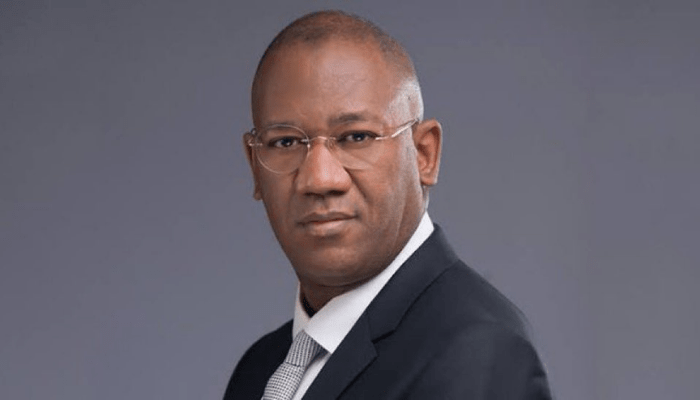
The Department of State Services (DSS) has questioned Datti Baba-Ahmed, founder of Baze University, over his consistent views perceived as inciting against the Presidency and the Nigerian State.
BusinessDay gathered from sources close to the DSS that Baba-Ahmed was quizzed for several hours on Friday before being released.
It was gathered that the 2023 Vice-Presidential candidate of the Labour Party (LP) was invited over comments he made on national television, where he blamed the judiciary and the military for allowing the swearing-in of President Bola Tinubu and Vice President Kashim Shettima after the 2023 general election.
Read also: Tukur Mamu was allocated N50m from Abuja–Kaduna ransom – DSS witness tells court

Baba-Ahmed, the founder of Baze University, Abuja, was also accused of inciting the military by declaring that “It was President Tinubu’s swearing-in that made it possible for them to look you in the face and call you ‘bloody fools’,” perhaps in reference to the altercation between Nyesom Wike and Lieutenant A.M. Yerima, a young military officer, over the ownership of a plot of land in Abuja.
The comments were regarded as capable of heightening national tension, particularly given the sensitivity of Nigeria’s current political climate.
Such sensitive remarks were considered disturbing, given how similar narratives contributed to instability in countries like Guinea-Bissau and others.
It is also believed that while the DSS action may not have any political undertones, the secret police is treating his comments with caution.
BusinessDay gathered further that the move was aimed at protecting Nigeria’s corporate existence.

Datti Baba-Ahmed was quoted as saying that the “complacency by the judiciary and military in not stopping the inauguration of President Tinubu’s administration” was capable of inciting crises in an already volatile situation.
Zagazola Makama, a security expert who spoke on the arrest and release of Datti Baba-Ahmed, noted that “such an invitation aligns with established protocols, especially as his description of efforts to improve national security as a ‘joke’ could agitate public sentiment and weaken trust in state institutions.
“These sessions are not punitive; they are preventive, focused on clarifying intent, contextualizing remarks, and preventing the emergence of narratives that could unintentionally fuel unrest.”
Efforts to get an official comment from the Labour Party on the latest development were unsuccessful.
Obiora Ifoh, the party’s National Publicity Secretary, said he was yet to confirm the DSS invitation.
“I am at a church crusade. I also saw the DSS invitation trending, but I am yet to confirm it,” he said.