In an era defined by fierce global competition, economic nationalism, and energy insecurity, no nation can afford institutional rivalry within strategic sectors. Collaboration has become the new cache of competitiveness. For Nigeria, partnership within the oil and gas ecosystem is no longer optional but imperative.
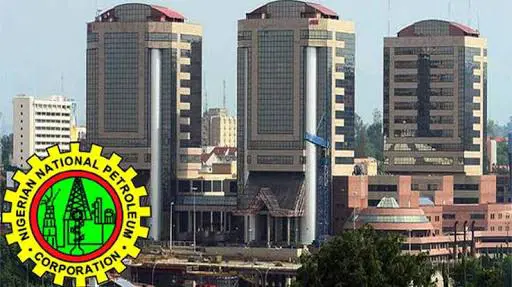
The renewed strategic alliance between the Nigerian National Petroleum Company Limited (NNPC) and the Dangote Refinery, therefore, represents far more than a corporate engagement. It signals a long-awaited shift from fragmentation toward cooperation capable of restoring sanity to Nigeria’s troubled downstream petroleum sector, especially at this time of war in the Middle East.
For decades, Nigeria’s oil story has baffled observers: a nation richly endowed with crude oil exporting raw resources while importing refined products at enormous cost. Billions of dollars were lost yearly to fuel imports, subsidies, logistics inefficiencies, and opaque trading arrangements. Domestic refineries collapsed under mismanagement, while private investors struggled against policy uncertainty and crude supply constraints.
Read also: Dangote Refinery gets only 5 of 13 needed crude cargoes from NNPC

The emergence of the 650,000-barrel-per-day Dangote Refinery changed the equation, but infrastructure alone cannot transform a sector without institutional alignment, and that alignment is now beginning to take shape.
Historically, Nigeria’s petroleum industry operated as disconnected silos. Government institutions, private refiners, upstream producers, marketers, and regulators often pursued overlapping or conflicting objectives, and instead of synergy, rivalry prevailed.
The result was predictable, leading to supply instability, pricing distortions, rent-seeking behaviour, and chronic dependence on imports.
The growing partnership between NNPC and Dangote Refinery offers an opportunity to replace suspicion with a shared national purpose. By coordinating infrastructure, crude allocation, shipping logistics, trading operations, and market distribution, both entities can unlock efficiencies impossible under adversarial arrangements.
Though the partnership must go beyond ceremonial visits and public declarations. Its real test lies in guaranteeing an unhindered and predictable crude oil supply to domestic refineries, as no refinery, regardless of scale, can operate optimally without feedstock certainty.

“While the Dangote Refinery represents industrial scale, modular refineries across the Niger Delta represent grassroots indigenisation of Nigeria’s hydrocarbon wealth.”
Nigeria’s painful irony in recent years has been domestic refineries struggling to secure crude produced within the same country. Production-sharing contracts, export obligations, foreign exchange dynamics, and commercial trading priorities often left local processors disadvantaged.
If Nigeria is serious about refining its resources at home, crude supply to domestic refiners, including Dangote Refinery and modular refineries scattered across the Niger Delta, must become a national priority policy. Doing so will immediately reduce import dependence, conserve foreign exchange, stabilise pricing, and deepen local industrial participation.
While the Dangote Refinery represents industrial scale, modular refineries across the Niger Delta represent grassroots indigenisation of Nigeria’s hydrocarbon wealth.
These smaller facilities, often located near producing communities, possess enormous potential to curb crude theft, reduce illegal refining, and create employment within host regions. Yet many operate below capacity due to irregular crude-access and financing challenges.
A broadened NNPC-Dangote partnership framework should therefore evolve into a sector-wide collaboration platform, integrating modular refinery operators into crude allocation systems, technical partnerships, and distribution networks.
Such inclusion would transform oil-producing communities from passive extraction zones into active industrial participants.
Nigeria’s downstream petroleum sector has long suffered from volatility, fluctuating pump prices, supply shortages, subsidy distortions, and speculative middlemen exploiting regulatory gaps.
Strategic cooperation between NNPC and domestic refiners introduces the possibility of market stability driven by local production rather than import exposure.
Local refining reduces shipping costs, insurance premiums, exchange-rate pressures, and geopolitical supply risks. More importantly, transparency improves when production and distribution occur within national oversight structures.
The expected economies of scale from collaboration could gradually normalise pricing mechanisms and eliminate panic cycles that have historically defined fuel availability in Nigeria.
Sanity in the sector ultimately translates into economic predictability for households and industries alike.
Beyond domestic benefits, the partnership positions Nigeria as a potential downstream powerhouse across Africa. With refining capacity expanding, Nigeria can transition from importer to exporter of refined petroleum products to West African and Central African markets. This strengthens regional trade under the African Continental Free Trade Area (AfCFTA) framework and enhances geopolitical influence.
Instead of exporting crude and importing poverty through refined imports, Nigeria can export value-added products, technology expertise, and industrial services.
This is how resource-rich nations build enduring economic strength.
The sustainability of this alliance depends heavily on regulatory clarity and policy consistency from government authorities. Investors, local and international, require assurance that crude supply frameworks, fiscal terms, and operational regulations will remain predictable.
Frequent policy reversals have historically undermined private investment in Nigeria’s oil sector. Partnerships flourish only where rules remain stable.
Government must therefore act as a facilitator rather than a competitor, ensuring that national assets complement private investments instead of constraining them.
Globally, successful energy economies thrive on collaboration. Saudi Arabia integrates state and private actors seamlessly. Norway aligns national oil institutions with commercial efficiency. The United States encourages partnerships across upstream and downstream operators, and Nigeria must adopt a similar philosophy.
Read also: NNPC reform begins — But transparency alone is not enough
The NNPC-Dangote alliance demonstrates that national development accelerates when public institutions and indigenous private capital work together rather than apart.
The ultimate beneficiaries are not corporations but Nigerians, through job creation, stable fuel supply, industrial growth, and reduced economic vulnerability.
Nigeria can now either continue the cycle of fragmented oil governance or embrace coordinated partnerships capable of unlocking full domestic value from its resources. The growing cooperation between NNPC and Dangote Refinery offers a glimpse of what is possible when competition gives way to collaboration.
But for this promise to materialise, partnership must extend across the entire refining ecosystem, ensuring crude availability, empowering modular refineries, and institutionalising cooperation as national energy policy.
In today’s fiercely competitive global energy landscape, nations that work together internally win externally.
Nigeria’s oil future will depend not on how much crude it produces, but on how effectively its stakeholders choose to partner in refining their shared destiny.