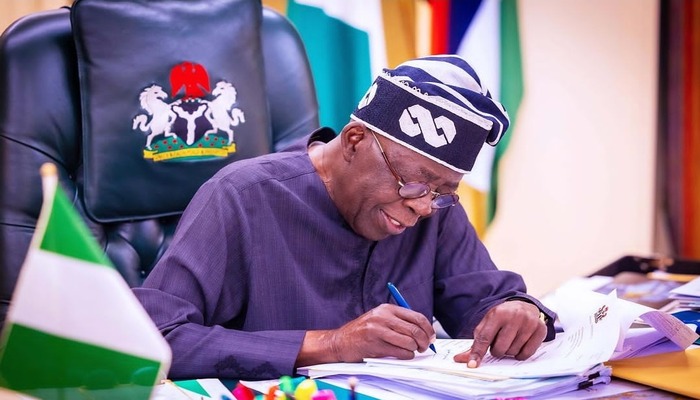
The passage of the revised version of the 2018 to 2020 Medium Term Expenditure Framework (MTEF) and Fiscal Strategy Paper (FSP) is hanging in the balance following last Thursday 1.8mbpd crude production cap approved by Organization of Petroleum Exporting Countries (OPEC). Consideration of the MTEF/FSP, which provides the parameters upon which the national budget is prepared, was deferred by the Senate and House of Representatives till this week, to reflect the outcome of the OPEC meeting on daily crude oil production for Nigeria, Libya and other member states.
At the meeting of OPEC and non-OPEC members held in Vienna, Austria, last week, Nigeria was told by the oil cartel not to produce above 1.8 million barrels per day (1.8mbpd) of crude oil.
Nigeria presently produces about 1.75mbpd of crude oil. The country was allowed to extend its oil-production cuts to the end of 2018 but would be subject to a review at the next scheduled meeting in June. Ibe Kachikwu, Minister of State for Petroleum Resources, who spoke after the Vienna meeting, expressed optimism that the OPEC resolution which extended by another nine months its 2017 output cut agreement, will not affect the Nigerian government’s revenue projections in the 2018 budget.
READ ALSO: Reps to consider a report on 2021-2023 MTEF today
However, members of Parliament who spoke with BusinessDay on Monday yesterday and analysts observed that the 1.8mbpd production cap may trigger a review of the fundamentals in the 2018 budget, as it fell short of the proposed oil output benchmark by about 27.8 per cent.
Senate spokesperson, Aliyu Sabi Abdullahi, in a chat with BusinessDay, also ruled out passage of MTEF/FSP by Tuesday as earlier announced by both chambers of the National Assembly.
Abdullahi who is also a member of the Appropriations Committee pointed out that the committee is yet to meet to agree on benchmark, but would meet during the week on a workable benchmark and present its report.

“The Joint Committee is yet to meet to arrive at the oil benchmark. The OPEC meeting took place after Senate plenary on Thursday. So we will meet to arrive at a benchmark this week. But at the moment, we are yet to meet,” he said. On his part, Chris Azubogu, deputy Chairman, House Committee on Finance in a telephone chat with BusinessDay expressed the need for Ibe Kachikwu, Minister of State for Petroleum Resources who led Nigeria’s delegation to the OPEC meeting to clarify issues relating to the conflicting reports in the public space.
While noting that the Minister made a robust presence at the OPEC, Azubogu harped on the need to get further clarification that will help the Parliament in consideration of the MTEF/FSP as well as the 2018 budget.
READ ALSO: NASS convenes emergency sitting to discuss revised MTEF, 2020 budget
However, aligning with the Minister’s position, Jide Olatunbosun, member of the House Committee on Appropriation, the documents presented by Nigerian National Petroleum Corporation (NNPC) to the joint Committees on Finance, Appropriation and Aids, Loans and Debt showed 15 percent increase in crude production between October and November 2017.
Olatunbosun (APC-Oyo) expressed optimism that, with the 2mbpd latest production level, as well as the estimated 400,000pd condensate crude, the projected revenue for the country in the 2018 fiscal year is realistic. To this end, he expressed optimism that the House and indeed the Senate will pass the MTEF/FSP with the projected parameters.
This oil cap is aimed at stabilising the price of the commodity at the global market.
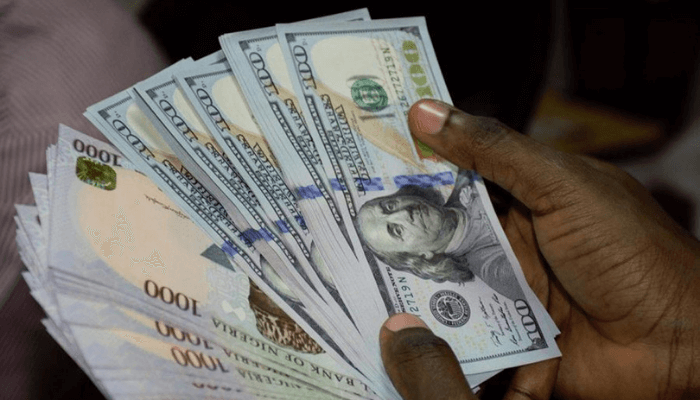
The country plans a budget of N8,612,236,953,214 for 2018 with a projected oil revenue of N2.442 trillion and non-oil projection of N4.165 trillion.
In the 2018 budget, Nigeria pegged the oil production at 2.3mbpd, the oil benchmark price of $45 per barrel, exchange rate at N305/$1, GDP Growth Rate of 3.5 per cent, inflation rate of 12.42 per cent, N113.09 trillion nominal GDP and N83.69 trillion Nominal Consumption.
But with the daily oil production cap for Nigeria, the two chambers of the National Assembly are expected to reduce the proposed daily oil production in MTEF and increase oil benchmark price from $45 per barrel.

KEHINDE AKINTOLA & OWEDE AGBAJILEKE, Abuja