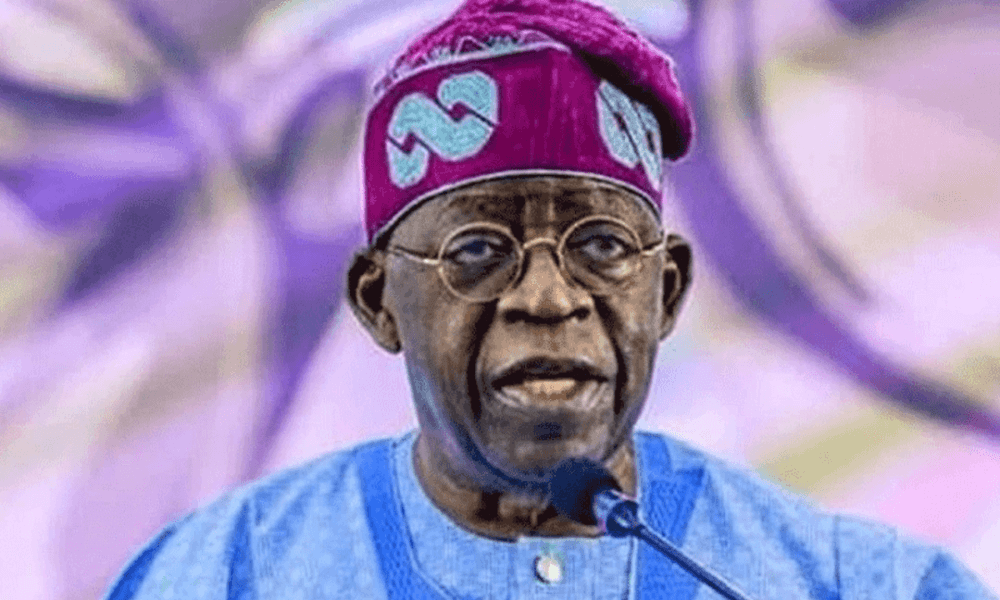
President Bola Tinubu has declared that his administration has implemented bold and difficult reforms that have dismantled longstanding distortions in Nigeria’s economy and restored policy credibility.
The President stated this his presentation to his Ministers at the Wednesday’s cabinet meeting.
The reforms which were started on his assumption of office, include the removal of fuel subsidy and removal of dual exchange rate policy, which the administration said has led to stability in the economy
The President also thanked members of the Federal Executive Council, for their ” unwavering commitment, resilience, and hard work in supporting this administration’s reform agenda”

According to the President, these reforms have amongst others hanced our economic resilience, restored macroeconomic stability, created a transparent and competitive business environment, and bolstered investor confidence
“As a result, our economy is now better positioned to attract both domestic and foreign private investment-investment that is critical to stimulating sustained growth, creating decent jobs, and lifting millions of Nigerians out of poverty”
The President also declared that the renewed Hope Agenda targets $1 Trillion Economy by 2030
The President said the country ” must now accelerate our efforts to achieve a minimum growth rate of 7.0% by 2027.
Read also: Tinubu appoints Odion, Rabiu, as Executive Commissioners in FCCPC

“This is not just an economic target it is a moral imperative. Stimulating higher growth is the only sustainable path to solving the poverty challenge in Nigeria.
The President, noted that “recent IMF Article IV Report published in July 2025, also affirms this trajectory and underscores the importance of investment-led growth”
He listed other plans to include the Renewed Hope Ward Development Programme, which he said is an inclusive development,
He stated that the recently launched Renewed Hope Ward Development Programme-a ward-based initiative covering all 8,809 wards across the 774 local government areas in Nigeria, remains “close to my heart. It is designed to empower active grassroots economic players, using a micro-level approach to tackle poverty. We aim to bring sub-national governments and private sector partners on board to ensure efficient and impactful implementation.”
The programme which is being implemented with National Economic Council, is prioritizing productivity-enhancing investments, strengthening food security, and deepening collaboration with local governments.
He stated that the efforts are essential to fully addressing the poverty challenge and ensuring that no Nigerian is left behind.
The President while also emphasizing the critical role of savings in catalyzing investment and growth, noted that “Currently, public investment as a share of GDP stands at a low 5.0%, largely due to insufficient public savings.”
The President called on the Ministries, Departments and Agencies to enhance spending efficiency, review deductions from the Federation Account such as the cost of collection by revenue agencies such as FIRS, Customs, NUPRIC and NIMASA etc.
“There is also the need to reassess the 30% management fee and the 30% frontier exploration deduction by NNPC based on the Petroleum Industry Act
“We must optimize every available Naira to sustain our momentum and finance our growth trajectory-especially in a time of global liquidity constraints.
“I am directing the Economic Management Team, chaired by the Minister of Finance and Coordinating Minister of the Economy, to Conduct a comprehensive review of all deductions and revenue retention practices, and Present actionable recommendations to this Council for an optimal way forward.”