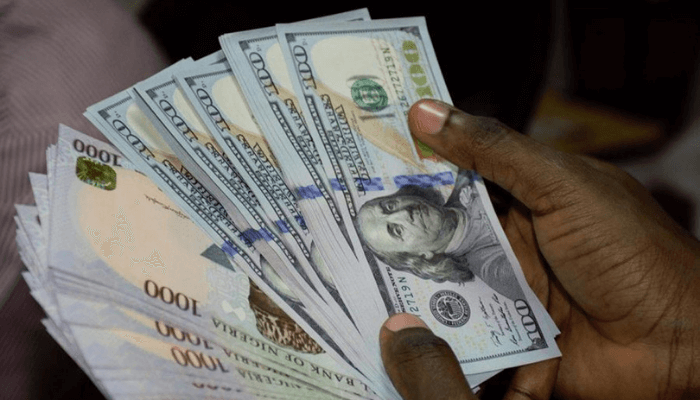
Experts are fretting that Nigeria’s borrowing may stifle credit to the private sector, as mouth-watering yields on the sovereign’s Treasury Bills make it difficult for lenders to turn a blind eye, BusinessDay reports.
“If government is borrowing at 22 percent, the private sector stands a lesser chance of securing loans from commercial banks because they would be required to pay a risk premium well above 22 percent and this may signal a crowding out,” says Kyari Bukar, chairman of private sector think-thank, the Nigeria Economic Summit Group (NESG).
Bismarck Rewane, an economist and chief executive officer of advisory firm, Financial Derivatives Company Limited, noted that “Banks were borrowing from the CBN at 14 percent per annum and lending to the Federal Government at 17 percent per annum,” in a recent presentation at the Lagos Business School (LBS).
“Record rates at T/bill auction of 18.5% (364-day) is also crowding out equities and PFAs are scrambling for T/Bills,” Rewane said.
The “crowding out effect” is an economic theory stipulating that a rise in public sector spending eliminates private sector spending.
The implication of crowding out the private sector may plunge the economy in a deeper mess and may render more Nigerians in the 180 million country jobless, analysts say.
Traders who spoke to BusinessDay, say the Treasury bills market has been quiet this week, prior to last week Friday which saw rates touch 14 year highs, as yields cooled on rising demand, prompting investors to draw back in anticipation of new developments.
“Investors are awaiting next week Wednesday’s primary auction to rake in higher gains than current levels of 19.7 percent yield at the secondary market,” a trader said.
Nigeria sold a one year tenor treasury bill of N120 billion at a yield of 22.6 percent at the primary market on Friday, last week, the highest since April 2002, as deduced from the FMDQ website.
“With the FGN offering yields in the 20s, it serves as a disincentive for banks to generate risk assets and as such it is inevitable that risk assets will shrink,” said Chinwe Egwim, a fixed income analyst at FBN Quest, in an emailed respose to questions.
“We know government revenues have plunged and they may be left with not many options, hence the reason they are borrowing,” Egwim added.
Nigeria’s Treasury Bill auction calendar was released on Tuesday, and the Debt Management Office (DMO) will be looking to raise N110 billion in August, 8.3 percent lesser than July’s N120 billion.
Analysts at FSDH research group, in a July 28 note to investors, recommended staggered investments between Treasury Bills and long dated FGN Bonds in order to minimise the impact of reinvestment risk.
Government revenues have tumbled by more than half in the first half of the year, as crude prices plummet and as production shrinks.
“The reduced revenue is responsible for increased issuance on the FGN bond market. In the T-Bill market, there’s been quite a bit of additional issues (beyond the bi-weekly auctions) which take out liquidity from the interbank market,” Egwim says.
However, there may be ways to ensure government borrowing doesn’t hurt the private sector.
“Historically, the CBN has set up specific funds targeted at key areas of the economy for the private sector to access on a subsidised basis.
Beyond that, the CBN can in theory set minimum risk asset limits or perhaps incentives for banks to lend to the private sector but this has some potentially negative implications,” Egwim concluded.
Olutola Mobolurin, chairman of stockbroking and financial advisory firm, Capital Bancorp plc, suggests “Government needs to diversify its borrowing away from naira assets because I think it is important that the productive sector of the economy are able to access loans at reasonable rates,” Mobolurin said in response to questions.
“We now meet most of the conditionality for a World Bank or IMF loan, (Fx market liberalisation and the fuel price modulation), we can consider this. It would help ease the burden of a crowding out effect on the private sector,” he added.
Mobolurin further said a development loan from both entities would boost the supply of dollars in the interbank market and may see government borrow less on the back of devaluation gains.
To jump-start business activities, Bukar also said the borrowings should be re-injected in the economy which is in its worst crisis in 12 years.
“Government may also need to cut down taxes to incentive investment. Now, you may think slashing taxes mean less inflows, but on the contrary, low taxes will improve the profit margins of companies and may shore up tax payments, so government may even earn more as a result,” Bukar added.
LOLADE AKINMURELE