For millions of Nigerians who power generators on petrol, fill diesel tanks to keep factories running, or budget carefully for the fuel that runs a small business, the message from the pump has become increasingly difficult to ignore.
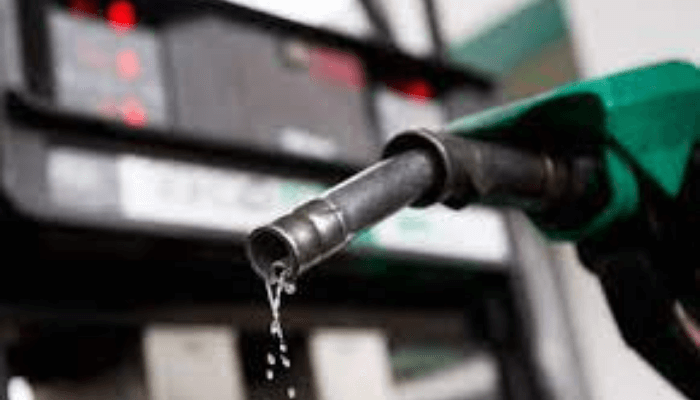
Petrol prices in Nigeria climbed to over N1000 per liter in March, up sharply from N835 per litre just a month earlier in January 2026, a jolt that, for many, has accelerated a quiet but profound shift toward solar energy.
The spike is not occurring in isolation. Nigerian crude prices have crossed $80 per barrel, their highest level since mid-2024, driven by geopolitical tensions in the Middle East, and the surge is already filtering through to domestic energy costs at the pump.
That pain, analysts say, is precisely what is driving one of Africa’s most dramatic solar adoption stories.

Nigeria installed 803 megawatts of new solar capacity in 2025, a year-on-year increase of 141 percent, making it Africa’s second-largest solar market behind South Africa. The growth was driven largely by rapid expansion in distributed solar systems, high energy prices, and the rollout of the DARES programme.
Read also: Nigeria’s petrol consumption falls to 56.9m litres/day in February – NMDPRA
The numbers underscore a structural shift. Nigeria’s cumulative solar capacity rose from around 385 MW in 2024 to nearly 1.19 GW in 2025, with off-grid installations, private mini-grids, solar home systems, and commercial rooftop systems accounting for roughly 96 percent of the total. Battery storage capacity expanded even faster, rising approximately 305 percent in a single year.
The economics are becoming hard to dismiss. Commercial and industrial consumers who have adopted on-site renewables are achieving energy cost savings of 20 to 30 percent compared with diesel self-generation, with power purchase agreements locking in tariffs below $0.15 per kilowatt-hour over 20-year periods.
For households and small enterprises still running petrol generators, a near-universal feature of Nigerian life given chronic grid failures, the calculus is shifting.

Nigeria imported solar panels worth N242.68 billion in the first half of 2025 alone, a 17 percent increase over the same period in 2024, with China supplying more than 71 percent of those imports. The surge reflects grassroots demand for energy independence rather than top-down policy design.
Policy is catching up, however. The government’s $750 million World Bank-funded DARES initiative aims to expand electricity access to 17 million Nigerians through distributed renewable energy, with the Rural Electrification Agency already deploying over one million solar home systems.
Investors are paying attention. Nigeria’s renewable energy market, valued at 3.59 gigawatts in 2025, is projected to reach 14.07 gigawatts by 2031, a compound annual growth rate of more than 25 percent.
Read also: Dangote refinery: A ballast or recourse?
Still, obstacles remain. Foreign exchange volatility continues to make imported solar equipment expensive, and most of the country’s solar capacity is still off-grid and fragmented rather than integrated into a coherent national energy strategy. The industry remains nascent: in 2024, grid-connected solar operators contributed just 0.2% of total electricity generation.
But with petrol prices rising, global crude markets volatile, and the naira under persistent pressure, the structural arguments for solar are accumulating faster than the obstacles.
For a country where the fuel generator has long been an emblem of survival against a failing grid, the solar panel is becoming something else: an emblem of escape.
Africa added 54 percent more solar capacity in 2025 than in 2024, the highest annual deployment the continent has ever recorded.
Nigeria, once an afterthought in that story, is now one of its central characters, pushed there, in no small part, by the relentless rise of prices at the pump.