Strong interest in Nigeria’s retail market from investors in and outside Sub-Saharan Africa has given tonic to growth, leading to its ranking as the second fastest growing among Africa’s five major retail economies including Egypt, South Africa, Ghana and Angola, a half year (H1) report on the Nigerian real estate market has revealed.
The report, compiled by NorthCourt Real Estate Limited, notes that the market will be growing in size by 130 percent to 382,550 square metres by 2016, up from 165,650 square metres in the first half of 2015, placing it second, by growth rate, to Angola which has a projected growth rate of 300 percent to 200,000 square metres by 2016, up from 50,000 square metres in 2015.
In Egypt, the market will be grow at the rate of 75 percent to 2,100,000 square metres by 2016, up from 1,200,000 square metres in the first half of 2015; the South African market will grow at 33 percent to 1,000,000 square metres by 2016, up from 750,000 while Ghana will rise 48 percent to 132,277 square metres by 2016, up from 89,277 square metres at first half of 2015.
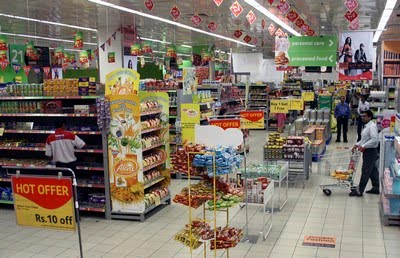
The Nigerian retail market, despite occasional challenges in the entire industry, has been a growth phenomenon, such that in the past 12 months alone, the market has received four standard malls, including the Port Harcourt Mall, Ado Bayero Mall, Ibadan Mall and Delta Mall, which have opened for business and are providing what is regarded as the first formal retail space in most of these regions.

Tayo Odunsi, the CEO/Director, Real Estate Advisory at Northcourt Real Estate Limited, explained to BusinessDay that this growth was driven by the strong interest which the market is receiving from investors inside and outside Sub-Saharan Africa.
The interest, he explained further, is fuelled by Nigeria’s compelling fundamentals, including very strong demographics, growing sophistication of the country’s emerging middle class, who desire a modern and formal shopping experience and rising disposable income, among other factors.
Gbenga Olaniyan, CEO Estatelinks Limited, agrees. Olaniyan observes that another major driver of this growth is the fact that Nigeria is a trading economy and that oftentimes, people take spaces in these malls only in anticipation of foot falls which those malls will be seeing by virtue of their tenant mix and build quality.
“The interesting thing is that the retail sector is booming, but I will tell you this, we are a trading economy and there is a new fad for structured malls where you know that once there is a mall and you put a Shoprite, a Game or a SPARR, people will go there”, he added.
Odunsi noted in his company’s half year (HI) report on Nigerian real estate market that the outlook for the market was bright and that on-going developments in retail space was significantly rich across the nation, disclosing that over 220,000 square metres of gross lettable space was expected to come on the market within the foreseeable future.

“Yet more developments are expected across Nigeria as the current offering for retail is still much lower than smaller African economies. Momentum is expected to conclude capital raising for a $250 million Sub Saharan Africa fund that is targeted at retail and office property developments”, he assured.
On the rental side, he said high figures in Lagos might top out as new shopping centres were delivered, hoping that current rates might be sustained as international brands come into the country, while indigenous brands such as Twice as Nice, Ruff n Tumble, Healthplus and Fusion got stronger.
CHUKA UROKO