MSCI Inc. has decided to keep Nigeria in its frontier-market index for now but freeze all the changes to the country’s stocks in the upcoming index review, an acknowledgment of Nigeria’s deteriorating foreign-exchange market.
At the height of emerging-market selloff, a number of developing countries imposed various capital restrictions in order to stem the outflow of money and reduce the downward pressure on their currencies. These extraordinary measures seem to have worked, helping arrest the capital outflows and spur a rebound in emerging markets of late.
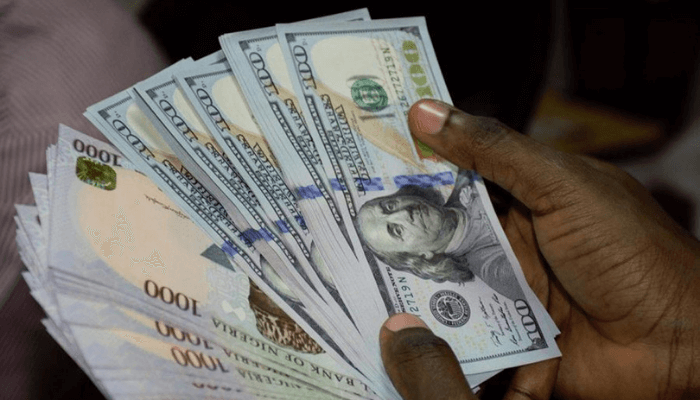
Nigeria, the largest economy in Africa, has banned imports of dozens of goods and curbed the access to foreign exchange. These controls have caused a logjam for foreign investors to sell stocks in Nigeria, raising concerns over the market accessibility. Last month, MSCI issued a notice warning against a possible exclusion of Nigeria from its frontier-market index, tracked by $12 billion of assets.
In a statement issued on Friday, MSCI said it will apply “a special treatment” for Nigeria in its upcoming May index review by not implementing changes “for any securities classified in Nigeria in the MSCI Nigeria indexes or composite indexes which Nigeria is a component of.” The index provider is concerned any index-related transactions will further deteriorate the liquidity in Nigeria’s market.

While Nigeria will remain its frontier market status, MSCI will continue to monitor the development. If the market access deteriorates, it may downgrade Nigeria to a standalone market.
“We have concerns because there could be problems with accessibility of this market for foreign investors,” said Pavlo Taranenko, a member of MSCI’s index research team.
Nigeria’s benchmark stock index rose 0.4% Monday, recouping some of the losses since MSCI’s initial announcement. But capital controls already cost Nigeria dearly. When it was removed from the bond indices by J.P. Morgan Chase & Co. and Barclays plc last year, bondholders sold billions of dollars of assets. If Nigeria did get the boot from MSCI, it will lead to a potential selling of $480 million of Nigerian equities, according to Renaissance Capital.
Nigeria’s plight underscores how these quick-fix capital restrictions aimed to slow capital outflows and prop up currencies could backfire by exacerbating the problem by driving away long-term foreign investors.
MSCI has yet to officially propose an elimination of Nigeria from the frontier index, as the capital controls are still considered temporary. “When we decide to remove a country from a composite index, usually it’s a long-term decision and there has to be some forms of irreversible changes,” Mr. Taranenko said. In 1998, Malaysia was removed from the MSCI indices after the government prohibited foreign investors from selling its stocks for a year. Ukraine got the boot in 2015 from the MSCI due to its capital controls.

Still, many investors have already been in retreat. “What’s concerning some investors is that there’s no real timeline: It could take up to months to get your money out of the country,” said Hedi Ben Mlouka, a portfolio manager of the Duet EM Frontier Fund, which has no exposure to Nigeria partly due to the currency controls. “When investors see that, they don’t want to put too much money in it. Ultimately, you end up having less foreign direct investments.”
“This is unfortunate as we maintain there’s much to like in Nigeria,” said Charles Robertson, global chief economist at Renaissance. “It will be a major blow to Sub-Saharan Africa as an investment destination. There’s a lot of hope placed on that market because of the size of the economy, the depth of the economy and the consumer story,” he added.
Growing at an average pace of 5.8% during the past decade, Nigeria has overtaken South Africa in 2014 to be the largest economy in the continent. Many global investors have high hopes for the populated African nation as its banking, agriculture and education sectors continue to boom.
But the oil shock has upended the rosy picture. Nigeria’s exports tumbled 30% in the last quarter of 2015 due to falling oil prices, heaping pressure on the value of its currency, the naira. Unlike many oil exporters such as Russia and Malaysia that let their currencies weaken to absorb the oil price shock, Nigeria’s central bank chose to keep the naira pegged at 200 per dollar in the official market in order to rein in inflation.
A weaker currency tends to fuel inflation as it makes import prices more expensive in local-currency terms. As a result, the Nigerian government has imposed various restrictions on foreign-exchange access, blocking the use of credit and debit cards abroad and halting imports of a long list of goods. Foreign investors who want to exit the market have to queue up at a monthly auction held by the central bank.
“Everyone who was able to sell Nigeria and wanted to get out has already done so, and people who are unable to sell are just hanging on,” said Alan Cameron, an economist at Exotix Partners, a frontier-market investment firm.