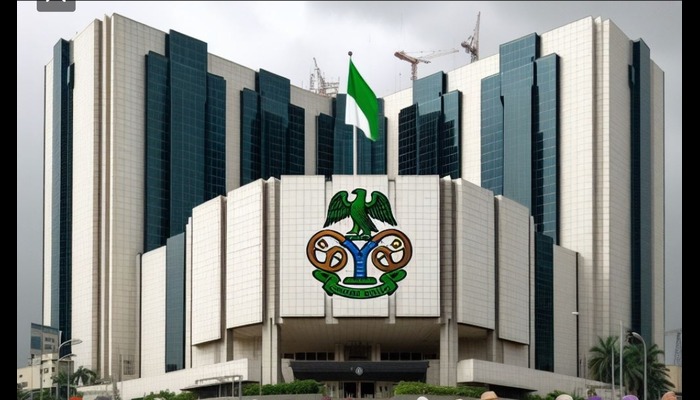
Inflation is expected to drop further in the coming months, as the Central Bank of Nigeria (CBN) sustains investor confidence by holding its benchmark interest rate steady. This follows three consecutive months of disinflation, underpinned by tight monetary policy measures and growing macroeconomic stability.
The CBN has largely maintained a hawkish stance since May 2022, raising interest rates to combat elevated inflation levels. In a continuation of that approach, the apex bank retained its Monetary Policy Rate (MPR) at 27.5 percent during its 301st Monetary Policy Committee (MPC) meeting held on July 21 and 22, 2025. The decision marks the fourth consecutive time the rate has been held at that level since it was raised in September 2024.
Announcing the outcome of the meeting, Olayemi Cardoso, governor of the CBN said the Committee unanimously voted to maintain the current monetary policy stance and hold all parameters constant to sustain the disinflation momentum and contain lingering price pressures. “Maintaining the current policy stance will continue to address the existing and emerging inflationary pressure,” he said.
Read also: One-year T-bill yield slips to 18.86% despite CBN rate hold

The MPC retained the MPR at 27.50 percent, kept the asymmetric corridor around the MPR at +500/-100 basis points, maintained the Cash Reserve Ratio (CRR) at 50.00 percent for Deposit Money Banks and 16.00 percent for Merchant Banks, and held the Liquidity Ratio unchanged at 30.00 percent.
Headline inflation (year-on-year) eased to 22.22 percent in June 2025 from 22.97 percent in May, according to data from the National Bureau of Statistics (NBS). This moderation was driven largely by a decline in energy prices, particularly cooking gas, diesel, and wood charcoal. However, food inflation increased to 21.97 percent from 21.14 percent due to the rising cost of processed food. Core inflation also ticked up to 22.76 percent in June from 22.28 percent in May, reflecting higher prices in sectors such as Information and Communication, Housing and Utilities, and Personal Care services.
Nonetheless, the CBN remains optimistic about the inflation outlook. Staff projections indicate that inflation is likely to fall further, supported by the continued tight monetary policy, a stable exchange rate, declining pump prices of petrol, and the anticipated moderation in food prices with the onset of the harvest season.
“The Committee remains committed to the Bank’s price stability mandate and would take appropriate measures to foster stability and confidence in the economy,” Cardoso said. He added that the MPC would continue to rigorously assess economic and price developments to guide its policy decisions.
Analysts Reaction

Analysts have largely supported the CBN’s cautious approach. Comercio Partners noted that under governor Cardoso’s leadership, the Central Bank has embarked on aggressive rate hikes, with inflation projected to drop to 20 percent by year-end. They observed that exchange rate reforms have contributed to naira stability, trading between N1,400 and N1,600 to the US dollar, while foreign portfolio inflows have surged by 106.5 percent to $13.35 billion. However, they warned that underlying fragility remains, citing a 42.3 percent drop in foreign direct investment (FDI) to $1.08 billion, persistent external risks such as Middle East tensions, and domestic vulnerabilities like flooding.
Nnamdi Nwizu, CEO of Comercio Partners Trading, pointed out that recent reforms by the Federal Government appear to be yielding results. “The naira has appreciated by about 8 percent against the US dollar despite a $3.5 billion decline in external reserves to $37.3 billion, following the CBN’s clearance of FX backlogs,” he said. He added that foreign investors are returning, with increased participation in Nigerian Treasury Bills and Bonds. “Inflation is also trending downwards, with yields on government securities falling by roughly 300 basis points this year,” he said.
FBNQuest analysts believe the MPC’s decision was also influenced by the need to support exchange rate stability. They warned that an early rate cut could reduce the yield advantage of domestic assets, potentially triggering capital outflows and renewed pressure on the naira. “By holding rates steady, the committee will likely preserve investor confidence and sustain the relative stability observed in the foreign exchange market,” they said.
They also noted that globally, the MPC took into account the uncertainty arising from the United States’ reciprocal tariffs scheduled to take effect from August 1, 2025. These tariffs could disrupt global supply chains and slow down growth. In addition, the reemergence of inflationary pressures has prompted more caution among central banks in advanced economies.
Domestically, the committee observed positive developments, including improvements in macroeconomic indicators, a stable FX market, declining energy prices, and food cost moderation. It also noted the resilience of the financial system, evidenced by strong financial indicators, while urging banks to maintain regulatory compliance. Nonetheless, they cautioned that prolonged tight monetary conditions could weigh on Nigeria’s growth trajectory, as high interest rates may discourage borrowing and investment.
Read also: Interest rates now firms’ biggest constraint, CBN survey shows
“The Committee faces the delicate task of balancing inflation control with the need to support economic growth,” FBNQuest said, adding that financial markets are likely to react with neutrality to the latest policy stance.
Razia Khan, managing director and Chief Economist for Africa and the Middle East at Standard Chartered Bank, said the MPC’s decision to keep rates unchanged was expected given the mixed inflation signals. “Despite headline inflation decelerating for three straight months, m/m inflation and elevated food and core inflation made the decision unsurprising,” she said.
She noted that if naira stability persists and food prices decline post-harvest, prospects for policy easing could improve by September. However, she stressed that the CBN would proceed with caution. “The clear message is that the CBN will not sacrifice FX stability for a quicker drop in local currency borrowing costs. Their ultimate goal remains single-digit inflation eventually,” she said.
In response to the MPC’s decision, the Nigeria Employers’ Consultative Association (NECA) applauded the CBN’s resolve to sustain a tight policy stance. The association described the move as a necessary step to consolidate recent economic gains and safeguard long-term macroeconomic stability.