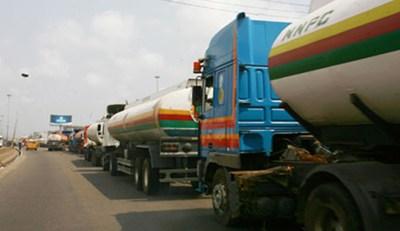
The alleged involvement of some of Nigerian oil companies in illegal oil lifting or oil theft is said to be responsible their ban by the Nigerian National Petroleum Corporation (NNPC).
According some industry sources, some of the local owners of the tankers, after fighting to be made to participate in crude oil lifting under the local content policy, decided to help themselves by engaging in illegal oil deals.
Some of them are also said to have been fingered to be close to some government officials in the past administration, who prevailed on the tank owners to do some dirty deals on their behalf to the detriment of the finances of the nation.
President Mahammadu Buhari had alledged that “250,000 barrels per day of Nigerian crude are being stolen and people sell and put the money into individual accounts.’’

He said the United States and other developed countries were helping to trace such accounts, saying “we will ask that such accounts be frozen and prosecute the persons. The amount involved is mind-boggling.”
Some former ministers, he said, were selling about 1 million barrels per day, and assured that his government will trace and repatriate such money and use the documents to prosecute them.
The oil and gas industry sources have however debunked the reports making the rounds that on account of the steps taking by NNPC, some individual are alleging that the government may repeal the local content bill. They say that the fact that there is Local Content Law is not a liberty for any company to carry out illicit activity in the country.
Eddy Wikina, former general manager, external relations, Shell Nigeria Exploration and Production (SNEPCO), said if the local tankers were found to have been involved in the illegal oil deals they should be banned.
If they are not found to be involved then the government has gone against both the local content and Cabotage law, which state Nigerians must own tankers for such businesses, he said.

“The fact that there is local content and Cabotage law does not prevent Nigerians from doing the right thing. So, if they go against the law of the land they should be dealt with accordingly,” he said, saying we must support the government to sort out the issue of oil theft, which has taken the centrestage of the Nigerian oil and gas industry in the last few years.
Another source, who does not want his name mentioned, said “the government’s action may have been informed by the fact that it wants to sanitse this aspect of the oil and gas industry, which has given the country negative headlines across the globe because of activities of oil thieves.”
But industry association, INTERTANKO, whose independent members own the majority of the world’s tanker fleet, had said in a letter to NNPC, that “there were no “evidence or grounds” given for the ban other than it understanding that these ships may have been targeted due to a failure to provide official out-turn figures at their last call and/or commercial differences between load and discharge figures for cargo and free water.”
Olusola Bello