The prospect of readily available grass to feed cows across the country has the potential to curb recurring violent clashes in different parts of the country between farmers and herdsmen. It will also see the value of cattle improve as better feed implies improved beef and milk quality.
“That is the only thing we need in Nigeria if we want to improve cattle, dairy and beef production in Nigeria,” said Ayoka Adebambo, a professor of animal breeding and genetics, at the Federal University of Agriculture, Abeokuta, in a phone interview with BusinessDay.
“We have the land required and instead of going to places like Brazil to import grasses, many places in the north can be used to produce adequate high quality grass,” Adebambo explained.
Soji Apampa, CEO, the Convention on Business Integrity, explained that his organisation has introduced cultivation of Napier grass in the Laduga grazing reserve in Kaduna state, where cattle owners are reporting significant improvements in their livestock.

The Laduga reserve according to the National Commission for Nomadic Education (NCNE) has a size of 88,411 hectares, and was officially gazzetted in 1996 by the Kaduna State Government. The Grazing Reserve is divided into six blocks for settlement of nomads with transhumant corridor for temporary settlement.
Apampa told BusinessDay that before introduction of the grass in the grazing reserve, milk production hovered around 1 litre (and usually less) per cow, but within weeks of feeding, cows could produce as much as 3 litres of milk in a day.
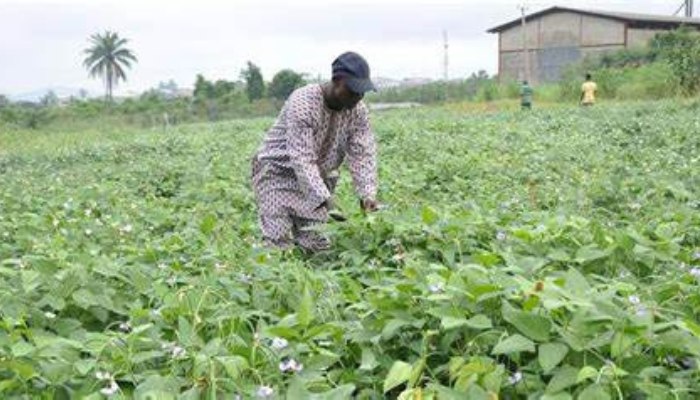
He also explained that the business of grass production is gradually gaining traction as rural dwellers around the reserve sold N6 million worth of Napier seedlings. This, he said can improve if deliberate efforts are made to encourage increase in production, and making it a structured business so as to attract the right investments.
Napier grass, also known as “elephant grass”, “Sudan grass” or “king grass”, is a fodder grass that produces a lot of high-protein forage. It is not entirely new in Nigeria, but now holds prospects of a profitable industry that could as well end years of violent conflicts between farmers and herdsmen.
The grass is suited to high rainfall areas, but is drought-tolerant and can also grow well in drier areas.

For a cow to produce well, it needs feed of about 15 kg a day. Impliedly, Nigeria’s estimated 19 million heads of cattle will require about 285,000 metric tonnes of feed in a day. As many nomadic herdsmen may be unable to produce the grass required to feed their cattle, this opens an opportunity to grow grass in commercial quantity to meet the needs of this market, and improve cattle quality in the country.
Chryss Onwuka, a professor of ruminant animal nutrition and president of the Nigerian Society for Animal Production, in a previous interview with BusinessDay, had said “In their [nomadic herdsmen] tradition, once their fields start thinning out and water becomes less available, they start moving towards regions where there is enough food and water.
“And all these tell on their [cattle’s] energy, which in turn reflects on their weight; bringing about weight losses that they had hoped to gain by moving. The little potential they have for weight gain is lost in the course of transiting from one place to another. If they were sedentary, then their restricted movement would have translated into weight gain,” Onwuka said
A report by Mercy Corps, which is sponsored by British Department for International Development (DFID), stated that the farmers-herdsmen conflict in Nigeria has lasted for more than a decade with no gaze on a lasting solution. The conflict has further worsened the prevailing insecurity in the nation, contributing immensely to poverty and food insecurity even in regions, such as Benue, Kaduna, Nasarawa, Plateau and Taraba state purported as the food basket of the country.
Since 2006, more than 1,400 people, including farmers, herdsmen, and locals from the host communities, have been killed as a result of the clashes related to cattle grazing (including more than 70 farmers recently killed in Benue – January 2018), and over 100,000 casualties in form of farms, houses and other valuables, have been recorded over the years with property worth $14 billion lost between 2013 – 2016 only.
Resolving these conflicts by providing an alternative to sourcing feed will eliminate the economic loss that comes with it, while also improving on the quality of cattle in the country. The increase in cattle productivity as experts have observed, will not only be for beef production but also dairy production where Nigeria currently lags global averages. At one litre of milk per day from a cow, Nigeria is far behind other countries where 40 litres can be achieved.