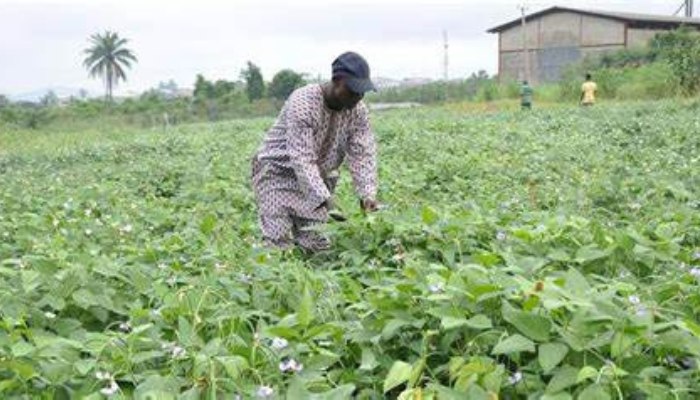
In line with the Federal Government efforts to make agriculture attractive to youths and drive their involvement, Farm to School Africa has trained a total 1, 800 students across five secondary schools in Akure, Ondo state.
The Farm to School Africa is an initiative of Springboard Nigeria, which was setup to help build the interest of young people in agriculture through training and establishment of farms in schools, thereby creating and nurturing interest in sustainable farming.
The students were trained in various aspects of agriculture such as poultry, seeds and seedling multiplication and crop production.
“The Farm to School program is to help build the interest of young people in agriculture to want to study it in the university and take it up as a career after graduation,” Lawrence Alaba Afere, founder and CEO of Springboard Nigeria, said during the launch of the project at Oyemekun Grammar School, Akure, Ondo state.

“A lot of young people do not want to take up agriculture as a profession because they do not understand the business aspect of agriculture.
“So the Farm to School initiative is catching them young at the secondary school level and training them on agriculture as a business,” Afere said.
He stated that the initiative is being sponsored by the Mitsubishi Corporation Fund for Europe and Africa and that the organisation is working in partnership with the Ondo state ministry of agriculture and education on the program.
Afere noted that with the support of the state ministry of agriculture and rural development, agricultural science teachers in the schools are trained by extension officers to serve as trainers within the schools for students.
“By this we are building a sustainable network of agric educators,” he said.

He added that the initiative will be replicated in other schools across the state.
Also speaking with BusinessDay during the launch, Jemimah Ibitokun, project coordinator, Farm to School Africa, said that with the training and the involvement of the students in the entire process of farming, their interest in agriculture will increase.
“If we monitor them well and closely we would have about 70 percent of them applying to study agriculture in the university not because it was the course giving to them by the school,” Ibitokun said.
Steven Temitope Ojo, prinicipal, Oyemekun Grammar School, said that the program would help the country and Ondo state in particular address the issue of unemployment, as the students have seen how profitable farming can be, saying that it will encourage many of them take it up as a career instead of searching for jobs.
“The program will equip the students for the future as they would be trained on various aspect of agriculture which they can take up as a profession after their university education,” Ojo said.
Josephine Okojie