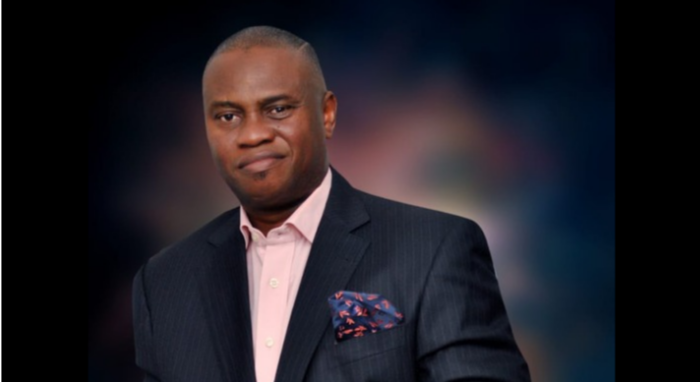
In the heart of Nigeria’s booming music scene lies an often overlooked truth — while the creativity is world-class, the business infrastructure is still playing catch-up. According to Michael Odiong, CEO of Premier Records Limited and Premier Music Publishing Company Limited, the missing links are clear: data, structure, and policy.
Odiong, who also serves as acting chairman, Music Publishers Association of Nigeria (MPAN), board member at ReLPI (Rights and Licensing Professionals Initiative), and co-founder of the Africa Music Business Roundtable (AMBRA), is one of the leading voices advocating for a more organised and equitable Nigerian music industry. In an exclusive conversation, he offers a clear diagnosis — and a roadmap for the future.
The current landscape: Talent without infrastructure
Nigeria’s music exports are making waves globally, with artists like Burna Boy, Tems, Wizkid, and Davido commanding international stages. But behind the glamour lies a fragmented industry where rights management, royalty collection, and licensing remain major challenges.

“There is no doubt that Nigeria has some of the most talented artists in the world,” says Odiong. “But without proper business infrastructure — data to track usage, structures to manage rights, and policies to enforce standards — creators often do not get what they truly deserve.”
The importance of data
Odiong stresses that data is the foundation of any modern music economy. In an age of digital streaming, real-time performance tracking, and global consumption, data helps determine who should get paid, how much, and when.
“Imagine your song being played in multiple countries or used in a film, and you have no way of tracking that usage,” he says. “That is the reality many Nigerian creators face. Without accurate data, royalties go uncollected or misallocated.”
Organisations like MPAN are working to bridge this gap by pushing for better metadata management, standardized reporting from digital platforms, and stronger partnerships with collection societies, both locally and internationally.

Building the structure
The second pillar, structure, refers to the organisational and legal frameworks that support the industry.
“In Nigeria, many musicians do not understand publishing, synchronization, or mechanical rights. Worse still, some of the institutions that should help manage these rights are either underfunded, undertrained, or outdated,” Odiong notes.
Through Premier Music Publishing Company Limited, he is working to change that narrative. The company is setting the tone for professional music publishing in Nigeria — advocating for proper contracts, transparent royalty splits, and licensing agreements that benefit both creators and rights holders.
On the other hand, the Africa Music Business Roundtable (AMBRA), complements these efforts by connecting stakeholders across the continent, allowing for knowledge-sharing and the development of shared standards. “If we can create a unified music business language across Africa, it becomes easier to license, distribute, and monetize content fairly,” he says.
Policy: The backbone of reform
The third and arguably most critical piece is policy. Without supportive government regulations and legal frameworks, private sector efforts will always be limited.
Odiong advocates for updated copyright laws, proper enforcement of intellectual property rights, and policies that support local content, fair competition, and equitable revenue sharing. He also stresses the need for music business education, both for artists and industry professionals.
0“Policy ensures that there are consequences for exploitation and that artists have recourse when their rights are violated,” he says. “It is not just about protecting the big names — it is about building a system that supports everyone from the grassroots to the top.”
The role of collaboration
One of Odiong’s key messages is that collaboration is essential. No single entity can fix the ecosystem alone. It requires cooperation between government agencies, rights organisations, record labels, publishers, artists, and technology platforms.
MPAN is currently working with local and international partners to streamline licensing processes and create shared digital infrastructure. Similarly, AMBRA is forging alliances with rights societies and industry bodies across Africa to develop a stronger, more unified front.
A call to action
Odiong remains optimistic. “We have seen what Nigerian music can do on a global scale. Now it’s time to build the business behind the music,” he says.
His call to action is clear: industry stakeholders must prioritize data integrity, structural reforms, and sound policies. Only then can Nigeria unlock the full potential of its creative economy — not just for a few superstars, but for thousands of songwriters, producers, composers, and publishers working behind the scenes.
As the African music business matures, leaders like Odiong are helping to lay the foundation — one built not just on beats and lyrics, but on systems that ensure sustainability, fairness, and long-term success.
Picture caption:
Michael Odiong, CEO of Premier Records Limited and Premier Music Publishing Company Limited.