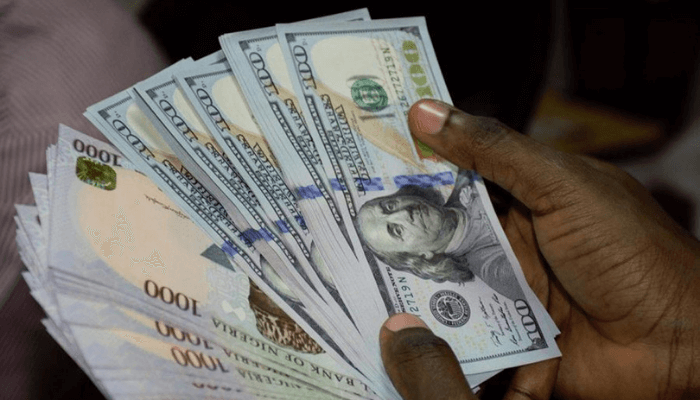
The Central Bank of Nigeria (CBN) may raise its benchmark interest rate before the general elections, according to Joseph Nnanna, Deputy Governor.
Nnanna who spoke at a conference in Egypt said the CBN is “in the mood” for tightening and will increase its main interest rate if inflation doesn’t slow.
He was quoted by Bloomberg to have said, “Every member of the Monetary Policy Committee is certain that the monetary policy rate should increase if inflationary pressures build up. Our intention is to ensure that the interest rate is kept positive in real terms.”
Analysts in the financial services sector yesterday raised concern on the implication of any Monetary Policy Rate (MPR) hike on the fragile economy.
Reacting to the development, Razia Khan, Managing Director/Chief Economist, Africa and Middle East Global Research, Standard Chartered Bank, said, “given that non-oil growth is as weak as it is, any meaningful tightening would be wrong for current economic conditions.”
The Monetary Policy Committee (MPC) has held its key rate at a record 14 percent since 2016 in a bid to prop up the naira and tame inflation after it spiked to double digits in the same year.
While inflation rate has since slowed to below the monetary policy rate, the MPC has shifted from some members voting for rate cuts in January to three of 10 members favouring higher rates at the July meeting.
“Although inflation is not yet at the single digit target rate, we should begin to consider expansionary measures rather than further tightening. Even though spending is likely to increase during election, this will not be at a scale that is sufficient enough to warrant further tightening otherwise we risk hurting the fragile GDP growth rate,” Taiwo Oyedele, head, Tax and Regulatory Services, PWC, said.
Inflation has been on the downward trend since January 2017 and the current rate of 11.23 percent is the lowest since January 2016. On the other hand, economic growth is slow at just below 2 percent in Q1, 2018.
Godwin Emefiele, governor of CBN, at the last MPC, noted that the downside risks to growth outlook include: continuing delay in the implementation of the 2018 budget; worsening farmer-herdsmen conflicts in some parts of the country; continued non-payment of workers’ salaries and pensions in some states; rising sovereign debt, as well as uncertainties surrounding the direction of trade, including the external demand for Nigeria’s oil.
The Independent National Electoral Commission (INEC) has scheduled the 2019 Presidential and National Assembly elections for Saturday, February 16, 2019, while the Governorship and State Assembly/Federal Capital Territory (FCT) Council elections have been scheduled for Saturday, March 2nd, 2019.
Emefiele also flagged the delayed passage of the
record 2018 budget of N9.12 trillion ($25 billion) and pre-election spending as possible price risks in the second half of the year.
“These factors would warrant a rate increase to send the right signal to the public, that the central bank will tighten policy to respond to higher inflation,” Nnanna said. “There’s a scope to raise rates before the elections in February.”
In his response, Uche Uwaleke, associate professor and head, banking and finance department Nasarawa State University Keffi, Nasarawa State, said, “I do not see the MPC further tightening monetary policy before the general elections.”
This, he said is because even though the CBN is supposed to be independent the reality is that in the coming months leading up to the polls, the political mood will play a key role in MPC decisions.
“I think the CBN Deputy Governor gave his personal opinion. Recall that even in the last MPC, only a few members voted for a rate hike while a majority voted to hold the rates. This is likely going to be the pattern up till the general elections early next year,” Uwaleke added.
HOPE MOSES-ASHIKE