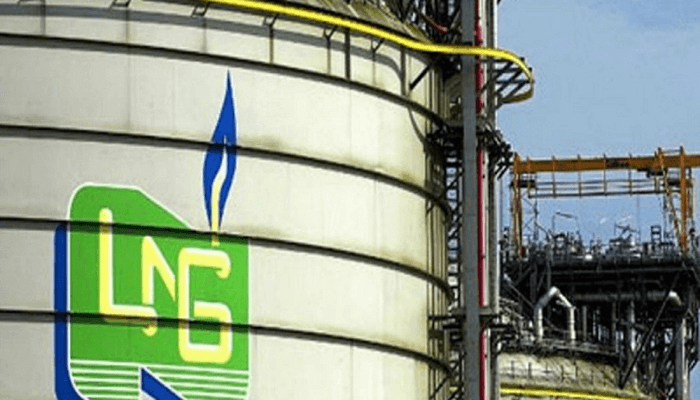
The federal government recorded no revenue from the Nigeria Liquefied Natural Gas (NLNG) company in the first three quarters (Q1) of 2024, underscoring the fiscal pressures facing Africa’s largest economy as oil sector disruptions and pipeline vandalism continue to erode petroleum earnings.
Data from the Budget Office of the Federation show that in the 2024 fiscal framework, Abuja projected N357.9 billion in dividend inflows from NLNG. However, actual receipts were nil in the first, second and third quarters of the year.
The shortfall comes at a time when the Tinubu administration is struggling to close wide fiscal gaps, while simultaneously implementing reforms aimed at boosting non-oil revenues.
Out of a total N25.9 trillion in projected federally retained revenue for the year, the government had received just over N14.5 trillion as of September, 29 percent below target.

Read also: Ebonyi moves to recover NLNG dividends from 1999
Vandalism, rising costs
The absence of dividend returns from NLNG, in which the federation holds a 49 per cent stake through the Nigerian National Petroleum Company Limited (NNPCL), is widely attributed to pipeline vandalism and crude oil theft. These persistent problems have not only crimped production but have also inflated operating costs, narrowing profit margins.
“Of course, pipeline vandalism can affect operating costs, profit and subsequently declare dividends,” said Wunmi Iledare, emeritus professor of Petroleum Economics and former president of the Nigerian Association for Energy Economics.
Industry officials say NLNG has been unable to operate its six-train Bonny Island plant at full capacity, with feed gas shortfalls linked to disruptions on critical pipelines in the Niger Delta. Despite being a global LNG exporter, Nigeria’s utilisation rates remain among the lowest compared to peers like Qatar and Australia.
The PIA shift, revenue classification
Beyond operational challenges, the zero remittance raises questions about how NLNG revenues are treated under the Petroleum Industry Act (PIA) of 2021.

Iledare noted that under the PIA, NNPCL, not the federal government, directly holds the federation’s equity in NLNG.
“Thus, any dividend declared by NLNG is paid to NNPCL, which then remits to the federation. From this angle, dividends from NLNG should not appear as a direct revenue item in the federal government’s budget,” he said.
He added that in corporate finance, dividend payouts fluctuate and companies may legitimately withhold them in certain cycles.
“The absence of declared dividends in 2024 may therefore not, in itself, be abnormal. The key is to ensure alignment with the spirit of the PIA: transparency, accountability, and proper fiscal federalism.”
Analysts, however, warn that the budgeting of NLNG dividends as a direct inflow to the federal treasury risks creating unrealistic revenue expectations.
Read also: NNPC, gas suppliers sign 20-year gas deal with NLNG
Questions over NNPC role
Other experts are less sanguine. Kelvin Emmanuel, an energy analyst, questioned NNPC’s central role in managing NLNG dividends, arguing that it obscures transparency.
“If dividends were not declared to the federal government, it means it was collected by the NNPCL,” Emmanuel said. “I have always said that the NNPCL as a consortium of government assets in the oil and gas sector should not be the beneficiary of FGN’s stake in NLNG because I do not see the work they do in NLNG. They are collecting equity from NLNG, and the government needs to look again at the importance of transferring the equity of FGN, to the Ministry of Finance Incorporated.”
Emmanuel argued that the current structure under which NNPCL manages equity stakes on behalf of the state blurs accountability, particularly given recurring concerns over the company’s opaque remittance practices.
Budgetary strain
The absence of NLNG dividends deepens fiscal stress in a budget already underperforming.
Data from the latest budget implementation report show that oil revenues remain volatile, with actual crude receipts of N4.64 trillion in the first nine months of 2024 falling short of the N6.13 trillion pro-rated target. Meanwhile, the government has leaned heavily on non-oil revenues such as company income tax (N1.93 trillion) and VAT (N604.3 billion) to plug gaps.
Grants and donor funding provided some relief, reaching N1.5 trillion against a nine-month target of N514 billion, but such flows are neither predictable nor sustainable.
Read also: Gas supply to Bonny plant brightens as NLNG signs GSAs deal
Policy dilemmas
For Abuja, however, the dividend question is not only about NLNG’s operational capacity but also about fiscal planning. With Train 7 expected to come on stream in the coming years, clarity on how dividends are accounted for will be vital.
Analysts warn that unless the government reconciles its budget assumptions with corporate realities, the mismatch will persist.
“There must be a reconciliation between fiscal planning and corporate realities,” said one Abuja-based tax expert. “If NLNG decides not to declare dividends, the government cannot simply manufacture those receipts in its budget. At the same time, citizens deserve to know how much NNPCL is collecting on behalf of the federation, and how it is shared.”
The bigger picture
The NLNG dividend shortfall is emblematic of Nigeria’s broader fiscal predicament: heavy dependence on hydrocarbons in an era of declining production, mounting theft, and uncertain global demand. While the government has taken steps to diversify revenues, oil remains the single most important source of foreign exchange and budget funding.