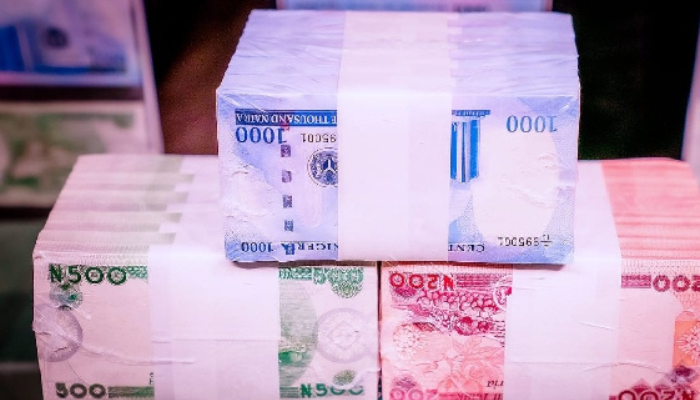
Nigeria’s money market instruments are currently offering mouth-watering yields, and this is dampening investor appetite for long-duration local assets as global and domestic risks continued to raise red flags.
Money market instruments are short-term debt investments in the financial market such as Treasury Bills (T-Bills) with maturities ranging from overnight to one year and it’s often characterized with low return, while bonds are long-term fixed-income assets issued by the government or corporates with at least 2-year maturities, and a periodic coupon payment
Average yield on benchmark Nigerian government T-Bills closed last week at 15.35 percent as against an average yield of 14.36 percent on benchmark Nigerian government bonds, according to data obtained from the FMDQ Securities Exchange.
The Federal Government of Nigeria (FGN) bond auction for August 2019 conducted on Wednesday was grossly undersubscribed the most in 2 year by investors on the back of weak offshore interest. The trend was also replicated at Thursday’s OMO auction, no thanks to escalating trade spate between the United States (U.S) and China and relatively low oil prices largely driven by build-up in U.S crude inventory.

Besides, about $14.4 billion Open Market Operations (OMO) maturities likely to hit the market from September to November, 2019 as well as anticipated capital outflows from the country due to the risks, the impact of build-up in crude oil inventory on crude oil prices, and rising imports of goods and services are expected to create pressures for Nigeria’s balance of payment.
The implication of the rising uncertainties causing increased outflows is an imminent further increase in short-term rates. “Risk aversion for emerging market assets constitute an upside risk for bond yields,” Omotola Abimbola, a macro and fixed income analyst at Lagos-based investment house, Chapel Hill Denham, stated in a note to clients.
This is as a result of offshore portfolio investors holding a large proportion of OMO securities put at a record-high level of $17.5 billion as of May 2019, representing a about 37 percent of outstanding OMO bills.
While these developments indicate vulnerability of Nigeria’s external account to shocks, and by extension downside risk to its exchange rate stability, focus would likely shift to the foreign currency debt market – Eurobond – with the inauguration of cabinet members.
Based on historical trend, officials of the Nigerian government led by the Minister of Finance, Budget and National Planning are expected to proceed on a roadshow to woo investors to participate in the offering.

Also, the Debt Management Office (DMO) has so far funded the 2019 budget with local borrowing, and in line with its debt management strategy which aims to increase external borrowing and reduce domestic debt exposure, it became more apparent that the days to the Eurobond offering are already counting down.
Clearly, a move in that direction would create an opportunity for investors – both local and foreign – to hedge their funds against possible currency risks by investing in the Eurobond market to grow their funds.