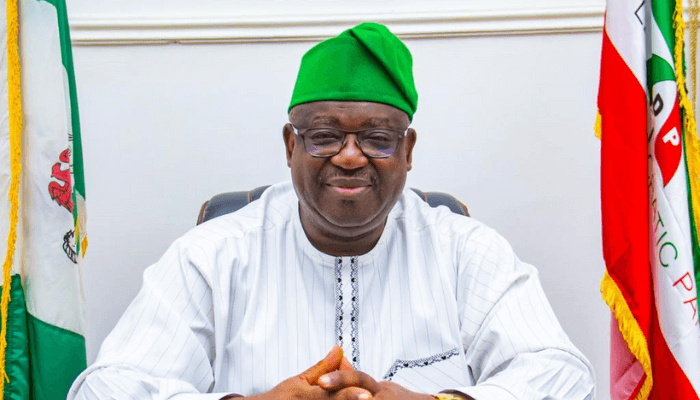
Governor Caleb Manasseh Mutfwang of Plateau State has reignited the national conversation on Nigeria’s fragile security framework by making a compelling case for the establishment of state police during the recent constitutional review hearing in Jos.
At the zonal public hearing of the Senate Committee on the Review of the 1999 Constitution for the North Central region, Mutfwang declared that centralized policing had become inadequate in the face of growing insecurity nationwide.
The event, held recently in Jos and chaired by Jibrin Barau, the Deputy Senate President represented by Oyelola Yisa Ashiru, a senator, drew governors, legislators, and stakeholders from across the region for two days of intense deliberation.
In his keynote address, Mutfwang didn’t mince words. He described the current state of insecurity marked by terrorism, banditry, ethnic clashes, and farmer-herder violence as a national emergency.

He called the violent displacement of indigenous populations in the North Central “genocidal,” insisting that only a localised, responsive policing model could address the problem effectively.
“We must speak on state police now or risk being seen as criminally negligent,” Mutfwang declared, underscoring the urgency of institutional reform.
Quoting former Mozambican President Joaquim Chissano, the governor framed constitutional reform as a nation-building mission, not just a legal exercise.
“This review is our chance to hand over a banner without stain,” he said, urging delegates to rise above politics and pursue the collective interest of Nigerians.
The governor argued that Nigeria’s historical instability stems from structural distortions rooted in colonialism, military dictatorship, and flawed democratic transitions.

According to him, while previous constitutional efforts had produced documents, they often failed to reflect the aspirations of everyday citizens.
Mutfwang emphasized that the proliferation of non-state armed groups is a direct result of the centralized security system’s failure to respond swiftly and effectively to local threats.
Across the country, communities have begun resorting to self-help security arrangements, an indication that public confidence in federal law enforcement agencies is at an all-time low.
“It’s no longer just a debate. The security structure as it exists has collapsed under the weight of its inefficiencies,” Mutfwang told the gathering.
Beyond security, he urged reforms in fiscal federalism, judicial independence, and recognition of indigeneity and citizenship rights as essential to a truly democratic society.
He maintained that empowering subnational governments to manage their own resources would foster better governance, accountability, and development.
“No constitution is perfect, but we must create one that speaks to our current realities and reflects who we truly are as Nigerians,” he said.
His call, however, has not gone unchallenged. The Plateau State Chapter of the Coalition of Fulani Registered Organisations submitted a strong memorandum opposing the idea of state policing.
Signed by Garba Abdullahi Muhammad and Adam Yakubu it’s chairman and secretary respectively, the group’s submission warned that local policing could be turned into a tool for ethnic persecution.
“State police would expose our communities to discrimination, harassment, and abuse. We, as a community, are not in support of the creation of state police because it would expose our communities to discrimination, harassment, and abuse by ethnically biased local police units,” they said in the memorandum.
The coalition urged President Bola Tinubu and the National Assembly to reject the proposal, arguing that reform should instead focus on improving the federal police.
While acknowledging flaws in the centralized system, the group insisted it remains a better safeguard against ethnic politics than fragmented state forces.
The coalition’s memorandum did, however, offer a middle ground stating that if state police must be established, it should come with strict federal oversight and independent mechanisms for redress.
They called for enforceable anti-discrimination laws and robust checks to ensure neutrality and professionalism in state-run security outfits.
In response to these concerns, Senator Ashiru, representing Barau, the committee chair, assured participants that inclusivity would guide the review process.
“Every voice will be heard. Every concern will be documented,” he promised.
Barau, emphasized the need to address deep-rooted national challenges through bold but thoughtful reforms.
The committee, he said, is committed to prioritizing key reform areas like electoral transparency, judicial autonomy, and devolution of powers to strengthen governance.
For Mutfwang and many like him, the state police proposal is not just about fighting crime, it’s a symbol of Nigeria’s readiness to confront outdated governance structures head-on.
But for others, particularly ethnic minorities and nomadic communities, it poses a dangerous risk of ethnic exclusion and state sanctioned abuse.
Read also: Mutfwang advocates state Police, fiscal federalism
Whether Governor Caleb Mutfwang’s bold push for state police will finally tame Plateau’s spiraling insecurity remains uncertain but it has undeniably shifted the national discourse. By forcefully linking structural reform to peace and survival, Mutfwang has made a powerful case that centralised policing no longer serves Nigeria’s fractured and traumatised communities.
His argument resonates with many in the North Central region and beyond, who see localized policing as a necessary step toward restoring trust, responsiveness, and safety. Yet, the road to implementation is fraught with both political and ethnic tensions.
Opposition from groups like the Coalition of Fulani Registered Organisations underscores the complexity of the issue. For communities that fear ethnic marginalisation, state police is a potential instrument of abuse rather than protection. These fears are not unfounded, given Nigeria’s volatile history of identity politics.
The challenge, therefore, lies not just in establishing state police, but in doing so with constitutional safeguards that guarantee fairness, oversight, and justice for all. If Mutfwang’s vision is to succeed, it must go beyond rhetoric, it must build an inclusive, accountable framework that transforms security into a shared national responsibility.
As the constitutional review continues, the debate over state police could emerge as the defining fault line between fear and hope, unity and division, tradition and transformation.
If the state police debate finally scales through, will it truly tame insecurity in Plateau and other parts of Nigeria? The question remains unanswered until it is done.
While proponents like Governor Mutfwang believe localized policing could restore trust and responsiveness in the security architecture, its success hinges on equitable implementation, constitutional safeguards, and national consensus. Without these, state police could either become the transformative solution Nigeria desperately needs or a deepening of the very divisions it seeks to heal. Only in its execution will the real answer be revealed.