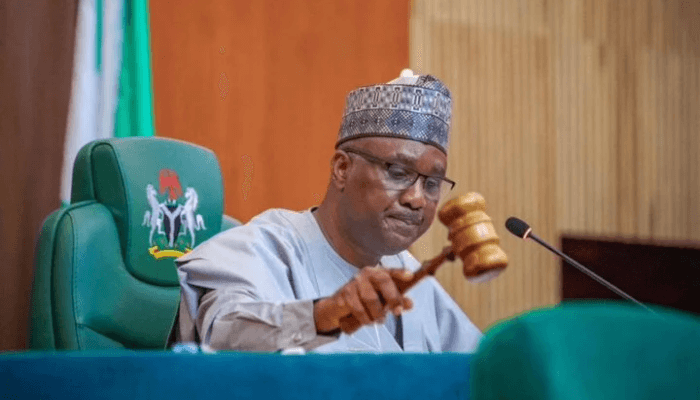
…says 2027 elections will be more transparent
Tajudeen Abbas, Speaker of the House of Representatives, has said that the National Assembly included both electronic and manual transmissions of results in the amended Electoral Act to avoid disenfranchising the Nigerian electorate and prevent voter apathy during the 2027 general elections.
Abbas noted that due to inadequate internet penetration in the country, it would be counterproductive to allow only one—electronic—form of results transmission in the Electoral Act.
He spoke when he hosted Felix Costales, Ambassador of Spain in Nigeria during a courtesy call over the weekend at his office in Abuja.

“A lot of people think that we need to embrace electronic transmission real-time in Nigeria, but within the very little period that you’ve been in Nigeria, you should be able to speak on the quality of our internet network. You should know that even in advanced cities like Abuja, you are not guaranteed stable internet services all the time.
“Based on the NCC report, they said Nigeria is still underserved by almost 40 percent, which means 40 percent of territories at large in Nigeria are not covered by the internet. Now, tell me, for those who are saying we should go ahead and do that, already if you look at the number of our registered voters in this country, it is alarming. It is sad to say that even with the manual arrangement we are using, we are only able to capture about 12-15 percent of registered voters who, after every four years, come to vote. That’s voter apathy. Very few people go out to vote.
Read also: Group rallies behind INEC, hails IReV upgrades, transparent result management
“Now, if we are to introduce (only) the electronic system, it will further reduce the number because 40 percent of the country will probably not be able to vote as they don’t have adequate internet services”, Abbas explained.
He stressed that would not only disenfranche the voters, it would deny some people the right to vote,and the country may record the lowest number of voters in the next elections.

“These are all avoidable. That is why we said, in our wisdom, the Electoral Act should be hybrid—a combination of both the manual and electronic systems. Where it is feasible to use the electronic, use the electronic transmission; where it is not possible, use the manual, because there is no way one form, particularly the electronic, can be used entirely in all parts of the country for the elections,” Abbas added.
He further argued that the internet is always backed by energy. “How do you power the entire country on the day of election to have phones that are working and internet that is working, backed by adequate electricity? All those are challenges that, for now, will not be able to provide us the opportunity to do transmission real time online,” he queried.
The Speaker however assured that, based on his interaction with Joash Amupitan, Chairman of the Independent National Electoral Commission (INEC), the 2027 general elections “will be more transparent, accommodating, and inclusive.”