Nigeria and Taiwan, despite their geographical differences, can collaborate to develop the country’s real estate, Andy Yih-Ping Liu, Taiwan’s Rep/Head of Mission in Nigeria, has said.
Taiwan, a country located along the southeastern coast of Asia, is known for occasional incidents of natural disasters such as earthquakes, typhoons, and extreme flooding events. Unlike Taiwan, Nigeria is free from these extreme weather conditions except flooding which is largely man-made.
But Liu says despite these differences, there is a lot the two countries can learn from each other, especially in the area of real estate, particularly housing development.
“Taiwan and Nigeria are so different from each other. Nigeria is a big country with every natural resource that we don’t have. Taiwan suffers from all the natural disasters. So, that’s why our development experience can be quite a useful reference for Nigeria,” he said.

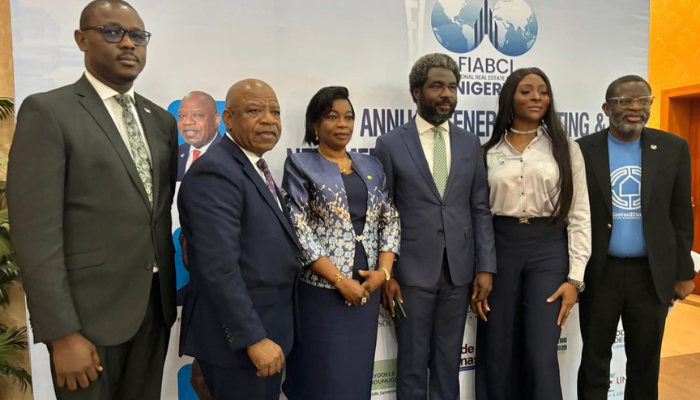
Liu spoke in an interview with BusinessDay on the sidelines of an Annual General Meeting (AGM) hosted by the International Real Estate Federation (FIABCI) Nigeria Chapter in Lagos recently.
Read also: Developer explains how FG’s real estate fund can bridge housing deficit
He believes that real estate firms have to focus on how people can actually live in a good environment, and to have a strong building that provides shelter over their head, and also to have good transportation to facilitate people moving around.
“Real estate has to be developed well for the general public. And this is how Taiwan can provide our experiences to help people do that. Taiwan’s experience, particularly, would be able to provide our expertise to counterbalance the natural disasters,” he said.
There are also other areas, according to Liu, that Nigeria can learn from Taiwan for its development, pointing out that, although they have developed very well, they still focus on what the people need.

“Because we don’t have any natural resources, we have to focus on what we can to develop ourselves based on education. Education guarantees that our society can have an abundant workforce,” he said.
Continuing, he said, “after about four to five decades of investing in education at all levels, we have now an illiteracy level of less than 2 percent. That means 98 percent of our people can read, write, and work. So, every aspect of development, including real estate, we need the people to devote themselves to, while the government and the private sector should work hand-in-hand.”
Earlier in his opening remarks, Akin Opatola, President, FIABCI Nigeria Chapter, highlighted the purpose of the AGM, saying that it allowed the chapter to induct new members, who were 20 in number, and also to take stock and savour the success of the 75th FIABCI World Real Estate Congress held in Lagos in June this year.
He told the new inductees that they were joining not just an association but a global family of real estate professionals committed to excellence. “I encourage you to immerse yourselves, engage actively, and let your membership open new doors of opportunity and growth,” he charged them.
Adeniji Adele, President, FIABCI Africa & Near East Region, noted that the day’s AGM was more than a statutory duty. “It is a moment to reflect, consolidate, and chart the way forward.
The visibility and credibility gained from hosting the World Congress must not end with June 2025. Rather, it should serve as a springboard for greater growth, stronger collaboration with government and private sector stakeholders, and deeper engagement within our region and across the FIABCI network,” Adele said.