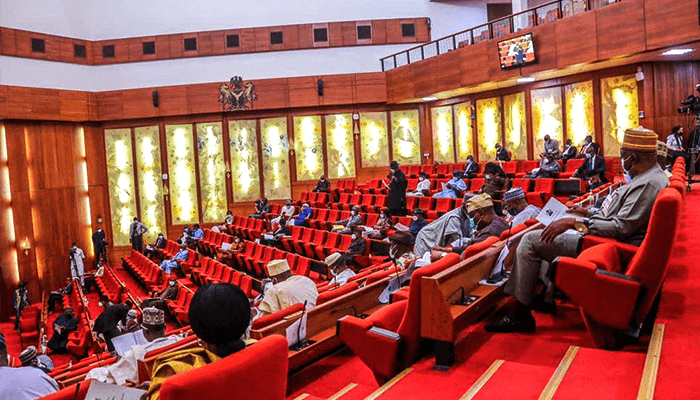
The Senate has begun a far-reaching review of Nigeria’s electoral and fiscal frameworks, with proposals that could see vote-buyers barred from elections for up to 10 years, extend voting rights to inmates, mandate early release of election funds, and ease budget funding pressures through recent tax reforms.
Opeyemi Bamidele, the Leader of the Senate, , disclosed the developments ahead of the National Assembly’s resumption from the Christmas break, saying the ongoing amendment of the Electoral Act would significantly strengthen electoral integrity and institutional independence.
According to him, the proposed Electoral Bill, 2025 introduces stiff sanctions for electoral offences, including vote-buying, alongside structural reforms aimed at improving the credibility and security of elections.
Read also: Tinubu seeks Senate confirmation of Oyewole as Justice of Supreme Court

“We have started the review of the Electoral Act, 2022 clause by clause to achieve this end. With the Electoral Bill, 2025, we have achieved quite a lot to improve how we manage our elections; enhance the credibility of the process and ensure the political parties are accountable,” Bamidele said.
“This vision is in line with the sustained public demands for an electoral system that will guarantee the security of votes.”
He explained that the bill contains “no fewer than 20 defining highlights” that would clearly distinguish it from previous electoral regimes.
“First, under Section 12 (1–2), the Bill recognises the voting rights of prisoners and the obligations of the Independent National Electoral Commission to register all eligible inmates in all correctional facilities nationwide.
“With respect to vote buying, the sanctions range from a fine of N5 million to a two-year imprisonment and a 10-year ban from contesting elections,” the statement read.

He said the bill also recommends mandatory jail terms and higher fines for offences such as result falsification and obstruction of election officials.
Bamidele said the provisions are aimed at eliminating impunity and strengthening the credibility of Nigeria’s electoral process.
He said the proposed law introduces electronically generated voter identification, including a downloadable voter card with a unique QR code.
He added that the bill mandates presiding officers to transmit polling unit results electronically, including the total number of accredited voters.
Bamidele said the legislation also standardises delegates for indirect primaries to prevent party leaders from unilaterally determining delegate criteria.
He said Committees on the Independent National Electoral Commission (INEC) in both chambers would soon submit their reports for clause-by-clause consideration.
Read also: Group petitions Senate over IOCs alleged mistreatment of Nigerian staff
Bamidele said the reforms are intended to guarantee credible, transparent and secure elections beginning with the 2027 polls.
Bamidele added that the legislation would also address perennial funding challenges faced by the electoral umpire.
“Also, under Section 3 (3), the Bill mandates that funds for general elections must be released at least one year before the day of the elections. Obviously, this reduces uncertainty that often clogs the operation of INEC and strengthens its independence,” he stated.
He noted that the amendment process would only be completed after securing the approval of at least two-thirds of the state Houses of Assembly, in line with constitutional requirements.
“These are brief highlights of what lies ahead of us in the coming weeks,” Bamidele said, adding that, “At the end of it all, good governance, enhanced security and the welfare of our constituents shall remain our cardinal objectives.”
Beyond electoral reforms, the Senate Leader also linked Nigeria’s improving fiscal outlook to the recent overhaul of the country’s tax laws.
He said the enactment of the 2025 Tax Reform Act would eliminate longstanding difficulties in funding the federal budget and lead to a gradual reduction in the country’s budget deficit.
“We have significantly reformed our fiscal space to reflect our socio-economic realities,” Bamidele said.
“This process culminated in the enactment of the 2025 Tax Reform Act.
“We now operate a progressively recalibrated fiscal regime that eases tax burden off the shoulders of low-income earners and places more responsibilities upon the high-income earners.”
Read also: Akpabio, Natasha resume legal battle as Senate President heads to Supreme Court
According to him, the impact of the reforms would be felt in subsequent budget cycles.
“From the reforms of our fiscal space, we believe funding our budget will no longer be a challenge, and our budget deficit will definitely begin to shrink year by year,” Bamidele added.