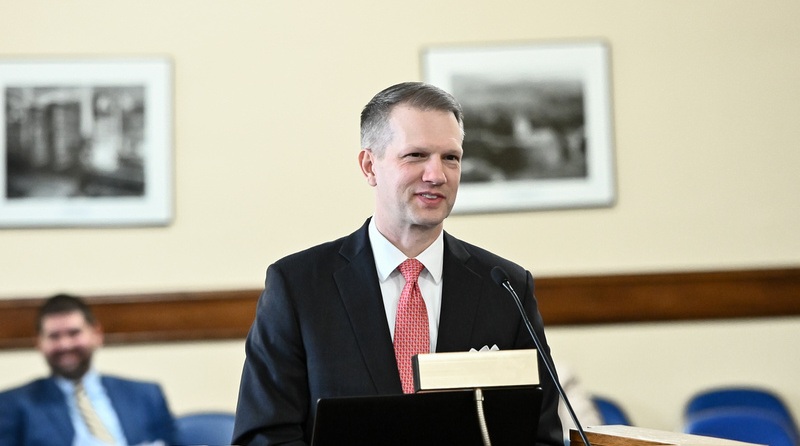
A prominent U.S. lawmaker, Riley Moore, has criticised Rabiu Musa Kwankwaso, former Kano State governor, accusing him of enabling religious persecution in Nigeria through his implementation of Sharia law.
The confrontation erupted Monday on social media platform X (formerly Twitter), where Moore directly challenged Kwankwaso’s record on human rights and religious freedom.
In his post, Moore, who has been an outspoken advocate against what he describes as a “Christian genocide” in Nigeria, accused Kwankwaso of being “complicit in the death of Christians.”
Responding to the Nigerian politician’s recent comments on U.S. foreign policy, Moore wrote: “Governor — do you care to comment on your own complicity in the death of Christians?”

The U.S. lawmaker’s remarks came in response to Kwankwaso’s statement urging the United States to assist Nigeria with advanced security technology instead of making military threats.
Kwankwaso had made the comments after former U.S. President Donald Trump reportedly instructed the Department of War to prepare for a potential invasion of Nigeria to combat terrorists accused of targeting Christians.
In his post, Moore reminded his followers that Kwankwaso, during his tenure as governor of Kano State, signed the Sharia Penal Code Bill into law in November 2000. The legislation established a parallel Islamic legal system in the state, which includes the death penalty for blasphemy — a provision that has drawn widespread condemnation from international human rights organisations.
“You instituted Sharia law,” Moore wrote. “You signed the law that makes so-called blasphemy punishable by death.”
The exchange comes amid heightened tension between U.S. lawmakers and Nigerian officials over allegations of systemic persecution of Christians in northern Nigeria. Several Republican lawmakers, including Senator Ted Cruz and Representatives Nancy Mace and Riley Moore, have recently amplified calls for Nigeria to be designated a “Country of Particular Concern” (CPC) under U.S. law — a move that could trigger sanctions and other diplomatic consequences.

Senator Cruz has also introduced a bill targeting Nigerian public officials who promote or enforce laws that restrict religious freedom, including those supporting Sharia or blasphemy provisions. The proposed legislation seeks to bar such officials from entering the United States and to freeze their assets.
Read also: Trump threatens to launch military attacks in Nigeria over Christian killings
Kwankwaso, a former defense minister and presidential candidate, has yet to respond directly to Moore’s accusation. However, in his earlier statement, he emphasised that cooperation — not confrontation — was the best path toward solving Nigeria’s security crisis.
He cautioned that threats of invasion could further inflame tensions and undermine efforts to foster national unity.
Nigeria, Africa’s most populous country, remains deeply divided along religious and ethnic lines. While northern states such as Kano operate under Sharia law for Muslims, the country’s constitution officially guarantees freedom of religion. Human rights groups have long warned that blasphemy laws — including the death penalty for alleged insults to Islam — contravene international human rights standards and have been used to justify mob violence.
Moore’s comments are the latest in a growing transatlantic debate over how the U.S. should respond to alleged religious persecution in Nigeria — and how Nigerian leaders defend or implement faith-based legal systems.