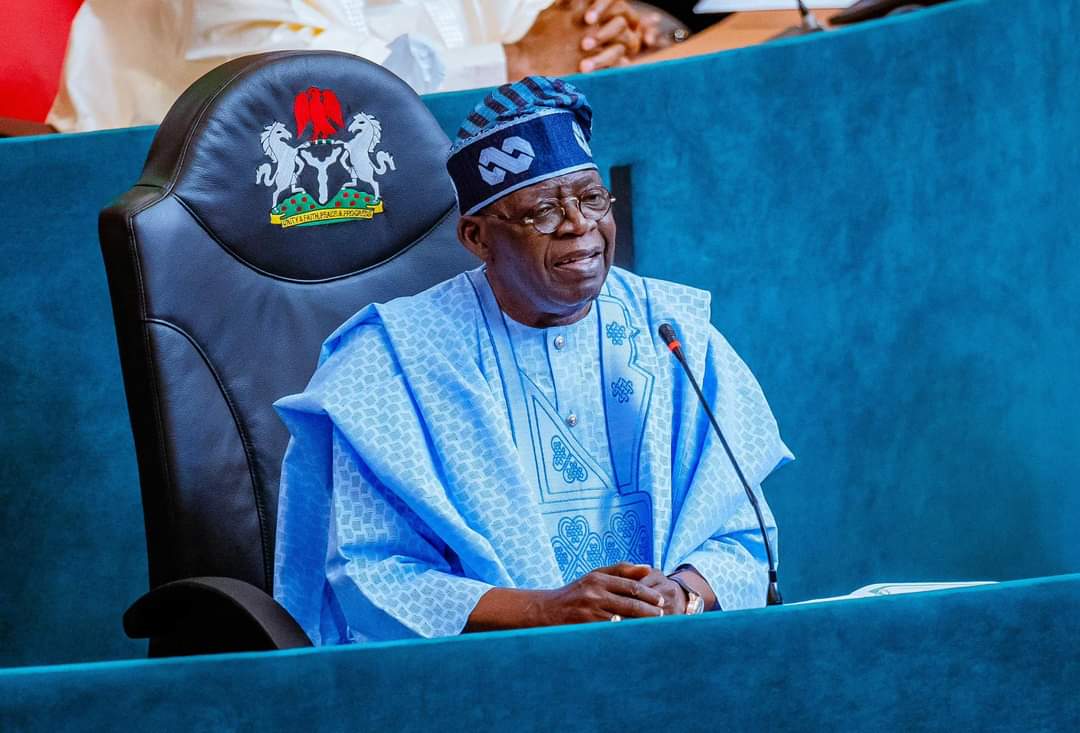
President Bola Tinubu has called for a more adaptive approach and collaboration among security agencies in tackling Nigeria’s deepening security challenges.
President Tinubu highlighted various threats from terrorism in the Northeast and banditry in the Northwest, to farmer-herder clashes in the Middle Belt and Separatist agitations in the Southeast, as issues that transcend the capacity of any single agency.
Spekaing at a one-day legislative dialogue on constitutional review and national security architecture organised by the House Committee on Constitution Review in collaboration with the Office of the National Security Adviser on Monday, President Tinubu, who was represented by Mohammed Badaru Abubakar, Minister of Defence, called for a robust legal framework to enhance collaboration and intelligence sharing among security agencies.
“The growing calls for State Police, the challenges of cybercrime and cybersecurity, and the urgent need for improved intelligence sharing demand a more adaptive and cooperative security architecture,” the president said.

He stated that it was time to align Nigeria’s security framework with present-day realities, warning that neither full centralisation nor outright fragmentation can sufficiently guarantee the nation’s safety.
Read also: How worsening insecurity deepens Nigeria’s food crisiseria’s porous borders and advocated for constitutional clarity on federal and sub-national roles in frontier security.
According to him, the Government’s integrated security strategy, characterised by intelligence fusion, joint task force operations, and synchronised offensives, has yielded significant results, including the dismantling of separatist cells in the Southeast and the disruption of criminal networks in the Northwest.
In his remarks, Tajudeen Abbas, Speaker of the Federal House of Representatives, said the dialogue was timely, given the urgent need to review and update existing laws to address current and emerging security threats.
He said Nigeria’s complex security landscape demands strategies that are “multi-dimensional, inclusive, technology-driven, and adaptable,” anchored in a solid legal and institutional framework.”

“The goal is to reposition the security architecture to effectively confront insecurity. This dialogue also allows us to refine proposed security-related bills, including the one seeking to establish state police,” Abbas said.
He highlighted the prevalence of terrorism, banditry, piracy, militancy, and oil theft across regions, stressing that the House is committed to taking practical legislative steps beyond motions and bills to support the government’s anti-insecurity efforts.
In his remarks, Benjamin Kalu, Deputy Speaker and Chairman of the Constitution Review Committee, described the dialogue as a necessary diagnostic process. He said previous legislation on security was often developed without adequate input from those directly involved in frontline operations.
“As legislators, we must base our reforms on accurate diagnoses. We are here to listen to those who wear the shoes and know where it pinches,” Kalu said.
Read also: Nigeria needs a leader that can confront insecurity, Obi insists
Also speaking, Christopher Musa, General and Chief of Defence Staff, also called for urgent legal and constitutional reforms to address emerging threats like cyber warfare, hybrid threats, and insurgency.
He described the current legal framework as increasingly inadequate and highlighted operational ambiguities such as unclear command authority and detention procedures that hamper effectiveness during internal operations.
He proposed key reforms, including: Amending the Armed Forces Act and relevant constitutional provisions;
Establishing field and standing court martials in all military commands;
Constitutionally recognising court-martial as a superior court of record;
Empowering the military to investigate and detain suspects during internal operations; Authorising the Nigerian Navy to collaborate with Customs and Immigration on inland waterways to combat piracy and smuggling;
Introducing a merit-based nomination process for the appointment of service chiefs.
He also advocated legal provisions to enable court-martials to try individuals captured in acts of terrorism or insurrection under martial law conditions.