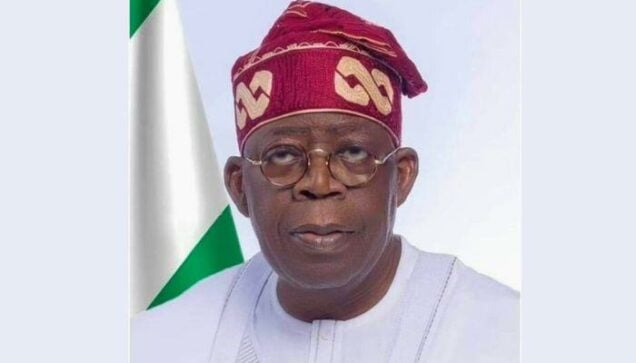
In a move to solidify national stability, President Bola Ahmed Tinubu has placed national security at the forefront of his administration, reaffirming his commitment to strengthening Nigeria’s security forces to defeat terrorism and banditry.
President Tinubu made this commitment while declaring open the National Economic Council Conference in Abuja on Monday. He noted that insecurity has remained a notable hindrance to Nigeria’s economic growth.
“I am leaving here again to find further means to strengthen our security forces, to combat and defeat terrorism. I promise you, this is what has kept all of us sleepless at night. But I assure you that we will win with determination and resilience. We will overcome this unacceptable terrorism and banditry. It is not part of our culture; it is foreign to us.
“So, it is an economic hindrance if we do not find an immediate solution to it. I commend many of you, particularly the Governors of Borno, Katsina, and Kaduna—many of you who have done so much to defend our freedom, liberty, and our commonwealth,” he said.

He explained that Nigeria currently stands at a crossroads, facing enduring structural challenges, including infrastructure weaknesses, unemployment, poverty, climate vulnerabilities, and limited fiscal space.
President Tinubu also emphasised that his administration, since its inception, has undertaken bold and necessary reforms to stabilise the economy, restore confidence, and lay the foundation for long-term growth. These reforms, for him, are instruments for delivering prosperity, dignity, and opportunity to all Nigerians.
According to the President, the monetary policy embarked upon since the reforms began has yielded positive results, such as lower inflation rates and macroeconomic stability.
The President also explained that with the implementation of these reforms, state and local governments now receive increased and more predictable federal allocations, improving their capacity to pay salaries, invest in infrastructure, and deliver social services.
“We have strengthened macroeconomic stability through improved revenue performance, stronger public financial management, and enhanced fiscal coordination. We have prioritised infrastructural development across transportation, power, digital connectivity, housing, and irrigation as a catalyst for inclusive growth.

“We have expanded social investment and human capital programs targeting vulnerable households, youth, women, and small businesses. The Renewed Hope National Development Project further demonstrates our commitment to grassroots inclusion through a bottom-up approach to national development.
“These successes reflect strong collaboration among the federal, state, and local governments, development partners, and the private sector.”
Speaking on the Renewed Hope National Development Plan 2026-2030, the President said it is evidence-based, realistic, and anchored on inclusive, balanced, and environmentally sustainable growth.
The plan, he said, prioritizes economic diversification and productivity, human capital development, national competitiveness based on comparative advantage, private sector-led growth, and climate resilience.
“The success of this plan depends largely on effective implementation at the state and local government levels, making it central to aligning national priorities with national realities. The conference has reinforced collaboration, shared accountability, and a focus on practical solutions and measurable outcomes.
“We must move decisively from declarations to implementation through data-driven decisions, making peer learning among states and innovative financing models a reality. Nigeria’s diversity is our strength. When states grow, Nigeria grows. When growth reaches the poorest households, national stability strengthens.”
The President urged state governors to look toward the diversification of agricultural produce, promoting dairy farming, livestock investment, and ranching in their respective states.