Permit me as I mime Sonny Okosun, one of my father’s favourite musicians, in his classic song, “Which way Nigeria, which way to go, I love my father land, how long shall we be patient till we reach the promise land, let’s save Nigeria.”
As regards the way, I agree with Ndubisi Ekekwe’s assertion that “Nigeria’s next leader has one primary assignment: reconstruct the country, monetarily and fiscally” in terms of saving Nigeria. This commitment made years ago was broken by the Buhari-led administration.
The victor of the February 25th presidential election would have to be competent enough to execute a good job, despite the fact that I am aware that the phrase ‘restructure Nigeria’ has been bandied about frequently for a few decades already.
Irrespective of our preferred candidates, we are all keen on the adopted strategy to be used to make Nigeria great again, Nigerians have the opportunity to determine who can perform the job better knowing fully well that Elections have consequences.

The existence of Nigeria is directly related to this approaching presidential election; Nigerians are searching for a leader who would keep them united and maintain peace and security, and if we use one criterion, the victor is too close to call.
Every area of Nigeria yearns to be heard, and nobody wants to completely rely on the central government to save them, which is why calls for restructuring are being made. All indicators and metrics among all candidates are nearly evenly distributed. Restructuring is essential to Nigeria’s survival because of this, even if some claim it is the only way to restore public faith in Nigeria.
Let’s face it, without hedging our bets, the majority of Nigerians are not benefiting from the current situation. In fact, they are poorer now than they were eight years ago, which is a bitter pill to swallow given that the country’s economy and population have grown significantly in that time. These factors together continue to strengthen the case for why this election is so important for the future of Africa’s most populous nation and largest economy.
For the first time since the 1999 election, Nigeria’s voting system has piqued the curiosity of young people. While some perceive it as an extension of the End SARS campaign, others believe it is just a plea for a safer and better Nigeria.
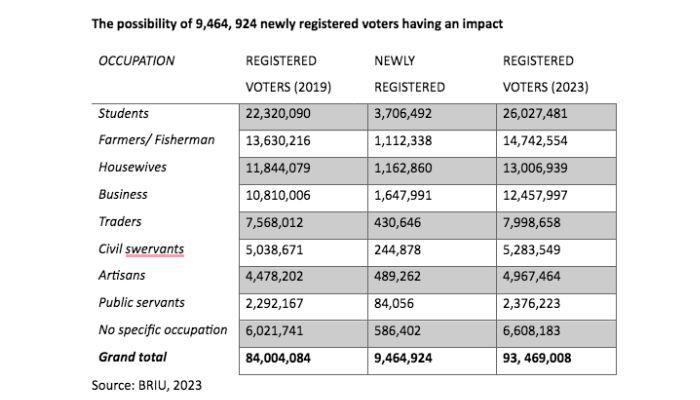
These young people, who account for 40% of registered voters, are experiencing a “unprecedented awakening,” according to Opeyemi Oriniowo of the Nigeria Youth Futures Fund, a non-governmental organisation based in Lagos, the country’s commercial centre. These are telling indicators on a continent where democracy is eroding.

The only other time voters opted to depose an incumbent party since democratic government began in 1999 was the APC victory in 2015, when there was a 3,928,869 vote gap between the winner and runner-up in the presidential election. There are about 9.5 million newly registered voters, which is nearly quadruple the number of difference in the 2015 presidential election, making the election close, chaotic, and critical to the future of Africa’s most populous country and greatest economy. The 9,464,924 votes cast can make or break this election, and only time would tell.
The possibility of 9,464, 924 newly registered voters having an impact
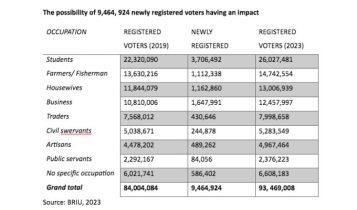
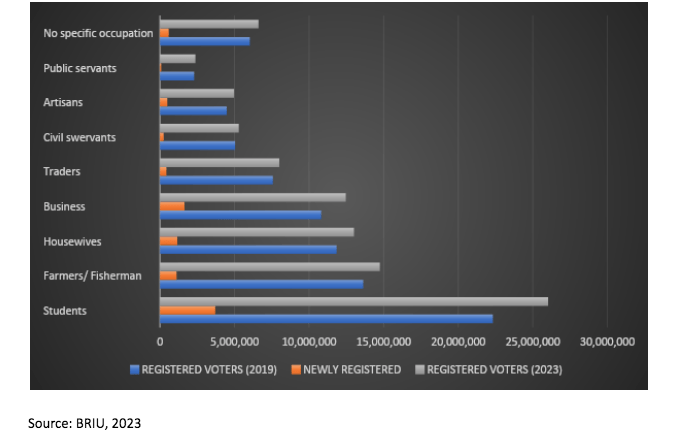
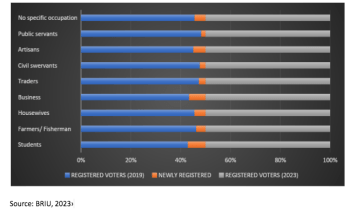
It feels like the final 17 minutes of the World Cup finals which is exactly 17 days away from Febraury 25th. Before you ask if there will be a Kylian Mbappé, let me remind you that there haven’t been any clear winner up until this point because Argentina, led by Messi, was in control until the lightning of Kylian Mbappé struck.
Three candidates appear to have a chance of winning. In addition to receiving the most votes nationwide, they must also receive at least 25% of the votes cast in at least two-thirds of Nigeria’s 36 states and the federal capital in order to win. If no contender succeeds in doing so, a never-before-seen run-off will be held which bring the conversation on the piossibility of a re-run (lets leave this for next edition for the paper).
For now, let the clock go tick tock tick tock tick tock
Read also: Nigeria’s manufacturing sector seen entering recession
Wednesday Explainer
The Central Bank of Nigeria established the AfriGo card as a national domestic card scheme to undertake domestic transactions within Nigeria, comparable to existing debit cards. The Afrigo card enables the CBN to compete in the $18.2 billion Nigerian cards and payments industry with foreign payment businesses including as Visa, Mastercard, Verve, and Interswitch.
The outcomes for AfriGo
Nigeria is going after MasterCard and Visa with the launch of AfriGo, its domestic card service. AfriGo can accomplish everything that a Mastercard, Visa, or Verve card can do.
Nigeria’s payment and Card market have an $18 billion value, and the CBN wants to tap into that. Debit and Credit cards are issued by the above listed companies, and now AfriGo will take a stab at it.
CBN has officially stopped charging any fees in dollars for transactions within the country with the launch of AfriGo. Nigeria is also the first African country to implement this service, following countries such as India, China, Brazil, and Turkey.
Dr. Ihayere holds a PhD in Economics with a focus on Innovation and Applied Economics. He is the current head of BusinessDay’s Research & Intelligence Unit. Oseghale.ihayere@businessday.ng