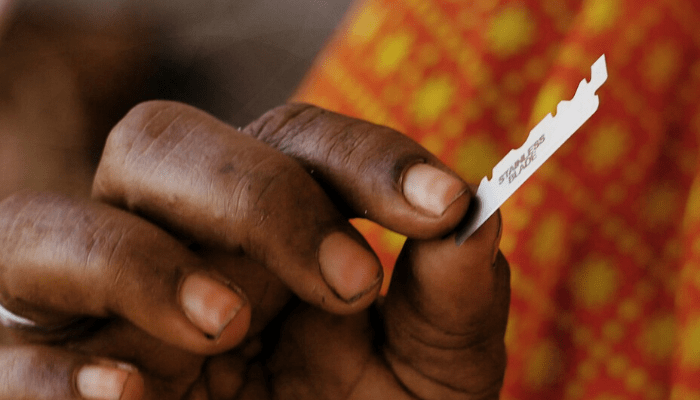
Stakeholders in Ondo State have raised the alarm over the growing “medicalisation” of Female Genital Mutilation (FGM), in healthcare facilities across the state.
According to them, some medical practitioners, who should be opposing the harmful practice, are now performing it under the guise of medical procedures.
Speaking at the 1st quarter 2026 Ondo State Technical Committee (STC) meeting on ending FGM convened in Akure, the state capital by Balm in Gilead Foundation for Sustainable Development (BIGIF) with support from the United Nations International Children’s Emergency Fund (UNICEF), Isaac Aladeniyi, who chaired the stakeholders meeting, however, disclosed that the state government is set to ban the practice across all health facilities including private ones.
Aladeniyi, who is also the Director of Family Health at the Ondo State Ministry of Health, noted that FGM is already outlawed under federal law, making it illegal in Ondo State.

He said; “the medicalization of FGM is really growing within facilities and of course when you medicalised it, it means that you are trying to justify reasons why you are practicing it especially when the medical people who are supposed to opposed it are now practicing it.
”Since it’s outlaw by the Federal Republic of Nigeria, it’s already outlaw in the state, so we have all legal ground to ban the practice in the health facilities of Ondo including the private facilities.
”Within the premises of the public facilities we are going to issue a circular that will be signed by the honourable Commissioner for Health and it will be circulated to all facilities in the state to ensure that the practice is prohibited.”
Nelson Akerele, the Programme Manager, Balm in Gilead Foundation for Sustainable Development (BIGIF), highlighted the importance of community engagement, education, and advocacy to eliminate the harmful practice, particularly in rural areas where it remains widespread.
Akerele also showcased the recent initiatives of the foundation, including the training of traditional birth attendants and health workers to identify and report cases of FGM, and counseling families on alternative rites of passage.
He, however, called for stronger collaboration with the judiciary and law enforcement agencies to improve access to justice, continuous engagement with health workers to curb the medicalisation of FGM, and greater involvement of traditional and religious leaders in addressing entrenched social norms.
Simidele Odimayo, the Special Adviser on Health to the Governor, said the state government had continued to strengthen its health system and expand public enlightenment across all 203 wards.
According to Odimayo, trained health educators have been deployed across primary, secondary and tertiary health facilities to sensitise residents on the dangers of FGM.
He noted that the government, through its Family Health Department and a dedicated gender desk, had intensified institutional efforts to tackle what he described as a deeply rooted cultural practice.
”The government is doing everything possible to ensure that female genital mutilation is brought to an end. We are working with partners and stakeholders to educate our people and change harmful social norms,” he said.
BusinessDay reports that the meeting, held at the Ministry of Health Conference Hall, which was organised in collaboration with the Ondo State Ministries of Health and Women Affairs and Social Development chatted a renewed course towards ending FGM in the state.