…as FG rolls out N250bn farm credit to drive agric transformation
Stakeholders in Nigeria’s agricultural sector have called on the Federal Government to ensure timely distribution of farm inputs, subsidies and improved seeds as part of efforts to meet the Sustainable Development Goal on Zero Hunger.
The call came as the Federal Government unveiled a N250 billion financing facility for smallholder farmers, aimed at boosting agricultural productivity, strengthening food systems and expanding agribusiness investments across the country.
Read also: How we plan to build Africa’s biggest Agricultural Bank – Ayo Sotirin

The initiative was announced during the 2026 Ministerial Stakeholders Engagement Retreat on Agricultural Transformation in Abuja, where Abubakar Kyari, Minister of Agriculture and Food Security and his counterpart, Aliyu Sabi Abdullahi outlined key achievements and policy priorities driving Nigeria’s food security agenda.
Kyari said the Government is prioritising increased domestic production while reducing reliance on food imports and ensuring that food remains accessible and affordable for Nigerians.
“We are united in our resolve to bridge gaps in agriculture so that essential food items are steadily available, accessible and affordable. Our mission is to boost agricultural productivity, create livelihood opportunities and drive wealth creation across the sector”, he said.
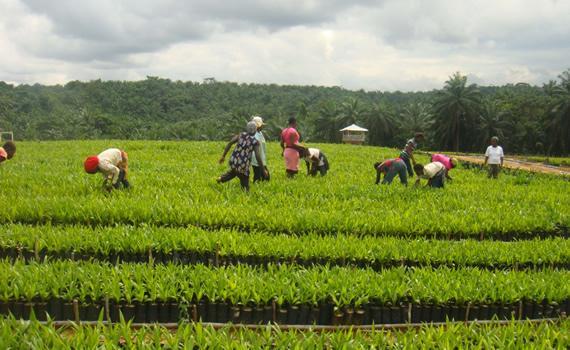
According to the minister, the N250 billion facility granted to the Bank of Agriculture will provide single-digit interest loans to smallholder farmers, enabling them to access improved seeds, modern equipment and other critical inputs required to scale production.
“To further support farmers, the Federal Government has granted a N250 billion facility to the Bank of Agriculture to provide credit to smallholder farmers at single-digit interest rates,” Kyari said.

He noted that Government interventions over the past two years had supported farmers through fertiliser distribution, mechanisation programmes and technology adoption aimed at transitioning agriculture from subsistence production to agribusiness.
Kyari disclosed that over 1.9 million bags of fertiliser had been distributed to nearly one million farmers, while new partnerships with Russia, Turkiye, India and Canada are helping expand fertiliser production and support technology transfer.
A 2025 Agricultural Performance Survey conducted by the National Agricultural Extension and Research Liaison Services also recorded increases in the production of rice, maize, sorghum, millet, cowpea, yam and cassava compared with the previous year.
Beyond production, the Government is also investing in agro-industrial infrastructure including processing plants, milling factories and agribusiness incubation centres to strengthen value addition and attract private investment.
Kyari said the rollout of Special Agro-Industrial Processing Zones, supported by the African Development Bank, will accelerate agricultural industrialisation, boost output and reduce post-harvest losses.
“We are scaling up industrial transformation across the agricultural value chain through the Special Agro-Industrial Processing Zones programme. The initiative aims to increase agricultural output by more than 60% and reduce post-harvest losses by 80%”, he noted.
Also speaking, Mohammed Idris, Minister of Information and National Orientation, said agriculture remains central to the administration’s economic reforms agenda.
“Food security is national security. That is why government continues to strengthen farming initiatives, promote mechanisation and deepen partnerships that improve food supply chains,” Idris said.
He added that broader economic reforms introduced by the administration are beginning to stabilise the economy and improve investor confidence.
“These reforms were difficult but necessary decisions to stabilise the economy and reposition it for sustainable growth. We are beginning to see progress as revenues improve and investor confidence strengthens,” he said.
Earlier, Marcus Ogunbiyi, Permanent Secretary, Federal Ministry of Agriculture and Food Security, said collaboration among stakeholders remains essential to achieving sustainable food security.
“Agriculture and food security are not the responsibility of government alone. It is a shared national endeavour involving farmers, development partners, the private sector and the media”, Oginbiyi said.
He noted that the retreat provides a platform to align policies, strengthen partnerships and ensure government programmes respond to the needs of farmers and agribusiness operators.
Stakeholders drawn from farmer groups, development partners and civil society organisations commended the government’s efforts but called for more inclusive policies aimed at empowering farmers and accelerating progress toward the Zero Hunger goal.
Limota Goroso Giwa, Executive Director, International Women Communication Centre and deputy director, sustainable development centre, University of Abuja, said Nigeria cannot achieve Zero Hunger without empowering smallholder farmers.
Read also: Fertilizer prices may spike as Iran bans food, agricultural exports
“You have done so much as a ministry, but the real question is implementation in line with the indices and indicators of the Zero Hunger agenda,” she said.
Giwa also highlighted structural barriers faced by women farmers, noting that limited access to land remains a major obstacle to food production.
“Women want to farm but they do not have access to land. How can we achieve Zero Hunger if women farmers cannot farm?” she asked.
Stakeholders further warned that climate change is increasingly threatening agricultural productivity and called on farmers to take advantage of agricultural insurance schemes being introduced by government.
“The big monster out there is climate change. There is every need for farmers to take advantage of agricultural insurance,” an official said.
Participants also urged Government to reduce the cost of pesticides, fertilisers and other farm inputs to enable smallholder farmers sustain production and contribute meaningfully to national food security targets.
The retreat brought together Government agencies, development partners, farmer organisations and private sector operators to review progress in the sector and shape future strategies for sustainable food production and agricultural industrialization in Nigeria.