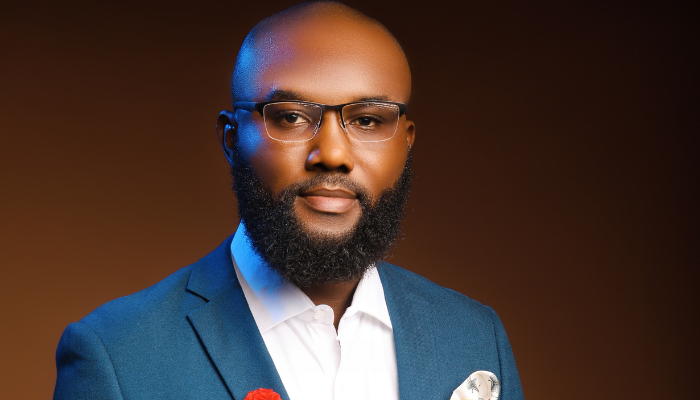
CrossTie Solutions, a fast-rising force in people development and organisational consulting, continues to redefine leadership capability across Nigeria’s public and private sectors. At the centre of this evolution is Adebayo Adegun, Lead Partner and CEO — a seasoned OD Consultant and leadership trainer with over 15 years of experience delivering strategic transformation across industries.
Adegun has remained committed to helping organisations build sustainable leadership and culture. Since founding CrossTie in 2013, he has led the firm to train over 5,000 professionals, with clients including CBN, Lagos State, Seplat, Stanbic IBTC, and more.
In this interview with Chisom Michael, Adebayo shares key lessons from his professional journey, hard-won insights into the evolving landscape of leadership development, and practical, experience-backed strategies for building people systems that not only align with organisational performance but also drive long-term cultural transformation and strategic impact. Excerpts:
You have worked across both public and private sectors. What differences have you observed in how organisations approach training and development?

Working across various sectors, I have observed contrasting mindsets regarding learning. Private organisations tend to view training as a strategic investment linked to performance, retention, and culture.
They adopt data-influenced approaches and customised learning paths that align with their business goals. In the public sector, training has historically leaned more toward compliance and occasional workshops.
However, this is evolving. Many public institutions are increasingly open to practical, mindset-shifting programmes that build strategic capability. For example, through our work with government agencies, we have seen a growing appetite for development initiatives that go beyond ticking boxes.
Ultimately, private organisations lead in agility, while the public sector has the scale to drive societal change if it embraces continuous learning as a lever of performance.
Many Nigerian companies struggle with succession planning. In your experience, what are the key barriers to getting this right?

Succession often fails because companies treat it as a one-off event, not a deliberate process. Over-centralised leadership is a common barrier, especially in founder-led businesses where control is tightly held.
Another challenge is the lack of structured talent pipelines. Many firms prioritise short-term performance over nurturing long-term leadership potential. Fear also plays a role as leaders may hesitate to develop successors, fearing irrelevance.
At Crosstie, we help businesses build what we call Leadership Architecture: a model that embeds leadership development into their operating rhythm, ensuring sustainability and long-term impact.
What role do you believe leadership coaching plays in improving business performance today?
Leadership coaching has become essential for improving performance because it bridges self-awareness and strategy. Unlike conventional training, coaching is personalised and confidential. It helps leaders build emotional intelligence, improve decision-making, and stay self-aware.
I have seen coaching transform leaders from reactive managers to intentional, strategic thinkers. This shift leads to stronger engagement, clearer communication, and better execution, all critical for navigating rapid change.
You’ve led training for some of Nigeria’s biggest institutions. What have these experiences taught you about developing senior talent?
Working with senior leaders across top institutions like TVC, First Pension, NDIC, DMO, Stanbic IBTC, and Lagos State Government has taught me that developing senior leaders goes far beyond sharing content. Senior executives rarely lack technical competence. Instead, their growth often depends on learning to influence culture, lead through people, and operate strategically. Many struggle to evolve from operational problem-solving to defining vision and values.
Another insight is that ego and legacy often get in the way. Effective development at that level requires creating safe spaces for vulnerability, accountability, and growth.
Our Senior Leadership programs at Crosstie often include simulations, coaching, and reflective exercises that push leaders to confront their blind spots and recalibrate their leadership style. When senior leaders shift their mindset, the effect on culture and performance is substantial.
Can you walk us through your approach when designing a competency framework for an organisation?
I view a competency framework as a strategic tool to align people, culture, and performance. The process starts by understanding the organisation’s vision, priorities, and desired culture.
At Crosstie, we typically use the KSA framework to define knowledge, skills, and attitudes: knowledge is what an individual needs to understand or be aware of in their role; skills are the technical and behavioural capabilities required to perform; and attitudes are the mindset and behaviours that align with the company’s culture.
From there, we validate the framework with leadership teams to ensure it resonates practically and culturally. Embedding it into daily operations such as recruitment, development, and performance reviews makes it a living document that defines how people grow and deliver results.
What strategies have worked best for you in aligning people development with organisational goals?
Alignment starts with clarity about where the business is headed. Every development initiative must connect to that vision. I’ve found that mapping critical capabilities and designing learning around them is effective, as is embedding development into everyday work, through coaching, projects, and feedback.
Culture also plays an important role. We use our 6-Dimensional Culture Framework to assess the cultural environment supporting development.
We embed learning into daily operations. That means not just workshops, but coaching, assignments, accountability, and post-training tracking tools like our CIRD (Culture Initiative Reporting Dashboard).
Finally, leadership sponsorship is essential. When leaders champion learning and link it to performance, alignment accelerates.
As someone who has managed consulting projects worth billions of naira, what lessons have you learnt about scaling impact in large systems?
Scale doesn’t start with size, it starts with clarity, consistency and discipline in structure. In large organisations, a lack of alignment can quickly multiply confusion.
It is also critical to build solutions that clients can sustain independently. Early wins are important as they build belief. And without robust data to track progress, scaling becomes guesswork. Our CIRD dashboard helps us monitor implementation across multiple touchpoints, ensuring progress is visible and accountable.
Scaling involves designing systems that are clear, repeatable, and owned by people.
How do you measure the effectiveness of leadership training programmes?
I look for evidence of learning, behavioural change, and impact on strategic goals to ensure training translates into value, not just.
At Crosstie, we start with immediate feedback and knowledge assessments, but more importantly, we track agreed performance indicators like decision quality, engagement levels, and execution speed through our proprietary Training ROI Tool.
Effectiveness isn’t about attendance, it’s about impact. We ensure that training translates into
performance, accountability, and real organisational value, not just inspiration.
In your view, what is the most pressing people-related challenge Nigerian businesses face today?
The most significant challenge is the gap between role and readiness. Many organisations promote people for technical expertise but fail to prepare them for leadership. This mismatch affects execution and morale.
Sustainable performance requires more than functional competence; it needs intentional development structures that build leadership capability and accountability over time.
What advice would you give business leaders trying to shift from reactive HR models to strategic people management?
First, see HR as a strategic driver, not an administrative function. People are the strategy, not just implementers of it.
Second, align HR initiatives to clear business outcomes and cultural goals. Use analytics to inform decisions from hiring and development to succession planning.
Lastly, embed HR in strategic discussions. If your HR leaders are not part of growth and innovation conversations, you are missing an opportunity.
Strategic people management involves creating systems that attract, develop, and retain talent capable of realising your vision.