The House of Representatives Committee on Renewable Energy has ordered Abba Aliyu, managing director of the Rural Electrification Agency (REA), to appear before it on Wednesday by 11 am or risk arrest by the Inspector-General of Police.
The directive followed the agency’s failure to respond to multiple invitations to account for the use of multi-million dollar grants and loans for rural electrification and renewable energy projects.
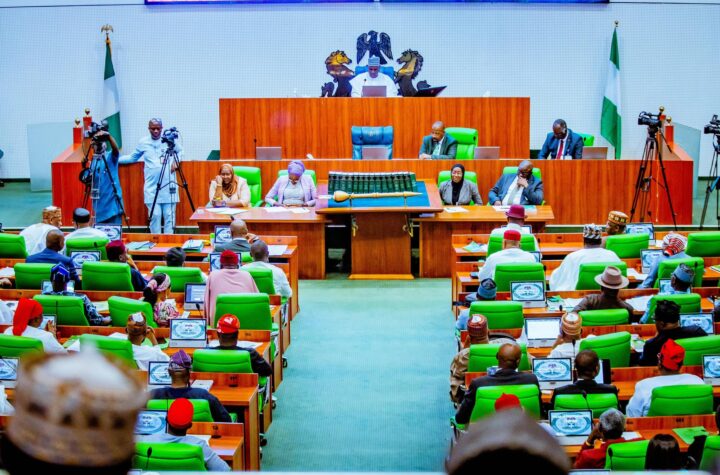
The committee issued the ultimatum during its investigative hearing on Tuesday, examining the domiciliation of green energy projects, foreign grants and investments received in the renewable energy sector from 2015 to date, as well as the deployment of renewable energy solutions across Ministries, Departments and Agencies.
The committee expressed dissatisfaction that the REA — the lead implementing agency for off-grid electrification — was absent from the session despite being central to the inquiry.

Afam Ogene, chairman of the committee, said formal invitations were sent to the agency on November 3, December 10, 2025, and February 4, 2026. He said the agency acknowledged receipt of the letters but failed to appear.
Read also: Fire-ravaged airport terminal would still have been pulled down – Keyamo
He described the absence as unacceptable, noting that the REA is responsible for receiving and administering substantial foreign grants and concessional loans intended to expand electricity access in underserved communities.
Among the funds cited by the committee were $550m from the World Bank for rural electrification projects; N13bn in funding reportedly backed by the Nigerian Electricity Regulatory Commission and other donors between 2015 and 2025; $8m in 2022 from a German development corporation; and $12m from South Korea between 2024 and 2025.
The committee also referenced a $750m World Bank facility linked to support for 10,000 farmers, $5.9m disbursed between 2022 and 2025 to improve access to green energy, and $5m from the Global Energy Alliance for agricultural electrification initiatives. Additional grants of $2.9m spanning 2022 to 2026 were also highlighted.

The committee said the REA was expected to provide a detailed breakdown of how the funds were applied, the projects executed, and the beneficiaries.
“These are public resources intended to expand electricity access and promote renewable energy. The agency must account for how these funds have been managed and who has benefited,” Ogene said.
Members of the committee warned that failure to account for the grants and loans could undermine Nigeria’s credibility with development partners and weaken investor confidence in the renewable energy sector.