Nigeria’s hotly debated tax reform bills are now ready for Presidential assent following the House of Representatives’ adoption of the harmonised versions agreed upon by both Chambers of the National Assembly.
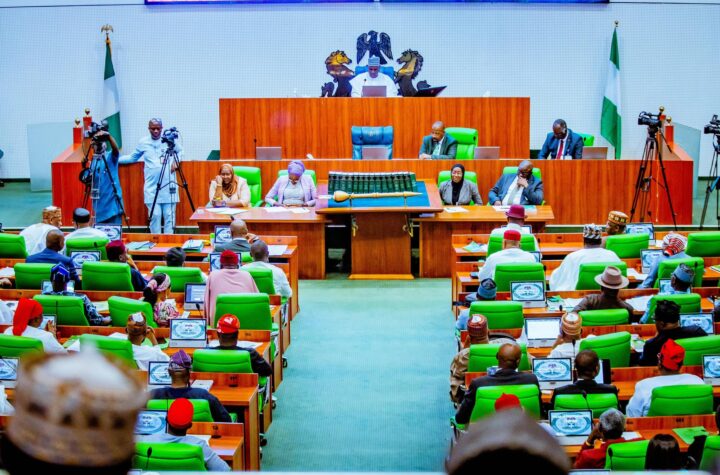
During its plenary onTuesday, the House considered and approved the report of the Conference Committee, which reconciled differences in the versions of the bills earlier passed by the Senate and the House of Representatives.
President Bola Tinubu had transmitted the four bills to the National Assembly in November 2024 as part of his Administration’s drive to overhaul Nigeria’s tax system. The proposed legislation includes the Joint Revenue Board (Establishment) Bill, the Nigeria Revenue Service (Establishment) Bill, the Nigeria Tax Administration Bill, and the Nigeria Tax Bill.
Following passage of the bills by both Chambers, a Conference Committee was constituted to harmonise the discrepancies. According to the Committee’s report, all areas of divergence have now been resolved.

James Faleke, Chairman of the House Committee on Finance, who led the House delegation to the Conference Committee, presented the harmonised report during plenary.
Read also: Nigeria, S’Africa among biggest losers as Africa forgoes $125bn in tax revenue
Faleke disclosed that there were 45 differences in the Nigeria Tax Administration Bill, 12 in the Nigeria Revenue Service Bill, nine in the Joint Revenue Board Bill, and 46 in the Nigeria Tax Bill. He confirmed that all contentious provisions were settled through consensus.
One of the provisions agreed by the committee is the imposition of a 4% development levy on the assessable profits of all companies subject to tax under chapters two and three, excluding small companies and non-resident entities. The levy will be collected by the Nigeria Revenue Service and paid into a designated special account.
Regarding the distribution of the levy, the Committee proposed that 50% be allocated to the Tertiary Education Trust Fund, 15% to the Education Loan Fund—up from the 3% earlier proposed by the House—and 8% to the Nigeria Information Technology Development Fund, an upward adjustment from the 5 and 10% proposals from the Chambers.

A new clause, Clause 158, was also adopted. It introduces a 5% surcharge on chargeable fossil fuel products either produced in or provided within Nigeria. This surcharge is to be collected at the point of transaction.
On Value Added Tax (VAT), the two Chambers are in agreement on the revenue-sharing formula: 10% for the Federal Government, 55% for State Governments and the Federal Capital Territory, and 35% for Local Governments.
The VAT revenue allocated to States will be further distributed using the following criteria: 50% based on equality, 20% on population, and 30% based on the place of consumption. Local Government allocations will follow a 70:30 split, based on equality and population, respectively. Both Chambers also agreed to retain the existing VAT rate of 7.5%.
During deliberations, Ahmed Jaha, member representing Borno warned legislative staff responsible for final proofreading and documentation of the bills. He urged them not to alter any clauses, no matter how minor the edits may seem.
“Where the ‘T’ is not crossed, don’t cross it; where the ‘I’ is not dotted, don’t dot it. We have the original versions of the bills, both before and after harmonisation. In the past, unauthorised edits have led to the President withholding assent. That must not be allowed to happen again”, he cautioned.
With the harmonisation process concluded, the bills will now be forwarded to President Tinubu for final assent, marking a critical step in Nigeria’s tax reform agenda.