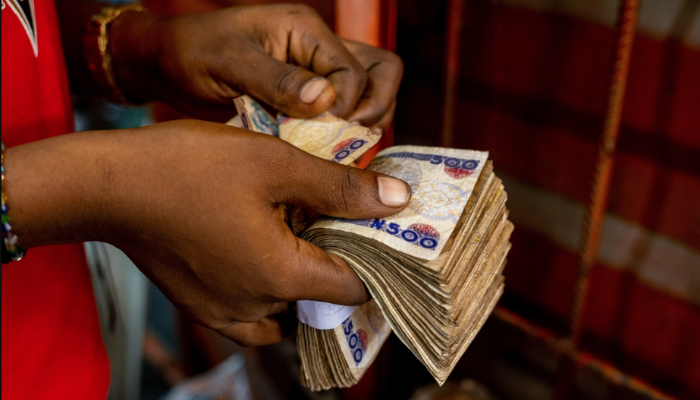
The naira experienced a marginal depreciation across the foreign exchange (FX) market on Wednesday, attributed to a decline in dollar liquidity that limited supply across trading segments.
According to data released by the Central Bank of Nigeria (CBN), the local currency weakened at the Nigerian Foreign Exchange Market (NFEM), where it lost N7.01 to trade at N1,590.74 per dollar, compared to N1,583.73 recorded on Tuesday.
The weakening trend was also mirrored in the parallel market, often referred to as the black market, where the naira shed N10, closing at N1,620 against the previous day’s rate of N1,610.
Market report by Coronation Merchant Bank pointed to a reduction in total foreign exchange inflows, which fell by 21.28% on a week-on-week basis.

A breakdown of the inflow figures showed that exporters contributed the majority share, accounting for 75.54%. The CBN’s contribution was a modest 2.98%, while Foreign Portfolio Investors (FPIs) provided 9.72%. Non-bank corporates made up 9.61%, and other sources represented the remaining 2.15%.
Read also: Naira, cedi among currencies to slip in 2025, says AfDB
The data highlights a noticeable reliance on non-central sources for FX supply, underlining the pressure on market liquidity.
Despite the current dip, Olayemi Cardoso, Governor of the CBN pointed to indicators of progress in the broader foreign exchange landscape. He stressed that the naira had reached a more stable and sustainable level, and the once-pronounced gap between the official and parallel market rates had been significantly narrowed. Cardoso attributed this to a series of disciplined and purposeful reforms implemented by the apex bank.
He further noted that the improved exchange rate stability had been instrumental in regaining investor confidence and stimulating autonomous foreign currency inflows through official financial channels. These inflows, he explained, are expanding the country’s foreign exchange base beyond its historical dependence on oil revenues.

In their assessment of the evolving FX landscape, analysts from FSDH Merchant Bank Limited underscored the importance of the CBN maintaining a proactive stance. They emphasised that sustaining investor trust and ensuring consistent market liquidity would depend on the continued implementation of reforms that deepen market confidence and attract diversified inflows.