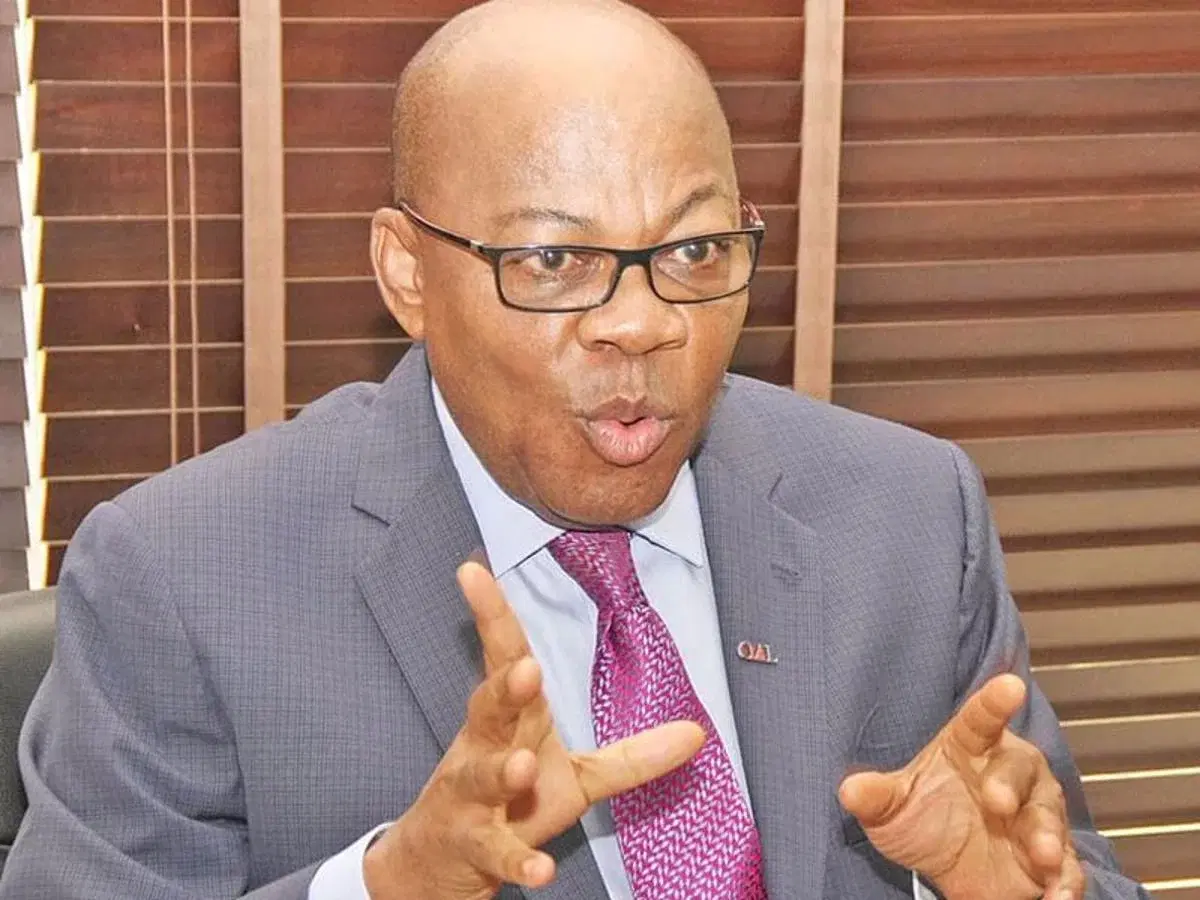
Olisa Agbakoba, a former president of the Nigerian Bar Association, has thrown his weight behind President Bola Tinubu over the recent Executive Order mandating the direct remittance of oil and gas revenues into the Federation Account, describing the move as a historic step toward restoring Nigeria’s fiscal sovereignty.
Agbakoba, in a detailed submission to the implementation committee chaired by the Minister of Finance, said the Executive Order marks a pivotal shift in Nigeria’s oil and gas governance framework and validates years of advocacy by his organisation, OAL, on the need to reform revenue administration in the sector.
The Executive Order directs that all oil and gas revenues — including Royalty Oil, Tax Oil, Profit Oil and Profit Gas — be paid directly into the Federation Account in line with Section 162 of the 1999 Constitution (as amended), which mandates that all revenues of the Federation be paid into the central pool for distribution to federal, state and local governments.
According to Agbakoba, the Order effectively dismantles what he described as “layers of unjustified deductions” historically undertaken by the Nigerian National Petroleum Company Limited (NNPC Ltd), and curbs practices that have, over time, weakened remittances to the Federation Account.

He argued that Nigeria’s worsening fiscal pressures — including mounting debt, revenue shortfalls and limited funding for public services, are partly traceable to structural weaknesses in the oil revenue framework under the Petroleum Industry Act (PIA).
While commending the President’s action as “revolutionary,” Agbakoba insisted that the Executive Order does not go far enough to address deeper structural distortions in the sector.
Call for NNPC Privatisation
Central to Agbakoba’s recommendations is a call for the full privatisation of the Nigerian National Petroleum Company Limited.
Agbakoba described NNPC Ltd as an “amorphous entity” whose dual role as both commercial operator and quasi-government institution creates structural conflicts that undermine transparency and reduce remittances.

He maintained that Nigeria does not require a state-owned oil company, arguing that a robust private sector already exists to drive exploration and production.
“The role of government should be limited to collecting rents and taxes, not participating in commercial oil and gas operations,” he stated, alleging that NNPC has historically absorbed between 50 and 70 per cent of oil and gas revenue through statutory and structural mechanisms.
He urged the Implementation Committee to recommend either the outright sale or privatisation of NNPC as part of the broader review of the PIA.
Phased Withdrawal from JV, PSC Arrangements
Beyond NNPC’s status, Agbakoba also called for a phased withdrawal from existing Joint Venture (JV) and Production Sharing Contract (PSC) arrangements with international Oil companies.
While acknowledging that the Executive Order now mandates direct remittance of revenues by operators, Agbakoba argued that simply changing the payment channel does not address the deeper contractual structures that determine how much accrues to the Federation.
He contended that JV and PSC frameworks allow IOCs to recover costs before calculating the government’s share, creating incentives that may erode Nigeria’s net revenue.
According to him, these arrangements, many negotiated decades ago, often lack transparency and disproportionately favour foreign partners.
The Senior Advocate of Nigeria (SAN) therefore recommended a structured transition plan that would gradually phase out JV and PSC arrangements over a defined period, while respecting Nigeria’s international treaty obligations and avoiding arbitration disputes.
Such a transition, he said, would translate Nigeria’s constitutional ownership of petroleum resources into tangible economic benefits and restore full sovereign control over production and revenue decisions.
PIA Review Imperative
Agbakoba further urged that the committee integrate these proposals into the planned comprehensive review of the Petroleum Industry Act, insisting that incremental administrative reforms must be complemented by deeper legislative restructuring.
He expressed OAL’s readiness to provide technical expertise to the committee to ensure that the oil and gas legal framework aligns with national fiscal interests.