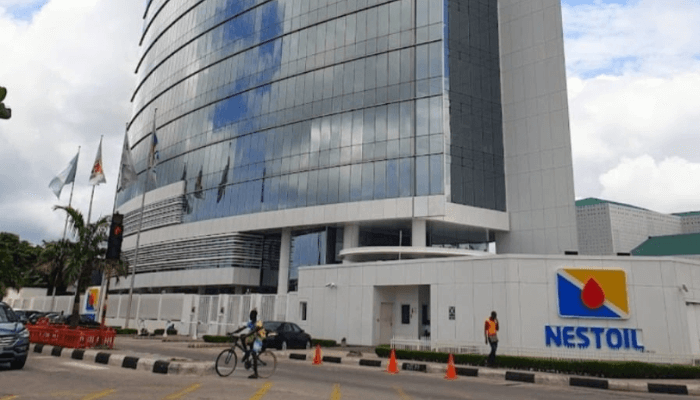
A fresh wave of tension flared yesterday as controversy deepened over allegations that the Lagos State commissioner of police failed to comply with a Federal High Court order vacating earlier ex parte orders obtained by FBNQuest Merchant Bank and First Bank Nigeria against Nestoil Limited.
The Federal High Court, in an Order dated 20 November 2025, vacated the ex parte directives previously granted to the banks.
According to court documents and legal representatives, the vacating order was duly served on the Lagos State Police Command and was formally acknowledged upon receipt.
Read also: Lokpobiri hails Renaissance for boosting oil output, restoring gas supply to NLNG

The order was also circulated to various national security agencies, including the Department of State Services (DSS).
While the DSS reportedly complied immediately,withdrawing its personnel from locations previously secured under the now-nullified ex parte orders, the Lagos State Police Command allegedly did not follow suit.
Legal representatives for the companies involved said that police officers “remained stationed at the Nestoil facilities” even after service of the new court order, thereby restricting access to parts of the company’s operations.
According to the lawyers, the continued police presence represents not only a disregard for judicial authority but also a direct violation of the court’s directive.
They argue that the Federal High Court’s order is binding on all parties and security agencies involved, leaving no room for selective interpretation or delayed compliance.

One senior legal counsel working closely on the matter expressed frustration over what he described as an avoidable escalation.
“The court has spoken,” he said. “Security agencies do not have discretion in obeying judicial orders. The continued presence of police officers is unlawful and amounts to contempt. This kind of conduct undermines confidence in the justice system and threatens the rule of law.”
He added that while the DSS promptly withdrew its operatives, the police command’s inaction raised questions about internal communication, command responsibility, and adherence to constitutional obligations.
Experts in constitutional law and civil rights have already begun weighing in, describing the situation as symptomatic of a broader problem within law enforcement operations in Nigeria.
Some analysts warn that if security agencies pick and choose which court orders to obey, the long-term implications could be severe.
On Thursday, the Federal High Court in Lagos vacated the Mareva injunction that had frozen the company’s assets and those of its directors over an alleged $1 billion debt claim.
Read also: Mike Adenuga gets largest chunk of Conoil’s N2.43bn final dividend
Osiagor issued the order after the Chief Judge of the Federal High Court transferred the case from Justice Dehinde Dipeolu to his court.
Dipeolu had, on October 22, 2025, granted a far-reaching Mareva injunction restraining Nestoil, its affiliate Neconde Energy Limited, and principal promoters, Ernest Azudialu-Obiejesi and Nnenna Obiejesi, from tampering with their funds, shares, and other assets in over 20 financial institutions.
The order also empowered First Trustees Limited and FBNQuest Merchant Bank Limited, acting for a consortium of creditor banks, to take possession of Nestoil’s assets under receivership.