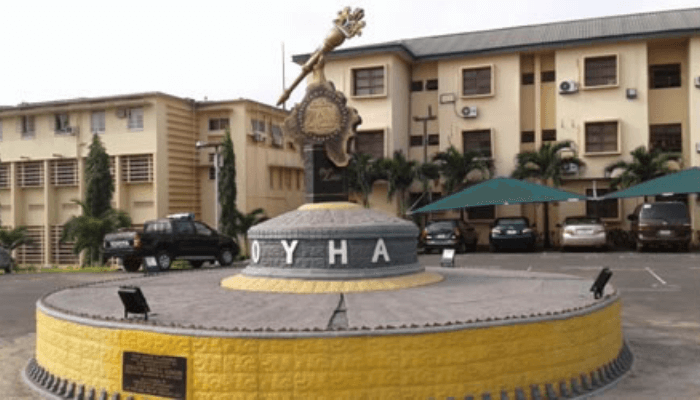
The Oyo State House of Assembly on Thursday, urged the executive to swiftly take action to streamline levies and eliminate illegal operators masquerading as revenue agents.
The lawmakers also emphasised the need for decisive measures to curb illegal revenue collection and end the harassment of commercial drivers, tricyclists and motorcyclists, in order to promote order, fairness and effective service delivery in the transport sector in the state.
This followed a motion co-sponsored by Rasaq Mabaje, representing Ido State Constituency on”Need to Curb Illegal Revenue Collection, Multiple Stickers, and Harassment of Commercial Drivers, Tricyclists and Motorcyclists in Oyo State”.
Read also: Lagos Assembly begins audit of 57 LGAs, LCDAs accounts

The lawmakers, who were unanimous in decrying the development, said that the Assembly had taken cognisance of persistent complaints from transport operators burdened by overlapping levies, unauthorised collections and the proliferation of stickers imposed by different agencies and individuals.
The legislators in their separate submissions expressed concern that the absence of a clearly defined and harmonised framework for transport-related charges had created room for abuse, intimidation and extortion, particularly at motor parks and along major routes.
According to the lawmakers, commercial drivers and riders form a critical part of the state’s informal economy and should not be subjected to practices that worsen their economic hardship.
Mabaje, who spoke during plenary, said that the situation was not only affecting livelihood, but also undermining public trust in government revenue systems.
Also, Mr Bamidele Adeola, representing Iseyin/Itesiwaju State Constituency, said that the unchecked activities of illegal collectors posed security and financial risks, warning that continued harassment could lead to unrest within the transport sector.

He urged the government to strengthen enforcement and ensure that only duly authorised agencies collect approved revenues.
Adeola contended that harmonisation of transport revenues would improve accountability and transparency while boosting legitimate government income.
He added that clarity in revenue collection would also enhance service delivery and reduce friction between drivers and enforcement officials.