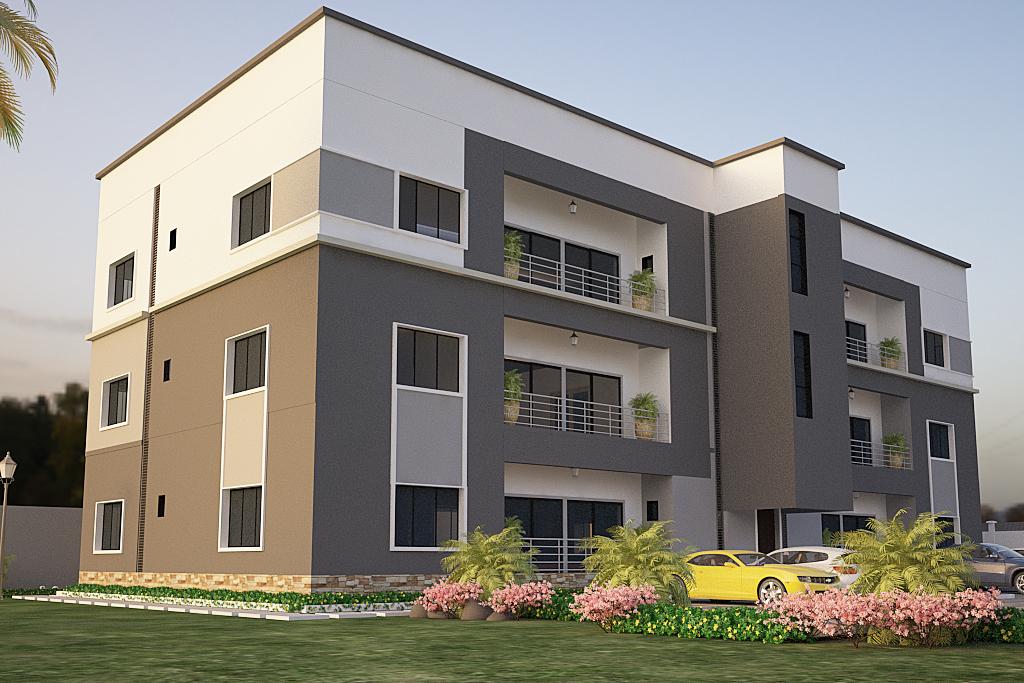
A survey by BusinessDay revealed that now is a good time to be buying home, land, office and mall from Nigeria’s property market as less competition has reduced demand’s power to influence the price.
The unattractiveness of the country’s property market to investors due to uncertainties of the forthcoming elections, declining income on the part of its citizens, property glut and the aftershock of economic recession are the reasons why there is plunge in property demand.
Olurogba Orimalade, Chairman of the Nigerian Institution of Estate Surveyors and Valuers (NIESV) Lagos State Branch said one cannot get property in Nigeria real estate market at a better time than now.
“It is a good time to buy because, unfortunately, the episode from last two years, in term of economic recession have led to a situation where a lot of property owners and developers are being flexible and are easing up, as they are ready to just get what you can call ‘any profit’,” Orimalade said.

Figures by the National Bureau of Statistics (NBS) showed that Nigeria real estate sector has been in recession for the 11th consecutive quarter through to Q3 2018 since the first quarter of 2016.
Nigeria’s GDP growth rate of 1.81 percent in the review quarter could not rub off the country’s property market as it reported -2.68 percent growth in the quarter under review. Although it was 1.21 percentage point better than the -3.88 percent reported in the previous quarter.
Ibraheem Babalola, Co-Founder/CEO of Muster, a shared housing marketplace said a lot of politicians want to sell their real estate investments to generate funds for campaign and this has impacted property prices in the country.
“Now is a good time to buy properties because prices are actually lower resulting from the fact that a lot of empty properties owned by politicians in major cities like Lagos, Abuja and Port Harcourt, which were vacant are now been be put up for sale because they want election campaign and they want to quickly turn these properties into cash,” Babalola said.
He concluded by giving an instance that a friend of his wants to buy a property in one of the most expensive property hubs in Lagos, not because she planned to acquire the property but “because she heard of a very attractive deal in the market.”

According to Association of Housing Corporation of Nigeria (AHCN), more than 90 percent of new homes utilise funds from personal savings for incremental construction which as a result of underdevelopment of Nigeria Mortgage sector in driving home ownership and AHCN says it is “worrisome.”
Yemi Stephens, Partner at Estate Links Limited said power to negotiate on the side of the buyer has more than doubled.
“The property market is not buoyant as we speak, as there are very few buyers. As a buyer, you are able to negotiate well now because very few people are buying,” Stephens explained.
He however painted a picture of the current state of the property market and he said it is like a situation where a property that four people used to struggle for is now left with just one person. “With the ability to buy now, you can sit down with the landlord and negotiate to a very good price,” Stephens mentioned.
Nigeria with about 20 million units housing deficit has one of the lowest mortgage to Gross Domestic Product (GDP) rate at about 0.5 percent, which obviously lags Ghana’s 2 percent, South Africa’s 30 percent, the U.S rate at 60 percent and that of the UK at 70 percent.
Rafiq Raji, chief economist at Macroafricaintel explained that mass housing, for which there is huge demand, is probably not attractive because incomes are low and credit is dear.
“More high-end property, plenty of which are empty in places like Abuja, have not enjoyed much custom because the rent economy, fuelled by political patronage, has been in dire straits for the past 3 or more years,” Raji said.
Jide Ogunleye, CEO of Denaro properties Ltd, a business and investment strategies expert with emphasis on real estate said it is a good time to buy because prices of properties are dropping in most of the areas with luxury homes “like Banana Island and Ikoyi, because people cannot really afford them.”
He also explained that a lot of investors are holding on their investment in the sector because of the forthcoming election.
It is less than three months before the 2019 presidential elections, and many have projected that it will be a drag between the alleged two most preferred candidates; Muhammadu Buhari, the current president and former vice president, Atiku Abubakar, of which both are from the Hausa/Fulani North.
“Somebody called me from the U.S and wanted to subscribe but later said he wants to wait and see how the elections goes. So a lot of people are holding on to their funds because of the uncertainties,” Ogunleye told BusinessDay.
The opinion of Stephens was not different as he said “looking at the political climate; you do not know what is going to happen,” although he said one can only pray that everything go on well.
“Everyone is trying to be careful in making investment. People are taking their time in what is called the ‘wait and see’ measure,” Stephens added.
While sluggish economic growth was recorded in 2018 despite an average of oil price of $70 a barrel which was not able to lift the real estate sector from contraction, uncertainties continues to cloud the outlook for 2019 as U.S. Energy Information Administration is forecasting an average oil price of $61 a barrel in 2019 while American multinational investment bank Citigroup Inc is forecasting oil prices to average $60 a barrel in 2019.
Industry experts see such situation negatively affecting Nigeria’s property market owing to the fact the country generates the largest foreign exchange from the sale of its crude oil.
So a drop in oil prices will mean decline in the value of the naira and less availability of dollar for developers to use in importing their building materials, this will therefore result in increase of property prices.
“When this happen prices of properties is going to surge,” Babalola said.
Fortunately, it will also be an opportunity for Nigerians in diaspora due to their high currency value, considering when they change the earned foreign currency into naira it will give them a high purchasing power.
BusinessDay survey revealed that naira depreciated last week from its stable N360/N363 to the US$, where it has stayed for most of this year, to a low of N370, the lowest rate since August 2017.
Endurance Okafor