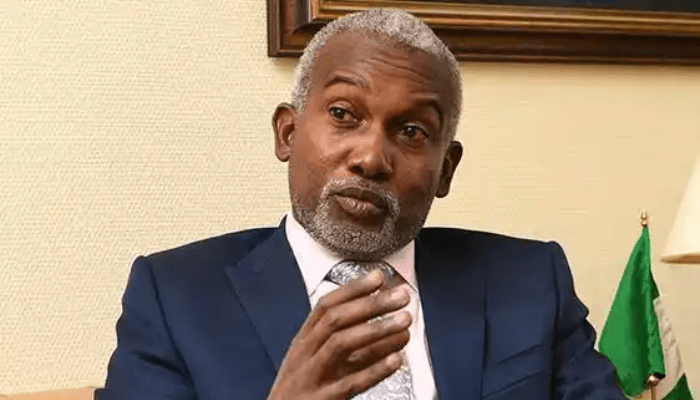
Yusuf Tuggar, Nigeria’s minister of Foreign Affairs, has urged international investors to look beyond isolated security incidents and focus on the country’s evolving economic reforms and opportunities.
Speaking in an interview on CNN on Tuesday, Tuggar said Nigeria is being unfairly judged by selective reporting of violence and insecurity, while the economic progress and reform efforts are overlooked.
Tuggar insisted that the violence in some parts of Nigeria is not purely domestic but part of a regional conflict linked to instability in the Sahel.
He noted that the crisis is connected to events across the region, including the fallout from Libya’s conflict, the proliferation of weapons, and climate-related pressures.

“It’s very important to see the conflict for what it is. It’s a regional conflict that has spilled over into Nigeria,” he said, adding that the situation cannot be separated from Sahel instability and other complex factors.
The minister highlighted ongoing cooperation with international partners, including the United States, to target bandits and terrorist groups in their hideouts.
Read also: Insecurity: US Under Secretary Hooker heads to Nigeria
He emphasised that Nigeria is strengthening its security architecture and taking decisive action against insurgents.
Tuggar warned that a “negative narrative” about Nigeria’s security situation is deterring foreign investment.

He urged investors to treat Nigeria the same way they treat other nations, pointing out that a single incident should not define a country of 923,000 square kilometres.
“We’re urging potential investors to treat us the same way, to look at us the way that they look at other countries,” he said.
He further criticised what he called an “overhyped” perception of geopolitical risk in Africa, arguing that the continent is often unfairly labelled as more dangerous than other regions, discouraging capital inflows.
Tuggar highlighted key economic reforms introduced by President Bola Tinubu’s administration aimed at improving the business environment and attracting foreign investment.
He pointed to changes in the foreign exchange regime, tax reforms, and the reduction of corporate income tax as key measures boosting investor confidence.
“It’s very important we look at the progress that the Tinubu administration has been making with macroeconomic reforms,” he said.
He also noted that Nigeria’s foreign reserves have risen to about $43 billion, and reforms have made it easier for investors to access foreign exchange.
On security matters, Tuggar said Nigeria has made “significant gains” against Boko Haram, mainly through regional cooperation via the Multinational Joint Task Force (MNJTF).
He noted that cross-border pursuit of insurgents has been a major advantage in curbing the insurgency.
However, he added that the effectiveness of the MNJTF was affected after Niger Republic withdrew from the force following last year’s military coup.
The minister also warned that persistent negative reporting could worsen insecurity by encouraging extremist groups to stage attacks for attention.
“So let us look at Nigeria holistically. Let us not continue to dwell on some of these isolated incidents and define the entire country by it,” he said.