Nigeria’s stock market is demonstrating rare breadth and strength as 2026’s rally rolls on, drawing in fresh liquidity and signalling a potential inflection point for investors prepared to look beyond headline indices to sector- and stock-specific opportunities.
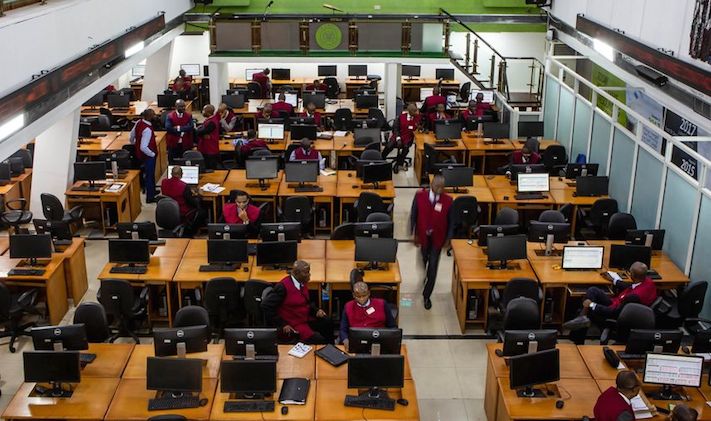
Data from the Nigerian Exchange Group shows the All-Share Index extending its bullish run this week, advancing 1.65 percent to 176,809.42 points and lifting year-to-date returns to 13.6 percent. Market capitalisation hit N113.5 trillion in early trading, adding roughly N1.84 trillion in value across just two sessions this week, highlighting renewed appetite across multiple sectors.
The rally is not limited to headline indices. In the week ended 6 February, the NGX ASI broke through resistance levels decisively, with turnover rising sharply to 3.86 billion shares valued at N128.58 billion, up from roughly N81.51 billion the prior week, and broad market breadth showing 71 advancing stocks versus 35 decliners.
“The market is genuinely widening,” says Oyekan Idris, a capital market analyst. “It is no longer just a narrow handful of bellwether driving performance. Banks, industrials, energy, and selected mid-caps are now participating. That makes this rally more structurally interesting for investors.” This pick-up in breadth is rare in the Nigerian market and a key differentiator from prior episodic rallies.

Banking and financials still lead, but the story is broader
Financials remain a backbone of NGX performance. The NGX Banking Index has jumped roughly 10.8 percent year-to-date, powered by strong liquidity flows and a recapitalised sector that has emerged stronger from regulatory reforms overseen by the Central Bank of Nigeria.
“Banking stocks are leading, not out of happenstance, but because the underlying credit environment is healthier, and return on equity across the sector is improving,” notes Abdulbasit Shuaib, a financial analyst at an investment firm. “That’s attracting both domestic and foreign liquidity, particularly from pension funds now being encouraged into equities.”
Indeed, a recent rule change that has unlocked pension fund money for equities is being credited with igniting fresh market liquidity, with market watchers calling it a “liquidity tsunami” for Nigerian stocks, according to an earlier BusinessDay report.
Energy and industrials offer strategic rotation plays

Beyond banking, energy and industrial goods names are gaining ground as part of broader sector rotation. Stocks such as Seplat Energy, Dangote Cement, and Lafarge Africa posted strong weekly gains during recent sessions, helping push the NGX Premium Index up nearly 6.8 percent amidst heightened bullish sentiment.
The energy sector was a particular standout, up 10.88 percent for the week, buoyed by a 15.36 percent surge in Aradel Holdings and continued investor interest in export-linked and commodity-related names. Analysts say this reflects not only cyclical price effects but structural underpinnings — as global energy markets rebalance and Nigeria’s fiscal reforms unlock investment flows into upstream and downstream players.
Mid-Caps and turnaround stocks attract tactical capital
While large caps anchor the rally, smaller and mid-cap stocks are delivering some of the most dramatic individual performance moves. During the same week, names like RT Briscoe Plc surged over 60 percent, Abbey Mortgage Bank Plc jumped 59 percent, and Union Dicon Salt Plc climbed 49 percent, highlighting significant tactical opportunities beyond the heavyweights.
These moves suggest that, for selective investors willing to manage execution and liquidity risk, there are high-alpha plays outside the core banking and energy universe.
Risks remain, but the structure of the rally has improved
Despite the optimism, structural risks remain. Nigeria’s macro backdrop is shaped by inflation dynamics, exchange-rate uncertainty, and political calendar effects that could dent sentiment if misread. Technical analysts caution that liquidity surges ahead of general elections can reverse once capital shifts to safer geographies.
Even so, broader participation distinguishes the current rally from past short-lived spikes. The combination of regulatory reform, institutional participation, and sector rotation suggests a deeper foundation.
For investors, the signal is clear: Nigeria’s equity market is no longer a narrow bull run driven solely by index concentration. It is an opportunity landscape where sector plays, quality banking names, energy transition names, and select mid-caps are delivering real-time returns. For the patient and disciplined, 2026 may be the year Nigeria’s capital markets finally reflect the country’s economic potential.