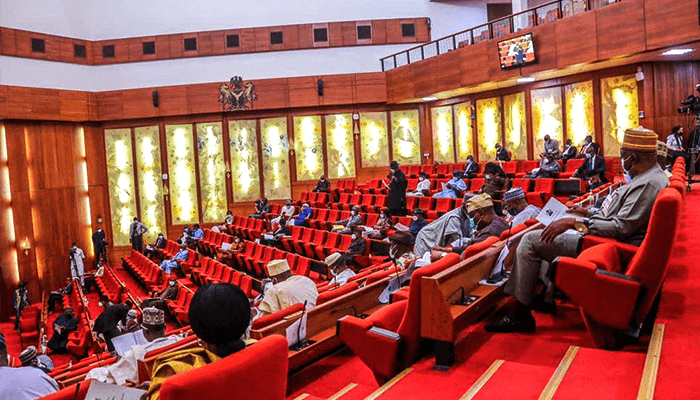
Members of the Senate Committee on Appropriations have called for the full removal of electricity subsidy as part of efforts to increase federal government revenue.
The lawmakers made the call on Monday during a public hearing on the 2026 budget proposal at the National Assembly.
Speaking at the session, committee chairman Adeola Olamilekan, who represents Ogun West senatorial district, said electricity sector reforms must include ending subsidies, which he described as a major drain on public finances.
Olamilekan said that despite the unbundling of the power sector and constitutional changes allowing states to generate electricity, the federal government continues to spend trillions of naira on electricity subsidies.

“We must complete the unbundling and subsidy removal in the electricity sector,” he said. “States are now empowered to generate power, yet subsidy remains a major fiscal burden. We need to address it fully to free up revenue.”
He argued that Nigeria’s annual revenue falls short of funding the size of its budget and that continued subsidy payments worsen the gap.
“If the revenue we have is not enough to fund the budget, why do we keep budgeting this way?” he asked. “Once we remove electricity subsidy, there will be no more payments running into trillions. That revenue will return to government coffers and help fund the budget.”
Olamilekan said the 2026 budget rests on these reforms and described it as a “budget of consolidation,” stressing that reforms must be properly implemented and embedded in people-focused programmes to deliver results.

For years, the federal government has subsidised electricity tariffs to reduce consumer costs, repeatedly acknowledging that the policy costs trillions of naira annually. Critics, however, warn that removing the subsidy could push tariffs higher, deepen hardship for households, and strain businesses.
Senate defends continued borrowing
During the hearing, Olamilekan also defended the federal government’s plan to borrow about ₦25.91 trillion to partially finance the 2026 budget.
He said borrowing remains a global practice, even among developed economies, and argued that Nigeria cannot fund its budget solely through monthly revenue inflows.
“No government runs without borrowing,” he said. “Revenue projections don’t come in at once. Government must continue to function.”
He added that the government plans to source funds from domestic banks, capital markets, and international markets, including Eurobonds, to cover the budget deficit.
Olamilekan then warned that failure to meet debt obligations could damage Nigeria’s international credit rating, including assessments by the World Bank, the IMF, and other rating agencies.
He commended the current administration for meeting debt obligations but said the country must unlock more revenue sources to manage its growing deficits.