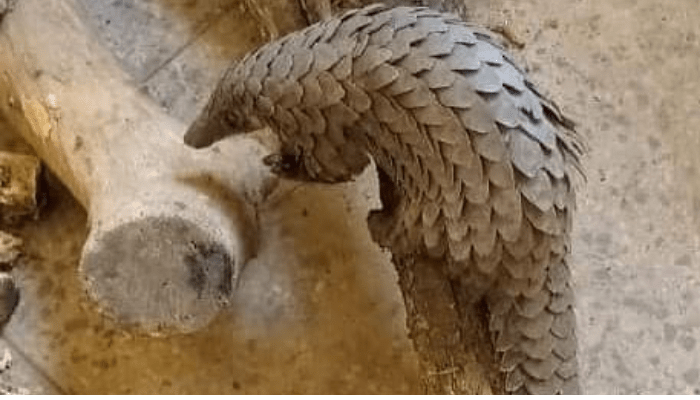
Conservation organisation Wild Africa is pressing Nigeria to accelerate the passage of landmark wildlife legislation and strengthen enforcement against traffickers, as new data reveals the devastating scale of the global pangolin trade.
Nigeria, which was linked to 55 percent of pangolin scale seizures worldwide between 2016 and 2019, has become one of the most critical pressure points in the fight to save the world’s most trafficked mammal.
Despite a 2016 international ban on commercial trade, demand from Asian markets where pangolin scales are prized in traditional medicine and the meat considered a delicacy, continues to fuel a thriving black market.
A l global report released late last year, Conservation Status, Trade and Enforcement Efforts for Pangolins, found that more than 530,000 individual pangolins were implicated in 2,222 illegal trade seizures between 2016 and 2024, with scales accounting for 99 percent of all confiscated parts. The report, prepared by the IUCN Species Survival Commission Pangolin Specialist Group for the CITES Secretariat, drew on submissions from 32 member states and warned that demand continues to drive exploitation across Africa despite existing prohibitions.

“Nigeria is a custodian of precious biodiversity, but our pangolins are being trafficked into extinction,” said Dr. Mark Ofua, Wild Africa’s West Africa spokesperson. “This World Pangolin Day, let’s make history for the right reasons.”
The group is calling on President Bola Tinubu to sign the Endangered Species Conservation and Protection Bill, introduced in early 2024, which would impose significantly harsher penalties for wildlife trafficking. The bill is currently awaiting presidential approval after clearing the National Assembly.
Nigeria’s enforcement agencies have notched some notable wins. The Nigeria Customs Service arrested a suspected pangolin scale broker in December 2024, seizing 2.179 tonnes of scales, the equivalent of roughly 1,100 animals. Since July 2021, the service and its partners have conducted 16 operations resulting in 35 arrests, 12 convictions, and the seizure of 21,582 tonnes of pangolin scales in total.
Still, conservationists warn that enforcement alone is insufficient given the animals’ biological vulnerability. Pangolins have few natural predators but reproduce slowly, making populations highly sensitive to sustained hunting pressure.
“With few natural predators and slow reproduction rates, pangolins cannot sustain human exploitation,” said Peter Knights OBE, CEO of Wild Africa. “Recent changes to reduce the use of scales in China should help, but we need more public awareness and better enforcement in Africa if they are to survive.”

In a broader regional push, West African governments and the IUCN Species Survival Commission announced the first-ever West Africa Regional Pangolin Conservation Action Plan 2026–2056 earlier this year, aimed at coordinating protection measures, population monitoring, and community outreach across range states.
All eight pangolin species are classified as threatened under IUCN criteria. Saturday marks World Pangolin Day, an annual event highlighting the conservation crisis facing the animal.