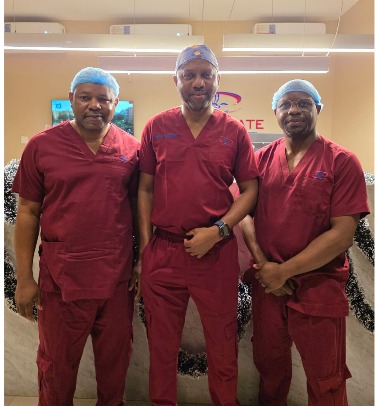
Nigeria has taken a step in expanding access to advanced healthcare after a private hospital in Lagos carried out what it described as West Africa’s first robotic-assisted gynaecological surgery, signalling a shift toward high-end medical innovation in the country.
The procedure, performed at The Prostate Clinic (TPC), involved the removal of a benign ovarian tumour from a 30-year-old woman using robotic technology, allowing the patient to be discharged the same day and return to normal activities within 24 hours, doctors said.
Healthcare experts say the development underscores Nigeria’s growing efforts to deploy minimally invasive and precision-driven technologies that reduce recovery time, preserve fertility and cut economic losses associated with prolonged illness.
“This marks a deliberate expansion from male-focused innovation into women’s health. Robotic surgery allows us to address complex gynaecological conditions with minimal pain, blood loss and hospital stay,” Kingsley Ekwueme, consultant robotic surgeon and medical director of TPC told BusinessDay.

Nigeria, Africa’s most populous nation, has historically lagged in access to advanced surgical care, fuelling medical tourism as patients travel abroad for specialised procedures. In recent years, however, private sector investment has accelerated the adoption of robotic, laparoscopic and AI-assisted treatments.
Ekwueme said robotic surgery offers a sharp contrast to traditional open procedures, which often require days of hospitalisation and weeks of recovery.
“Within six hours, once vital signs are stable, patients can eat and go home. They can return to productive life within 24 hours,” he said.
The operation was carried out at no cost to the patient as part of the clinic’s corporate social responsibility initiative, reflecting what Ekwueme described as the broader economic value of rapid recovery and preserved productivity.
Yusuf Oshodi, a consultant gynaecologist at Lagos State University Teaching Hospital (LASUTH), who was part of the surgical team, said the precision of robotic-assisted surgery was critical in protecting the patient’s reproductive potential.

“The tumour is benign, and we were able to remove only the affected tissue without compromising fertility,” Oshodi said, adding that many Nigerian women suffer silently from conditions such as fibroids, endometriosis and ovarian tumours due to delayed diagnosis.
Fibroids alone affect up to 70 percent of women in some Nigerian communities, Oshodi said, although only a minority develop severe symptoms. Late presentation, he warned, often leads to complications including anaemia and cardiac strain.
UK-based consultant gynaecologist Olaolu Aladade said minimally invasive surgery significantly reduces complications associated with open procedures.
“Patients recover faster, return to work sooner and experience better psychological and economic outcomes,” Aladade said.
Beyond individual care, the milestone reflects broader institutional ambitions. TPC has partnered with the Imo State government to establish a robotic surgery centre, which it says will be Nigeria’s first public-private facility dedicated to advanced robotic procedures, research and training.
Ekwueme said the initiative could help curb medical tourism, strengthen local expertise and expand research opportunities, particularly in areas such as artificial intelligence and precision medicine.
“With the right partnerships, Nigeria can build an ecosystem for advanced healthcare that keeps patients, skills and innovation within the country,” he said.
Olaolu Aladade, UK-based consultant gynaecologist, said robotic and minimally invasive procedures offered clear advantages over open surgery, which he said remains common across much of Africa. He noted that open procedures are often associated with longer recovery times, higher complication rates and increased risks to future fertility.
“With robotic surgery, patients recover faster, spend fewer days in hospital and are able to return to work and family life much sooner. Beyond the clinical benefits, the psychological and economic outcomes are significantly better, as women can resume normal activities without the prolonged pain, disability and loss of productivity that often follow open surgery,” Aladade said.