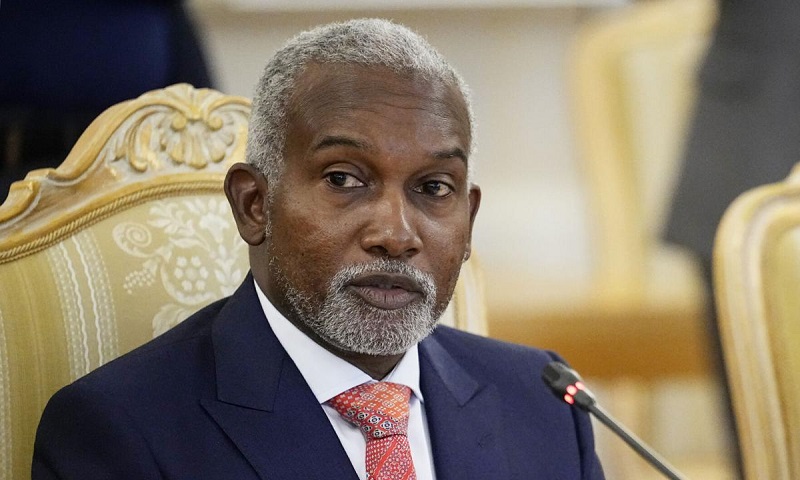
Nigeria will anchor its 2026 foreign policy on strategic autonomy, regional stability and responsible global partnership, Yusuf Maitama Tuggar, Minister of Foreign Affairs, declared.
He made this declaration on Tuesday night at the annual New Year Reception for Ambassadors and Heads of Mission in Abuja.
The minister said Nigeria’s diplomacy in the coming year would prioritise dialogue over division and cooperation over confrontation amid what he described as a period of global geopolitical recalibration and fragmentation.
Read also: Tuggar sets out three foreign policy priorities for Nigeria in 2026

He commended ambassadors who recently concluded their tours of duty in Nigeria and welcomed new envoys from Qatar, Lebanon, Namibia, Sudan and Saudi Arabia, pledging close collaboration based on mutual respect.
The minister announced a procedural refinement allowing ambassadors-designate to commence official duties once they present copies of their letters of credence to the Chief of Protocol.
However, formal engagements with the President and Vice President will remain subject to the presentation of full credentials.
Reviewing Nigeria’s foreign policy engagements in 2025, Tuggar said the country intensified its economic diplomacy through targeted investment outreach and high-level bilateral engagements across infrastructure, agriculture, energy, digital connectivity and industrial development.
He noted that on the margins of the Economic Community of West African States (ECOWAS) @ 50 Summit, Nigeria convened the inaugural West Africa Economic Summit to deepen regional trade and integration, mobilise investment, strengthen infrastructure connectivity and expand employment opportunities across West Africa.

He added that Nigeria broadened its partnerships across the Global South and the Middle East, while consolidating longstanding ties with the European Union, the United States and China in areas spanning trade, education, public health, climate action, migration dialogue and security cooperation.
Complementing this push, Nigeria launched the Regional Partnership for Democracy in collaboration with the United Nations Development Programme (UNDP), aimed at strengthening democratic institutions, promoting electoral integrity and reinforcing inclusive governance across West Africa and the Sahel.
Tuggar identified security and stability in the Sahel as central to Nigeria’s 2026 outlook, warning that the resurgence of terrorist activity poses direct threats to regional prosperity and investor confidence.
He called for a recalibration of diplomatic and security frameworks to support effective, outcome-driven partnerships, including proven mechanisms such as the Multinational Joint Task Force, which coordinates regional counterterrorism operations.
“Beyond recent political developments, we remain neighbours with a shared responsibility for the safety and prosperity of our peoples. This is our region, and we must ensure that it works for all,” he said.
The Regional Partnership for Democracy, he noted, will take on a more preventive focus in 2026, strengthening institutional capacity and reinforcing collaboration among governments, civil society and development partners.
He invited members of the diplomatic community to support programmes under the initiative.
On the domestic front, Tuggar said macroeconomic indicators suggest Nigeria’s economy has “turned a corner,” citing a robust capital market, a unified foreign exchange regime, a more coherent policy environment and modernised tax laws as factors enhancing the country’s attractiveness to long-term global capital.
He said Nigeria would continue expanding engagement across the Global South while deepening economic ties with Europe, North America and Asia.
With the publication of the electoral timetable by the Independent National Electoral Commission (INEC), Tuggar noted that Nigeria is entering another critical democratic phase.
He reaffirmed the government’s appreciation for longstanding partnerships with the diplomatic community in areas such as capacity-building, electoral observation and knowledge exchange.
Positioning Nigeria as a “confident, constructive and stabilising partner,” Tuggar reaffirmed the country’s commitment to multilateralism as the most credible framework for addressing global challenges.
Read also: Nigeria’s linguistic diversity is an unexplored asset constrained by policy failure
“In a world where fragmentation may seem expedient, inclusive institutions, rules-based cooperation and sustained dialogue remain indispensable to global stability,” he said.
He sought diplomatic support for Nigeria’s candidatures to key international bodies, including the Committee on the Elimination of Discrimination Against Women, the Human Rights Council, non-permanent membership of the United Nations Security Council for 2030, and the World Heritage Committee for 2029.
The minister also reiterated that the Ministry of Foreign Affairs remains the appropriate channel of communication between foreign missions and the Federal Government, urging strict adherence to established diplomatic protocols to ensure coherence and institutional clarity.
Tuggar emphasised the enduring value of diplomacy in building bridges, reducing misunderstandings and advancing shared prosperity.
“Nigeria stands ready to continue this work with you,” he said, expressing optimism for a productive year ahead.