Two civil society organisations have warned that Lagos risks a humanitarian crisis after state authorities launched a fresh wave of forced evictions in the Makoko waterfront community, an informal fishing settlement.
Health of Mother Earth Foundation (HOMEF) and the Centre for Children’s Health Education Orientation and Protection (CEE-HOPE) said the ongoing demolition exercise has displaced families, destroyed livelihoods and exposed vulnerable residents, including children, women and the elderly, to violence, homelessness and hunger.
In a joint statement on Monday, the groups accused the Lagos state government of conducting what they described as an unlawful eviction using armed security personnel, bulldozers and unidentified thugs, with houses reportedly set ablaze and boats seized in the predominantly fishing settlement.
Read also: Nigeria’s medical tourism spending crashes 96% as local healthcare capacity deepens

Residents said the operation began early on January 5, catching many households unprepared. “They came around 8am and started shooting, spraying teargas and burning houses. Many people had gone to the market, fishing or travelled for the holidays. Their homes and properties are being destroyed while they are away,” a community insider said.
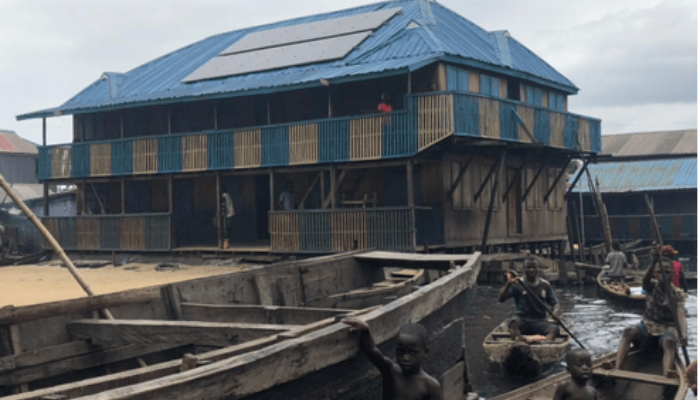
Makoko, a densely populated waterfront community built largely on stilts, is home to tens of thousands of low-income residents whose livelihoods are tied to fishing and informal trade. Rights groups say the destruction of homes and boats threatens not only shelter but also food security and income for affected families.
According to residents, the latest demolition breached assurances previously given by government officials. Community leaders said they were told that only structures located within 30 metres of power lines would be removed, but the operation allegedly extended far beyond that limit.
“They have almost reached 100 metres, burning houses down,” the source said, adding that traditional chiefs were summoned to Government House to lodge complaints, only for demolition teams to move in while the leaders were away.
HOMEF and CEE-HOPE described the exercise as inhuman, vicious and condemnable, warning that it could escalate into a full-blown humanitarian emergency if halted relief and accountability measures are not urgently put in place.

“It is really sad that rather than securing citizens, government and their agents are adding to the horrors, deprivations, harms and insecurity in the land. The assault on Makoko is absolutely reprehensible and unacceptable,” said Nnimmo Bassey, executive director of HOMEF.
Bassey said the Lagos State Government has a legal and moral obligation to protect the rights of Makoko residents, particularly their rights to housing, dignity and livelihood.
“The human and shelter rights of every resident of Makoko must be respected. Enough of this dehumanising treatment of the urban poor by the state in cahoots with private developers,” he said.
Betty Abah, CEE-HOPE’s executive director, said the demolition reflects a pattern of what she called lawlessness in the state’s dealings with low-income communities.
“Just after the savage attack on Oko-Baba, Ayetoro in Makoko, followed by Otumara, Baba-Ijora and the recent massive eviction of Oworonshoki, the government is turning its vicious searchlights on Makoko again,” Abah said.
She noted that Makoko had previously suffered demolitions in 2012, during which a local chief was killed by a police officer attached to the demolition team, raising concerns about the use of force in the current operation.
Abah questioned why repeated demolitions dominate housing policy in Africa’s largest city, despite its chronic housing deficit.
“Why is it not the provision of affordable or social housing that is making the headlines from Lagos every year? Why is it the vicious attack on poor and vulnerable masses and massive forced homelessness, often in direct violation of rules on prior notice, resettlement and compensation?, she asked.
She also warned of the long-term impact on children, saying demolitions often force thousands out of school as families struggle to survive in the aftermath.
“These perennial attacks by a government on people to whom they owe a duty of care and protection are lawless, unwarranted and reprehensible. They fall short of international and local standards of engagement and must stop now,” Abah said.
Read also: Healthcare services should be treated as a right rather than a privilege Boetheia CEO
The NGOs called on governor Babajide Sanwo-Olu to immediately halt the eviction exercise, provide medical treatment for injured residents and compensate those displaced. They also urged the state to adopt slum-upgrading strategies aligned with international best practices rather than demolitions.
“Lagos must upgrade informal settlements, not destroy lives,” the statement said.
Lagos State officials were not immediately available to comment on the allegations. The government has previously defended waterfront demolitions as necessary for urban renewal, environmental protection and public safety, citing concerns around infrastructure, security and flood control.
Rights groups, however, argue that such objectives do not justify forced evictions carried out without consultation, court compliance or humane alternatives, warning that continued demolitions risk deepening urban poverty and social instability in Nigeria’s commercial capital.