… leaves key rates unchanged
… analysts expect no significant changes in financial markets
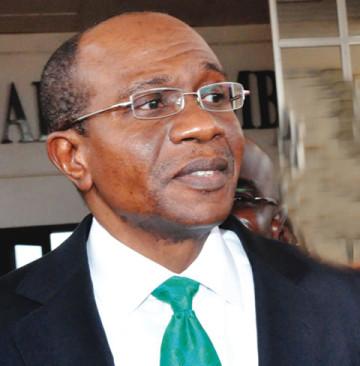
Godwin Emefiele, governor, Central Bank of Nigeria (CBN), weekend, ruled out a possible devaluation of the naira at least in the near term, due to deflated calls from some quarters to officially readjust the local currency for the third time to align with current realities.

The CBN devalued the naira last November from N155/$ to N168/$, and then to the current N197/$ where it is today to save the currency and conserve foreign reserves. Although the naira has maintained some stability at interbank market, closing last week at N199/$ at the interbank market, but has witnessed volatility at the black market where the rate averaged at about N240/$.
But gross reserves increased from $28.57 billion at end-May 2015 to $31.53 billion as of July 22, 2015, reflecting the blockage of leakages as well as the bank’s management policies.
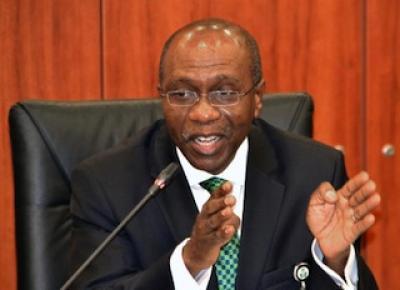
Emefiele, briefing on the outcome of the Monetary Poilcy Committee meeting that left key rates unchanged, insisted that the naira was appropriately priced at this time and that activities at the BDCs should not be the determinant policy direction for the naira.
“We had done almost a 22 percent depreciation of the currency from N155/$ to N197/$ that it is today.
We cannot continue to adopt an indeterminate depreciation of our currency because of its impact on our people given that this is a heavily import dependent economy.

“The naira is appropriately priced at this time and we continue to monitor the situation, and if there is any need to change our position in the course of time, we would make it public,” the governor said.
Adopting some sort of ‘wait and see’ attitude to see how President Buhari’s economic agenda unfolds, the CBN retained the Monetary Policy Rate at 13 percent +/_ 200 basis point, ans also left the Cash Requirement Requirement (CRR) unchanged at 31 percent.
Emefiele said the underlying fundamentals of the economy, the evolving international economic environment, developments in oil prices as well as the need to allow for the unveiling of the economic agenda of the Federal Government all informed that decision.
However, following the CBN’s resolution, analysts at WSTC Financial Services Limited do not expect any significant change in the course of the financial markets. They generally expect the bearish trend in the financial markets to remain within the short-term outlook.
“In our opinion, the decision of the MPC to maintain status quo in spite of growing inflationary pressures and increasing volatility in the parallel segment of the foreign exchange market underscores the fact that the apex bank is getting to the limits of monetary policy options it can deploy. We believe the CBN may remain incapacitated in this way until there are clear policy directions from the fiscal side of economic management, particularly on issues bordering on fuel subsidy and economic administration,” Olutola Oni and his team of analysts said after the meeting on Friday.
In her opinion, Razia Khan, managing director, chief economist, Africa Global Research, stressed the need for Nigeria to retain its GBI-EM index inclusion, but still argued for FX liberalisation at some point. Until this happens, she said, there will be limited scope for any monetary easing to boost the economy (although the immediate inflationary consequences of FX liberalisation might also see any meaningful easing deferred).
“The outcome of the CBN’s July MPC meeting mostly represents an effort to hold everything steady, until there is a clearer consensus on policy direction. Unfortunately, with reports of queues for FX, greater market bottlenecks, and a rising spread between the parallel and interbank FX markets, Nigeria does not have the luxury of time to defer these decisions. Clearer policy direction is required, in order to safeguard macro-economic stability,” she said.
Furthermore, the CBN governor said the Committee was concerned about the trends in key macro-economic indices in the first half of 2015, particularly inflation that had been on the upward movement.
He acknowledged the absence of easy choices in the circumstance, but monetary policy alone was limited, and would require urgent complementary fiscal policies to define the path of growth and create the basis for stabilisation.
“We will continue to review what is happening in the market and I’m sure in the next meeting, depending on the information available and what is happening in the macro environment then, it may be possible to begin to consider easing,” he said.
Explaining further the stance not to adjust the naira, he noted the relative stability at the interbank FX market, wondering why the wide calls for the devaluation the local currency based on volatility at the parallel mnarket, holds just 5 percent of total FX transactions.
“Let me say that I strongly disagree with the argument that most of the people patronise the BDCs for FX. More than 95 percent of transactions in the financial system that involve buying and procuring of FX take place at the bank or interbank market,” he noted.
He underscored the fact that “Nigeria appears to be the only country in the world today where the central bank still funds the BDC activities, signalling that may change in due course, saying data avaliable to CBN show that most of the transactions that take place at the parallel windows were for illicit business rather than being for retail trade.
“And for that reason, I continue to wonder why people will continue to use the BDCs rate, which constitutes a minute percentage of volume of FX transactions as a basis to ask us to determine exchange rate,” the governor argued, stressing “we will not, we cannot devalue the naira due to what is happening in the parallel because we do not consider that market as a major market in the foreign exchange make.”