When Nigeria’s ginger farmers lost more than ₦12 billion to a devastating blight outbreak in 2023, it was not merely an agricultural disaster. It was a loud warning about the fragility of the country’s food systems, the vulnerability of export-dependent value chains and the persistent failure of policy execution.
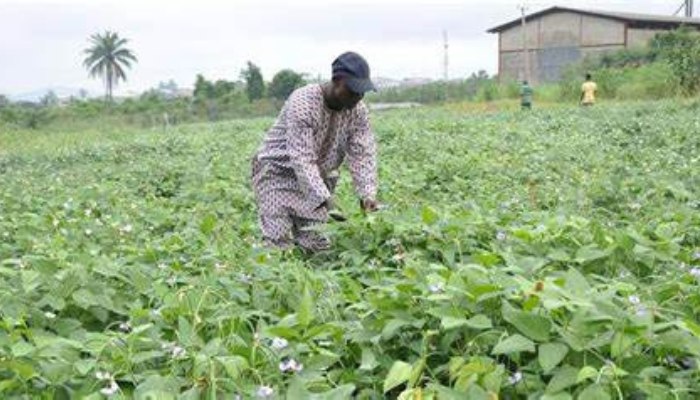
Records from the Nigerian Agricultural Development Fund, NADF, show that the 2023 wet season outbreak wiped out over 90 percent of ginger harvests across Kaduna’s major producing communities, triggering one of the deepest sectoral collapses in Nigeria’s modern agricultural history.
The shockwaves have since rippled through rural livelihoods, export earnings, agro-processing investments and national food security planning.
Read also: Top 5 ginger-producing countries in the world

“It was estimated that Nigerian ginger farmers incurred losses amounting to ₦12 billion due to the catastrophic blight epidemic that decimated their crops in 2023. That is something we all have to bear in mind, because we are at all times one or two bad harvest seasons away from losing our food supplies,” the minister of agriculture said.
From farm fields to export terminals, the losses exposed a fragile value chain ill-prepared for biological shocks, weak institutional response and poor delivery of intervention funding.
From powerhouse to paralysis
Before the blight outbreak, Nigeria ranked among the world’s top ginger producers, with annual output oscillating between 750,000 and 800,000 metric tonnes.
Kaduna State alone accounted for more than 60 percent of national supply, supporting tens of thousands of farming households and anchoring a fast-growing export trade.
By 2024, production had plunged to about 727,000 metric tonnes, according to agricultural performance data. Export earnings collapsed even more sharply.

Figures from the National Bureau of Statistics, NBS, show that ginger export revenues fell by 74 percent in the first nine months of 2024, reflecting the combined impact of disease, farm abandonment, seed scarcity and rising insecurity.
Industry surveys indicate that 2025 output remained well below historical norms, as many farmers lacked the financial capacity, quality seedlings and disease confidence to return fully to production.
The result has been a prolonged income shock for farming communities, a breakdown in supply contracts and rising uncertainty across the processing and export chain.
Farmers trapped in a cycle of loss
Florence Edwards, president, ginger growers, processors and marketers association of Nigeria, described the period between 2023 and 2025 as a “ginger slope,” marked by devastating losses, seed shortages and collapsing margins.
“Our farmers suffered almost 98 percent crop losses in previous seasons because promised government support never reached them. We have learned to manage the disease ourselves. This year, we will be very careful,” she said.
She criticised what she called a persistent disconnect between public policy announcements and farm-level realities.
“The government talks about giving money to farmers, but in reality, nothing is reaching them. Those who supposedly received funds were not actual farmers but political appointees. That is ridiculous at the highest order,” Edwards said.
Compounding farmer distress has been a brutal price squeeze. At the peak of last year’s planting season, a bag of ginger seed sold for as high as ₦950,000. Yet by harvest, output prices collapsed amid weak demand, import competition and poor market coordination.
“The cost of farming inputs has not come down, yet output prices are falling. Who will absorb this loss if not the farmers?” Edwards asked.
Similar pressures are now surfacing across cassava, beans and rice value chains, raising fears of a broader agricultural income crisis.
Rural retreat and shrinking production base
Joy Bulus, a ginger farmer in southern Kaduna, said she abandoned ginger farming entirely in 2025.
“I could not afford the seeds, and we all feared that the disease was still there,” she said.
In her community of over 100 ginger farmers, fewer than 20 returned to production last season she said.
“We heard that government and NGOs were supporting farmers, but we were not beneficiaries. We are still hopeful that government will come to our aid, or else the ginger market could be lost beyond redemption,” Bulus said.
This widespread retreat from farming has intensified rural poverty, weakened food supply chains and further eroded Nigeria’s export capacity.
Economists warn of structural policy failure
Kehinde Ojo, economist, said the ₦12 billion loss figure highlights a deeper structural problem in Nigeria’s agricultural intervention framework.
“One of the biggest problems facing ginger farmers is the failure of intervention funds to reach the real beneficiaries. Government support is often trapped in layers of agents, contractors and middlemen, leaving farming families without the help they urgently need,” she said.
Ojo argued that once funding passes through multiple administrative channels, accountability collapses, creating space for diversion and political capture.
“What farmers need is not more announcements, but a system that delivers support directly into their accounts, without interference or filtering,” she said.
She called for the deployment of a comprehensive national farmer database, integrating biometric identity, farm size mapping, production records and verified bank accounts.
“Nigeria is already in the era of digital identity and artificial intelligence. With the right systems, government can build a reliable database that allows direct intervention, real-time monitoring and performance tracking,” Ojo said.
Such reforms, she noted, would eliminate intermediaries, reduce corruption and dramatically improve impact.
Read also: Seedbank project fuel ginger price rally, three years after blight
Government response and lingering trust deficit
In response to the 2023 crisis, the federal government, through the NADF, said it rolled out free agricultural inputs to 5,000 ginger farmers across seven local government areas of Kaduna State, under a ginger recovery initiative.
The beneficiary local governments include Kachia, Zango-Kataf, Kaura, Kagarko, Jema’a, Jabba and Sanga.
The fund also disclosed that it is supporting the Illaj Ginger Factory in Kaduna and has established a ginger blight epidemic control taskforce aimed at curbing disease spread and rebuilding Nigeria’s global competitiveness.
While these interventions mark progress, industry players say the scale remains far below what is required to reverse years of accumulated losses, restore farmer confidence and rebuild export capacity.
a national food security warning
Beyond ginger, analysts say the ₦12 billion shock serves as a broader warning about Nigeria’s food security vulnerabilities.
With climate volatility, rising production costs, insecurity and weak agricultural financing systems, Nigeria remains dangerously exposed to supply shocks.
The ginger crisis demonstrates how quickly a single disease outbreak can destabilise incomes, exports and food availability.
Read also: Investors target industrial utilization of ginger-based products to boost economy
For farmers, processors, exporters and policymakers, the lesson is clear: without urgent investment in disease surveillance, farmer financing, digital intervention delivery and value chain resilience, Nigeria risks repeating similar collapses across other strategic crops.
For now, ginger growers are relying largely on self-driven disease management, community resilience and cautious hope that the hard lessons of recent years will translate into a more stable 2026 harvest cycle.
But with over ₦12 billion already lost, confidence will only return when policy promises begin to consistently translate into measurable farm-level impact.