…Cuts election notice period to 300days for Ramadan
…Senate retains manual backup for result transmission after tense showdown
…55 Senators back manual Option, 15 Oppose
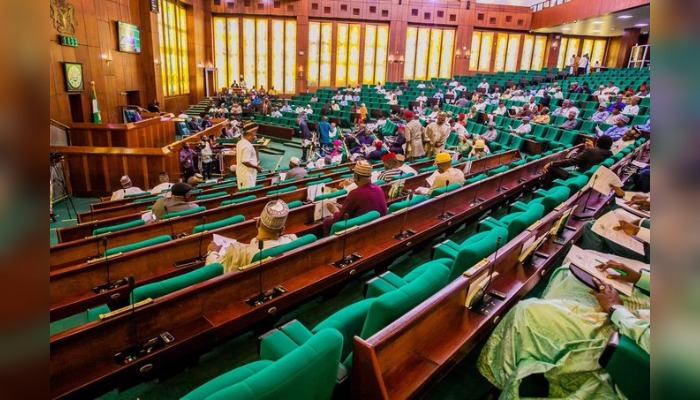
Despite initial friction and tense deliberations, the National Assembly passed the 2022 Electoral Amendment bill for a third reading, adopting the version of manual upload as backup.

In the course of the passage, the Senate on Tuesday amended Clause 28 of the Electoral Act Amendment Bill, 2026, reducing the notice period for general elections from 360 days to 300 days in a move aimed at preventing the 2027 Presidential and National Assembly polls from coinciding with the Muslim holy month of Ramadan.
Rising under Orders 1(b) and 52(6) of the Senate Standing Orders, Opeyemi Bamidele, Senate Leader, moved the motion for reconsideration.
He explained that the previous provision requiring elections to be held “not later than 360 days before the expiration of the term of office” could inadvertently affect the 2027 timetable.
“Upon critical review of the passed bill, the 360-day notice requirement prescribed in Clause 28 could result in the scheduling of the 2027 Presidential and National Assembly elections during the Ramadan period,” Bamidele said.
Read also: N’Assembly passes Electoral Act Amendment for third reading

Bamidele noted that holding elections during Ramadan “could adversely affect voter turnout, logistical coordination, stakeholder participation, and the overall inclusiveness and credibility of the electoral process.”
The amendment followed consultations between the leadership of the National Assembly and the Independent National Electoral Commission (INEC), which had earlier announced February 20, 2027 for the Presidential and National Assembly elections, with governorship and state Houses of Assembly polls slated for March 6, 2027.
Simon Lalong, the Chairman of the Senate Committee on Electoral Matters, who seconded the motion, explained that Joash Amupitan did not deliberately fix the election dates to conflict with the holy month of Ramadan as speculated in many quarters.
“It was the immediate past INEC Chairman, Mahmood Yakubu, that actually set the template for the election dates from 2019 to 2031,” Lalong stated.
The Senate equally retained a controversial proviso in Clause 60 of the Electoral Act Amendment Bill, allowing manual transmission of election results where network failure occurs, after a tense session that culminated in a division vote.
Trouble began during clause-by-clause consideration of the bill when lawmakers reached Clause 60, which deals with the electronic transmission of election results from polling units to INEC’s IReV portal in real time.
Enyinnaya Abaribe raised a point of order, objecting to the proviso in Clause 60(3) that permits manual transmission where the network fails.
He insisted on mandatory real-time electronic transmission of results, calling for a division to determine lawmakers’ positions.
The chamber momentarily descended into murmurs and consultations before moving into a closed-door session to resolve the impasse.
When plenary resumed, Abaribe renewed his call for division on the contentious proviso.
It will also be recalled that last week, Abaribe called for a division, but when the Senate President accepted, he chickened out.
Presiding over the session, Senate President Godswill Akpabio described the development as democratic engagement.
“This is democracy in action,” Akpabio said, directing senators to “signify where they belong by standing up and raising their hands.”
At the end of the vote, 55 senators, mostly from the ruling All Progressives Congress and three opposition members, voted in favour of retaining the proviso allowing manual transmission where the network fails.
The opposition lawmakers who joined their voices with the majority to vote for the provisio are Olalere Oyewunmi (PDP, Osun state), the deputy minority leader, Aliyu Wadada ( SDP, Nasarawa West ), and Amos Yohanna ( PDP, Adamawa North).
Fifteen opposition senators voted against it, insisting on mandatory real-time electronic transmission.
The 15 senators who voted for mandatory real-time transmission were Enyinnaya Abaribe (ADC, Abia South); Abdul Ningi (PDP, Bauchi Central); Aminu Tambuwal (PDP, Sokoto South); Ireti Kingibe (ADC, FCT); Seriake Dickson (PDP, Bayelsa West); Natasha Akpoti-Uduaghan (PDP, Kogi Central); Onawo Ogwoshi (ADC, Nasarawa South); Tony Nwoye (LP, Anambra North); Victor Umeh (APGA, Anambra Central); Ibrahim Dankwambo (PDP, Gombe Central); Austin Akobundu (PDP, Abia Central); Khalid Mustapha (PDP, Kaduna North); Sikayo Yaro (PDP, Gombe South); Emmanuel Nwachukwu (APGA, Anambra South); and Peter Jiya (PDP, Niger South).
Akpabio declared that those who voted for the proviso “had just saved Nigeria’s democracy,” while also commending Abaribe and others for standing their ground.
He commended lawmakers for what he described as an act of patriotism following the passage of the Electoral Act (Repeal and Re-Enactment) Bill, 2026.
In his closing remarks after the third reading of the bill, Akpabio said, “This week, colleagues, a Bill for an Act to repeal the Electoral Act No. 13 of 2022 and re-enact the Electoral Bill 2026 to regulate the conduct of federal, state and area council elections in the Federal Capital Territory, and for other related matters, 2026, has been read the third time and passed.”
He thanked senators for what he called their democratic spirit during deliberations, particularly those who voted against the controversial proviso.
“Let me thank distinguished senators for their act of patriotism and for displaying democracy, particularly those who had the courage, even against overwhelming odds, to stand up and answer their fathers’ names by showing so much courage to vote against the proviso… though retained overwhelmingly, your minority status notwithstanding, you showed overwhelming courage.
“You were able to prove democracy at work,” he said.
Akpabio also praised senators who supported the retention of the proviso, which allows manual transmission of results where network failure occurs.
“I also want to thank those who voted for the proviso to remain, that you have saved democracy by making sure that we don’t go on continuous reruns and repeats of elections, by ensuring that the primary mode of collation of results remains the polling unit results,” he stated.
He noted that the Senate’s decision to formally provide for the electronic transmission of polling unit results to INEC’s portal marked a significant shift in Nigeria’s electoral history.
“I want to also thank the Senate for introducing electronic transmission of polling unit results through the portal… which will now make it possible for even monitors, including foreigners who are not able to visit the 176,000 plus polling units in Nigeria, to see the polling unit results dropping into the portal,” Akpabio said.
“This is a major innovation since 1960, which the Senate stands to be applauded for,” he added.
Emphasising the supremacy of polling unit results, he said, “Elections are done in the units. Elections are not done at the collation centres. “That is why you insisted that the polling unit results, duly signed by the presiding officers as well as agents of candidates and political parties where available, remain the primary mode of collation of all results in Nigeria.”
The Senate also passed Direct and Consensus mode for primary elections.
The Senate President further commended lawmakers for reforms in party primaries, noting, “I thank you for your innovation that we should undertake only direct primaries plus consensus in our primary system, because this will enable all party people to partake in the choice of their candidates.”
Read also: Senate expands electoral act amendment conference committee to 12
He also appreciated senators for returning to plenary after budget defence sessions to conclude work on the bill.
“Above all, I thank you for cancelling your budget defence and coming to undertake this plenary to bring this issue to an end.
“Congratulations to all for ensuring a smooth election in 2027,” Akpabio said, before announcing that the Senate would adjourn briefly to adopt the votes and proceedings.
With the decision, the Senate effectively reaffirmed its earlier position that while electronic transmission of results is permitted, the duly signed Form EC8A by the Presiding Officer and counter-signed by party agents (where available) shall serve as the primary source of results in the event of network failure.
The development marks the second time in one week that the upper chamber has rejected mandatory real-time transmission without a manual fallback, setting the stage for further debate as the bill progresses.