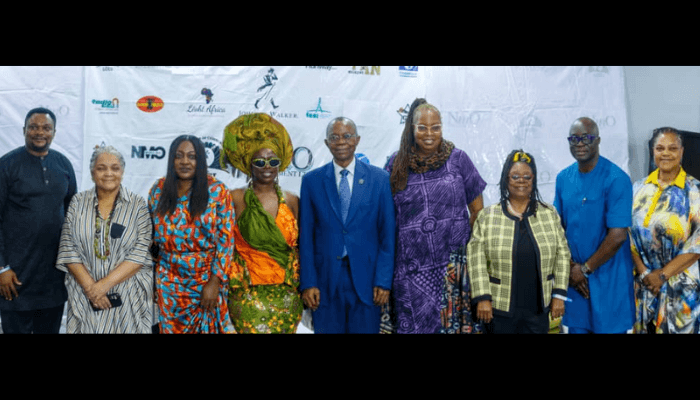
The President, Lagos Chamber of Commerce and Industry (LCCI), Gabriel Idahosa has urged government at all levels, development partners and stakeholders to prioritise long-term financing models tailored for the development of the creative and entertainment industry in Nigeria.
Idahosa made the call while speaking at the 2nd annual LCCI Creative and Entertainment Symposium and Easter Festival Parade held in Lagos under the theme, ‘Celebrating and embracing positive impact: Consolidating the creative, entertainment, and cultural ecosystem against a challenging socio-economic environment the way forward.’
He observed that the creative ecosystem in the country was still grappling with structural challenges such as lack of access to funding, intellectual property theft, weak infrastructure, regulatory bottlenecks and inadequate formal training institutions.
According to him, such challenges can be tackled with intentional investment in the industry by the governments and private stakeholders offering low-interest loans, grants, venture capital, and impact funds to the creative.

Stating that the creative and entertainment industries have emerged as survivors and beacons of hope, resilience, and innovation, amidst turbulence, the LCCI president said: “In Nigeria alone, the creative sector contributes approximately 2.3 percent to GDP, accounting for over 4.2 million jobs and impacting millions more through ancillary services such as tourism, tech, fashion, and logistics.
“Across Africa, Nollywood stands tall as the second-largest film industry in the world by output, producing nearly 2,500 movies annually and generating over $1 billion in revenue.
“The Nigerian music industry, spearheaded by global icons like Burna Boy, Wizkid, and Tems, is on track to surpass $44 million in streaming revenue by 2025, according to PwC’s Global Entertainment and Media Outlook,” he said.
On piracy, he disclosed that it robs Africa of an estimated $5 billion annually, adding that a robust copyright enforcement system, blockchain-based tracking, and regional cooperation through ECOWAS and the African Continental Free Trade Area (AfCFTA) can transform how the country value and monetise their art.
In addition, he said: “Let us treat our intellectual property with the seriousness it deserves. It is the oil of the 21st century. From Non-Fungible Tokens (NFTs) to AI-generated music, the future of creativity is digital. Let us build digital literacy programmes, animation schools, and tech-creative incubators.

“Our youth must not only consume content, they must create, code, and commercialise it. Platforms like Africori, Mavin Global, and FilmOne have already demonstrated what’s possible when creativity meets digital scale. Culture is not merely a commodity, it is our identity.
On the event he said: “We live in an era of unprecedented economic uncertainties, from inflationary pressures, currency depreciation, and unemployment to the aftershocks of global pandemics and geopolitical tensions”.
Also speaking, the chairperson, Creative and Entertainment group LCCI, Ngozi Omambala said that the event which held in partnership with NMO Management limited aimed to support an enabling environment , robust and vibrant sector, building on infrastructure to consolidate a powerful and global creative ecosystem.
According to Omambala, who is also the group managing director, NMO Management Limited: “Symposium comes at a pivotal and watershed moment for creative sector which has seen growth, development a backdrop of harsh socio economic challenges we all face and intend to constructively tackle and address here in the interests of future protection and betterment of our creative communities’.”
Emphasising the importance of the Nigeria huge youth population, she said: “the youth make up large proportion of demographic landscape. Of Nigeria’s 230million population 70 percent under 30 – Nigeria has largest youth population across the world, an asset to any world economy and indeed a huge capital resource for economic growth and prosperity.
Omambala also revealed that this year’s Lagos International Trade Fair organised by the LCCI would feature International Artistic Pulse Festival,. an independently self-run and funded 10 day music film fashion food visual arts and technology driven.
Highlights of the event include; panel discussions, the LCCI Creative and entertainment “meet the authors’ literary launch initiative and fashion parade.