…As breathing clean air becomes luxury
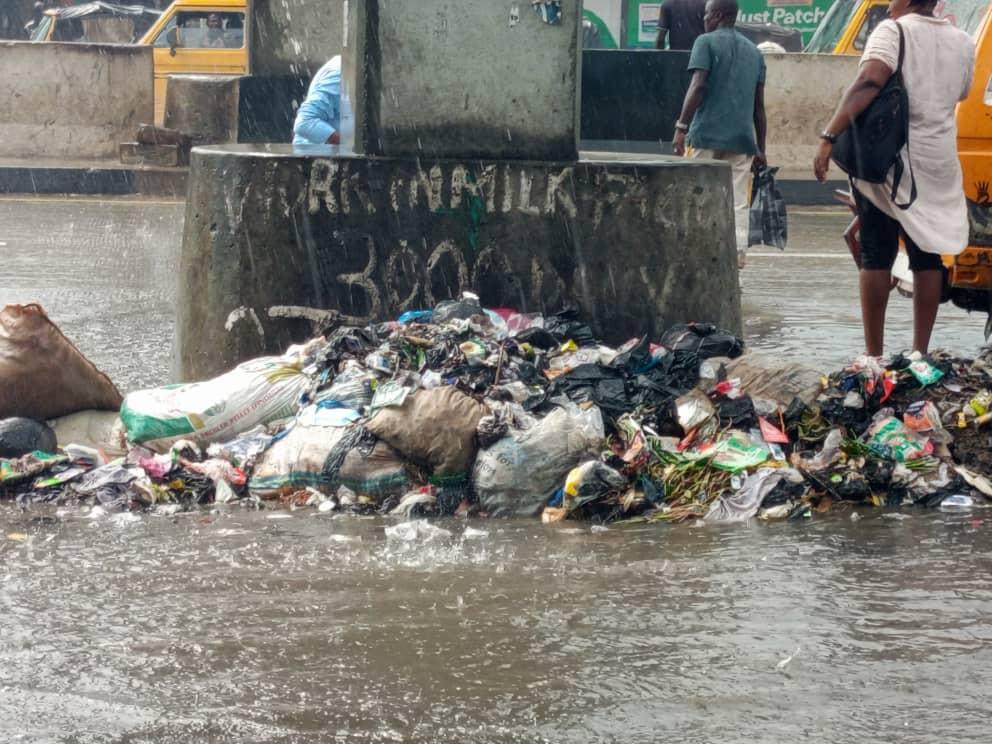
For a city that never goes to sleep, Lagos State generates more than 14,000 metric tonnes of solid waste daily, an increasingly unmanageable volume as open dumpsites litter major routes within the city.
Home to over 20 million people, Lagos State occupies a landmass 20 times smaller than Niger State, making it difficult to manage vast volumes of waste, further raising concerns among experts who warn that open dumpsites pose serious threats to public health and the safety of residents.
With the population projected to double by 2030, experts warn that mounting waste could lead to environmental degradation, raise certain health concerns and worsen air quality.
For 42-year-old Funke Bimola, who has lived near an open dumpsite for years, respiratory illness has become routine. “Sometimes when I work, my chest tightens, my breath shortens, and I feel weak even after recovering from pneumonia,” she said.

Idowu Salawu, chief executive of MacPress Limited and a waste management expert, have raised several health concerns on the implications of unregulated and poor management of open dumpsites.
“Open dumpsites have severe public health implications, including poor air quality, contamination of borehole water, foul odours and a high prevalence of waterborne diseases,” he noted.
Helena Durodola, an environmental researcher at Harper Adams University, United Kingdom, added that dumpsites release harmful pollutants that reduce air quality and cause serious health implications.
Read also: Nigeria’s rural dead zones set to light up with Starlink phone coverage
“When organic matter or plastics degrade in open dumpsites, pollutants such as nitrogen oxides and carbon monoxide are released, increasing the risk of respiratory tract infections, asthma attacks, and cardiovascular diseases,” she noted.

A BusinessDay intelligence report found moderate to poor air quality in areas with open dumpsites, clogged drainages and polluted water bodies, particularly around the Oluososun dumpsite, Ebute-Ero, Police College, Ikeja and an open dumpsite close to Police Post.
The findings followed a three-month bi-weekly air quality assessment conducted using AirCare, a United States Air Quality Index (US-AQI) platform that relies on satellite data from the European Space Agency.
A study on 150 child waste pickers on Olusosun dumpsite show that over 50 percent them complained of constant headaches.
Experts also say that they are at risk of being pricked by sharp objects such as syringes, needles, surgical blades and broken bottles, further exposing them to communicable diseases.
Read also: Nigerian hospitals are turning to solar power as grid failures cost lives
“Most waste collectors operate in an unregulated manner, and this reduces air quality,” noted Joshua Ndaman, Chief Executive Officer of BuyScrap Nigeria.
Some experts also warn that scavengers may heighten health risks, as they can pick up harmful microbes or pollutants that pose serious threats to surrounding neighbourhoods.
According to the World Health Organization (WHO), air pollution contributes to about 114,000 deaths annually in Nigeria. A recent United States study has also linked air pollution to breast cancer.
After examining 28,000 breast cancer cases across five cohorts in the US, the study found that women exposed to higher levels of air pollution face an increased risk of developing breast cancer compared to those living in cleaner environments.
Lagos State ranked 133 of world’s most polluted cities according to World Air Quality, 2022 report.
Read Also:Tinubu, First Lady, pay tributes to Adeboye at 84
Investment opportunity
Experts say waste can be converted into energy or soil nutrients if the right infrastructure and technical expertise are in place.
“These dumpsites are not completely waste; they can be converted into energy, further reducing the cost of electricity generation in the state,” Salawu noted.
“One million metric tonnes of waste can generate about 800 megawatts of gas to power electricity plants, and we already have about 40 million metric tonnes of waste deposited at the Olusosun dumpsite alone,” he added.
Beyond treatment, experts advocate a circular approach to waste management—viewing waste not as refuse but as a recoverable resource.
“Organic waste can be composted to return nutrients to the soil, recyclable materials can be reprocessed into new products, and residual waste can be managed to minimise emissions,” Helena noted.
Tackling waste
Experts say solutions lie in sorting waste at source, closing infrastructure gaps, and formalising the informal waste collection sector through education and training.
“We need to shift people’s focus from mere disposal to resource management, ensuring that all waste streams are handled responsibly at the source,” Ndaman noted. Better waste management practices are not complex but require commitment, experts say.
“Waste separation at source should become standard practice. Properly engineered landfills and regulated waste treatment facilities must replace informal dumping sites,” Helena added.
Experts also stress that public awareness and enforcement are critical. People cannot comply with systems that do not exist, and policies mean little without enforcement and education. Clean air depends on how societies manage their waste, daily and often out of sight.
Government efforts
The Lagos State government, through the Ministry of Environment, has intensified efforts to improve waste management, including enforcement measures, single-use plastics ban and the decommissioning of open dumpsites such as the Olusosun open dumpsite.
In a statement, Tohumbo Wahab, commissioner for Environment and Water Resources, outlined the state’s interventions. “Lagos is not smelling; it is recovering and setting a model that could last decades,” he said.
The state has signed a landmark agreement with Zoomlion Nigeria, a subsidiary of Jospong Group, to build a Transfer Loading Station at Olusosun. Under the plan, 2,500 tonnes of waste will be moved daily to a new Material Recovery Facility in Ikorodu, paving the way for the dumpsite’s closure.
A similar facility will be developed at Solous III in Igando, with 1,500 tonnes of waste redirected to a recovery centre in Badagry.
“What excites me most is how this agreement will deliver cleaner streets,” Wahab added.
Lessons for Lagos from Kigali, others
Lagos is not the only city in Africa that has grappled with waste management. Kigali (Rwanda) had in the past grappled with improper waste management but with strict regulations, ban of single-use plastics and outsourcing waste collection to private companies, it has built a reputation of being the cleanest city in Africa as of today according to reports.
Accra is emerging as a model in urban waste management, backed by strong investment in modern infrastructure and initiatives such as the “Let’s Make Accra Work” programme. The creation of a Sanitation Police unit to enforce environmental bylaws further underscores the city’s commitment.
The 2024 “Top 10 Cities in Africa” report highlights Accra as a city on the move, steadily transforming its sanitation landscape.
Addis-Ababa in Ethiopia also transformed its management challenge through the waste-to-energy model.