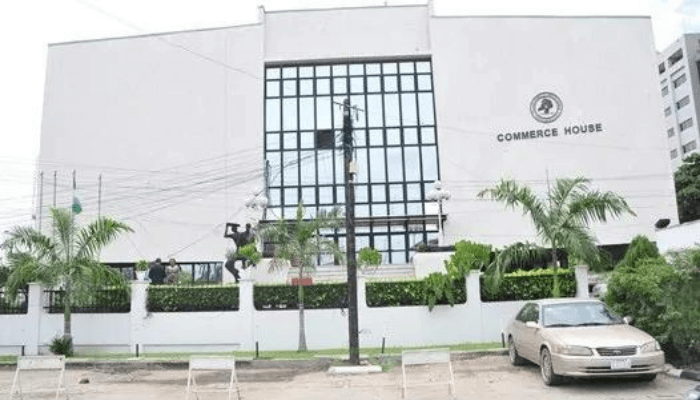
The Lagos Chamber of Commerce and Industry (LCCI) has urged the Federal Government to prioritise a better-managed and more consistent fiscal policy environment.
This follows the International Monetary Fund’s (IMF) downward revision of Nigeria’s economic outlook in its April 2025 World Economic Outlook report.
LCCI Director General, Chinyere Almona, made the call on Thursday in Lagos, citing Nigeria’s fragile economic conditions as justification for urgent fiscal reform.
The IMF downgraded Nigeria’s 2025 growth forecast from 3.2 per cent to 3.0 per cent, reflecting global and domestic economic pressures.

Almona stressed the need for policies that reduce public debt and build buffers to manage increased defence spending and other fiscal challenges.
She added that the government must address potential trade-related shocks that could affect short-term economic stability.
With falling crude oil prices, Almona advised stricter measures to cut governance costs and adjust budgetary expectations accordingly.
She acknowledged recent steps like exchange rate unification and halting Central Bank deficit financing, but warned they were not sufficient on their own.
“The IMF’s concerns over Nigeria’s vulnerability to external shocks are valid, as we remain overly dependent on crude oil earnings,” she noted.

She warned that global public debt was projected to reach 117 per cent of GDP by 2027, urging swift action to cut borrowing costs.
Almona called for more attention to inflation, stating it had not eased significantly, even with updated statistical methods.
She advised increased investment in infrastructure to support the productive sectors and stimulate broader economic growth.
Almona said the government must revisit and adjust its 2025 budget assumptions, considering lower oil revenue projections.
She recommended cuts to non-essential recurrent spending and removal of non-productive subsidies to improve fiscal health.
“To grow non-oil exports, incentives should target high-potential sectors such as solid minerals, digital economy, and the creative industries,” she said.
She suggested agriculture could be boosted by investing in fertiliser production, irrigation systems, extension services, and value chain infrastructure.
Almona added that inclusive growth required expanded access to microfinance and a reliable power supply.
She also called for regulatory reforms that support MSMEs and domestic manufacturing to create jobs and grow revenues.
The Director General urged the swift implementation of tax reforms, backed by improved tax administration systems, to increase government revenue.