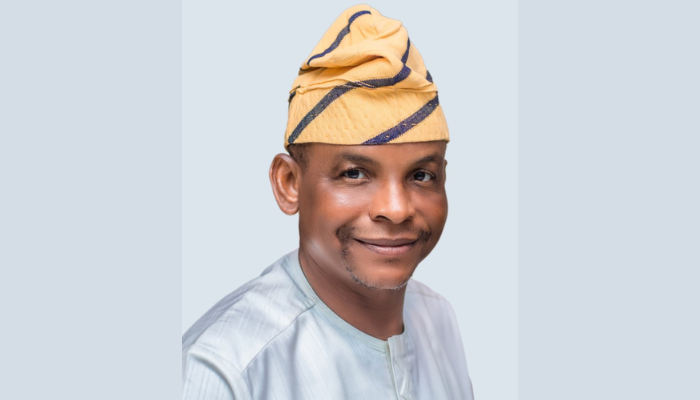
In the bustling heart of Lagos, where ambition meets complexity and the hum of daily life is matched only by the dreams of its millions of young people, one man is quietly—and decisively—reshaping the educational landscape. Commissioner Jamiu Tolani Alli-Balogun stands at the forefront of a transformation that is as strategic as it is humane, one rooted in data, vision, and the unshakable belief that education is the ultimate equaliser.
Lagos is no ordinary jurisdiction. If it were a country, it would rank as the fourth largest in Africa, a nation-sized city whose future will be defined by the quality of its schools. The challenge is formidable. Across Nigeria, UNICEF estimates over 10 million children of primary-school age and more than eight million of junior secondary-school age remain out of school—a crisis with profound implications for national productivity, stability, and global competitiveness. In this context, the progress Lagos is making under Alli-Balogun’s watch is not just a local success story; it is a signal of what is possible when leadership is grounded in both vision and evidence.
From the moment he was appointed to the Governing Council of the Teachers Registration Council of Nigeria, it was clear that Alli-Balogun’s influence would extend beyond Lagos. This national platform allows him to push for rigorous teacher quality standards across the country, aligning professional certification, continuous training, and classroom practice with the demands of a 21st-century economy. His approach is unapologetically systemic—every reform is designed to reinforce the architecture of quality teaching and learning.
On the home front, his commitment to inclusion and equity is embodied in Project Zero, the state’s flagship drive to re-enrol out-of-school children. By combining school kits, grassroots mobilisation, and targeted community outreach, this initiative has restored thousands of learners to the classroom. It is not charity; it is a deliberate investment in human capital, grounded in research that shows how targeted interventions dramatically reduce dropout rates.

Equally transformative has been the acceleration of the EKOEXCEL programme, a structured pedagogy reform that marries lesson guides, real-time data, and teacher coaching. The results speak for themselves: measurable improvements in literacy and numeracy that align with global findings on the power of structured support. Alli-Balogun has complemented this with a fortified quality assurance regime, empowering the Office of Education Quality Assurance to ensure that policy promises materialise in the classroom.
Safeguarding remains a cornerstone of his reforms. By reiterating Lagos’ ban on corporal punishment and promoting positive discipline, he is reshaping the culture of schooling—creating environments where learning can flourish without fear. His advocacy for integrating artificial intelligence, coding, and ed-tech into everyday teaching is equally forward-looking, equipping Lagos students for a digital economy that demands not just knowledge, but adaptability and innovation.
Perhaps most telling of his leadership style is his willingness to confront uncomfortable truths. In publicly addressing Lagos’ performance in recent WASSCE results, and linking them to stronger promotion policies and academic interventions, Alli-Balogun demonstrated a level of transparency and accountability that energises teachers and administrators alike. This openness to data—good or bad—is the hallmark of reformers who are committed to outcomes, not optics.
Under his guidance, Lagos’ achievements have found an international audience. The presentation of EKOEXCEL at the Education World Forum positioned the state as a learning hub whose innovations are attracting global attention. This visibility is more than prestige—it is a gateway to partnerships, funding, and knowledge exchange that can accelerate reform.
Research supports every strand of his agenda: keeping children in school, supporting teachers with structured tools and coaching, and creating safe, motivating learning environments. These are not stand-alone projects; they are interconnected capabilities designed to withstand political shifts and economic uncertainty.

Commissioner Jamiu Tolani Alli-Balogun’s tenure is a study in strategic leadership. He is building a Lagos education system that is resilient, equitable, and future-ready—a system that not only raises test scores but also nurtures the kind of critical, creative thinkers the city’s future demands. His milestones are more than markers of achievement; they are the scaffolding of a legacy that will outlast his tenure. And in a city where the stakes are as high as the potential, that legacy could very well redefine what is possible for education in Nigeria and across Africa.