The gross infrastructure deficit in Nigeria occasioned by the comatose power sector culminating in socio-economic and political problems as reflected in the high interest rates charged by financial institutions and more perniciously by the rise in crime wave, failure of the real sector, extreme poverty in the street, political agitation, spiralling unemployment rate, militant insurgencies, and many more time bombs has reached a point where we can no longer run away from the problems or snob the solution but to fight back to safety and prosperity by doing the needful.
To this, the keywords are sustainable developments in the energy sector in terms of solutions to the acute energy poverty and obnoxious power infrastructure deficits being suffered even in the midst of abundant natural energy resources and friendly metrological conditions. This requires, in the short and long term, massive captive power plants and distributed generations (DG) employing mainly renewable energies that are comparatively competitive with respect to the natural locations in question. Such technologies, including wind, solar, micro hydro, biomass, and biodiesel/biogas. Wave, tidal, ocean thermal energy conversion (OTEC), and geothermal energy systems may be commercially exploited in the future as our technology in power engineering improves. In fact, with the present level of technological advancement, Nigeria’s geographical location isn’t suitable for OTEC and geothermal energy exploitation primarily for the fact that Nigeria doesn’t fall within the regions in the Pacific Rim of Fire which naturally favours such. Subsequent articles in this series will further elucidate that and related phenomena.

The focus on individual, public, and private opportunities in tapping into this alternative (which are mostly renewable) energy business in Nigeria is now realistically narrowed down to wind, solar, micro hydro, biomass (including MSW), and bio fuels (Jatropha and the petrohols etc.). By sitting the respective energy cum power plants in proximity to their natural sources and loads (consumption) as much as possible, less energy losses will be recorded in transmission and distribution and the overall system reliability and efficiency will be enhanced aside significant reduction in the project capital which is very good for business. Let’s take a quick expose on the respective viable options before us.
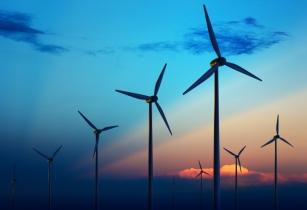
Wind power. The energy from wind is not readily available in every geographical location. However, it varies from season to season which also implies that the revenue obtainable from renewable energy investments fluctuates with season depending on the prevailing weather and climatic conditions from extremely highs wind speeds (gust) to very low wind speeds (calms). Our researches so far has shown that in the city of Lagos and the southern coastal areas of Nigeria, the solar energies(insulation) are highest between November and April and the wind speed follow almost the same pattern unlike in the Western Worlds where solar insulation is highest in the summer while the wind speeds are highest in the winter. This is another reason why our technological adoptions must be properly adapted to optimize local peculiarities. The solar photovoltaic panels are similarly designed based on Western meteorological conditions. That will be dealt with in subsequent articles. The higher the average prevailing wind speed, the higher the power generated and, of course, the revenue and vice versa. Typically, wind speeds tend to alternate with solar intensity. Also wind speeds are typically highest at the brow of hills, offshores, oceans fronts, water surfaces, higher altitudes, and vast planes. For a wind power generation to be commercially feasible in an area, the wind speed should be at least 4meters per second (4m/s).
The wind speeds in Nigerian coastal fronts like Brass and Bonny for example have wave returns of over 10m/s at the least. The same applies to Lagos as well. The Lagoons have fairly high wind speeds as well. The wind speed in the ocean fronts increases as one progresses further towards the high seas. Floating wind turbines are most suitable for offshores while fixed floaters are suitable for the lagoons. Wind turbines with proper maintenance and lubrication last up to 25 years. The capital recovery period varies with locations as per the volume of wind speed (energy harvest), but range between 12months and 24months in conservative terms. This recovery period and cost of energy generation also reduces significantly as the capacity is increased; the bigger, the better.
To be continued………
Christian Okwori