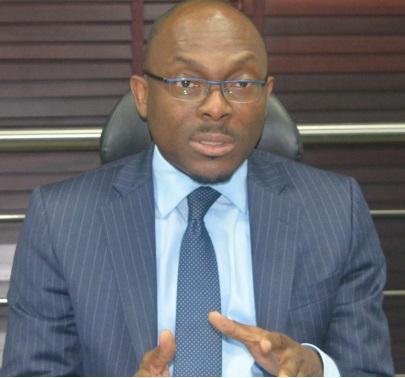

Leveraging FMDQ OTC Securities Exchange (FMDQ)’s GOLD (Global Competitiveness, Operational Excellence, Liquidity and Diversity) Agenda for the transformation of the Nigerian financial markets, trading activities in the FMDQ markets (fixed income, currencies and derivatives) rose from N104 trillion in 2014 to N137 trillion in 2015. BOLA ONADELE KOKO, the managing director/CEO, FMDQ in this interview with TELIAT ABIODUN SULE, says that the mandate of the Exchange is to develop the Nigerian financial markets with the aim of upgrading the market to international standards. Here are some excerpts we highlighted:
What were the major achievements of FMDQ OTC Securities Exchange in 2015?
Thank you very much. In 2015, we worked towards establishing FMDQ OTC as a securities exchange with a focus on the debt capital market and putting regulatory structures in place to support this market. During the year, we commenced our listings and quotations Service and had two (2) sovereign debt securities (Federal Government of Nigeria (FGN) bonds and Nigerian Treasury bills), six (6) corporate bonds & two (2) commercial papers (CPs) admitted to the FMDQ platform. The listing of the FGN bonds and quotation of the Nigerian Treasury bills (the first of its kind in the nation) marked a major milestone for FMDQ and also provided the securities access to the full complement of the FMDQ listings and quotations service; which includes but not limited to the global visibility through their inclusion on the FMDQ Bloomberg E-bond trading system and on the quotations page of the FMDQ website.
Listing of bonds (FGN and corporate) on FMDQ, has also provided unprecedented transparency and price discovery to these securities as relevant and up-to-date information are made available on the website for all interested stakeholders. Again, we started work on the quotation of CPs on FMDQ. If you could remember, for some time the CP market was almost non-existent. This work culminated in the release of the FMDQ Commercial Paper Quotation Rules (CPQR) and thereafter the quotation of two (2) CPs, one bank CP and one non-bank CP, on the Exchange. In 2015, we also positioned this Exchange internationally, by becoming a full Member Exchange of the African Securities Exchanges Association (ASEA) and an Affiliate Member of the International Capital Market Association (ICMA). In a bid to understand FMDQ’s novel position as an over-the-counter (OTC) securities exchange, we recorded visits from capital market participants (including the regulators, exchanges and operators) from four (4) African countries: Angola, Ghana, Uganda and Kenya. The Debt Capital Market Workshop, which was very successful, was another major highlight of 2015. Towards the end of the year, we organised the Nigerian Debt Capital Markets Workshop, in collaboration with the International Finance Corporation (IFC), and with the support of the Securities and Exchange Commission (SEC). The Workshop, which saw several panels made up of local and international subject-matter experts, as well as a host of other market participants, including key financial market regulators such as SEC, the Central Bank of Nigeria (CBN), National Pension Commission (PenCom), x-rayed the challenges in the market and proffered actionable solutions to some of them. To align this with the Nigerian Financial System Strategy (FSS) 2020 vision, we decided to set up a Steering Committee and other sub-Committees, made up of representatives of SEC, CBN, PenCom and some seasoned investment banks to support the generation of ideas from the market and the implementation of these solutions towards the development of the market. Once the challenges facing the market have been resolved, integration of the market with external financial markets will become achievable.
Since FMDQ started, what reforms have been implemented and what value have they added to FMDQ markets, which comprise fixed income, currencies and derivatives?
We were launched on November 7 2013 and prior to that time, the erstwhile interbank market was very opaque, though the market had closing prices available, the methodology for calculating these prices was not disclosed. The first thing we did was to introduce the FMDQ Daily Quotations List (DQL), which provides information (market/model prices and yields, and the values traded) on all securities listed and quoted on FMDQ. To support trading activities, we implemented an FMDQ Bloomberg E-Bond Trading System, which brought transparency to the market, as it also provided us the opportunity to share the market data with stakeholders. Our Price Tickers, at the top of our office building and on our website, are other avenues through which we share this data. This year, we will improve on these by including market depth to the buy side, so that stakeholders can see the last traded prices for securities.
It was also important to provide governance to the market. We had to work on improving market conduct of Dealing Members by apportioning sanctions to documented infractions. Regulation is very important in a financial market and this necessitated putting rules together for all market participants to read and appreciate their responsibilities in the market. We had to codify the trading Rules for FGN bonds, treasury bills, money market and foreign exchange rules. We also released FMDQ Bond Listing and Quotation Rules & Commercial Paper (CP) Quotation Rules and enhanced market surveillance activities. Again, we put in place general market rules and standards to ensure integrity in the price formation process.
Prior to FMDQ, no one could estimate the size of the OTC market. We first published our market turnover data in 2014, when N104 trillion worth of transactions were traded on this platform, and everybody, including us, were amazed at the volume of the transactions. This was significantly higher than the Nigerian Stock Exchange (NSE) market turnover of circa N1.3 trillion for same year. The transactions in 2015 amounted toN137 trillion. With such volumes in the OTC market, we can now understand the magnitude of the global financial crisis as this happened in an opaque market where nobody could precisely monitor the turnover activities that took place in the market. Interested stakeholders can get all the relevant data relating to our operations easily on our website.
The LIBOR scandal in the United Kingdom raised some credibility issues around fixings. What measures has FMDQ put in place to ensure that NIBOR is not rigged?
Prior to the LIBOR crisis, no one had governance over benchmarks because people did not appreciate the size of contracts written against these benchmarks. The OTC market was not only opaque in Nigeria; it was opaque all over the world. It was after that scandal that IOSCO decided to publish standards for benchmarks and everyone is working with IOSCO’s Principles for Financial Benchmarks. In the case of Nigeria, we are ahead of the curve with what the Central Bank of Nigeria and banks did by putting FMDQ together. The first thing FMDQ did was to document the governance standards over the NIBOR. We examined the sources of the submissions of the banks that are selected as reference banks and tightened the selection process. There was an automation of the submission process to ensure that there were two levels of authentication from each reference bank. We have also executed a code of conduct with these banks to enhance the governance and hold each bank accountable for their submissions. To ensure that no one is gaming the system, we are working with the CBN on the possibility of moving the NIBOR to more of executed trades than submissions.
Since the release of the FMDQ Commercial Paper (CP) Quotation Rules, how many companies have quoted their CPs on the OTC Exchange?
The total worth of CPs quoted on this platform is N80.4 billion. We started with banks – Stanbic IBTC PLC (N44.54 billion); Wema Bank (N8.15 billion); and now have the real sector participating – the Nigerian Breweries (N17.71 billion) and Guinness Nigeria Plc (N10 billion). Nigerian Breweries was able to cut down its interest cost by going straight to the market to issue CPs. We have gone further to develop the Quoted Commercial Paper Status Report (QCSR) which we think would be of great interest to financial market regulators. What this Report does is provide the status of the CP you have bought and the behaviour of the issuer. This will tell you if an obligor honours the terms of the issuance and on the day of payment, if it defaults, we flag up such institution. The governance over the CPs today is completely different from what it was some years back.
Then, if you look at the pension industry, because of the amount of governance over CPs, PenCom will in no distant future, encourage pension fund administrators (PFAs) to invest in only CPs that are quoted. This is as a result of the due diligence that FMDQ has put in place for CPs on its platform, including the pre-quotation and post-quotation regulations.
The interest in CPs is picking up and it requires the regulators to add their voices to the quotation process since the CPs quoted on FMDQ are well documented and therefore, transparent.
One of FMDQ’s markets is the Foreign Exchange (FX) Market. What is your view on the current situation of this market in Nigeria?
We have a fragmented market right now, as you will be talking about the CBN market, the interbank market, BDC and parallel market at the same time. We also have a market where we are failing to appreciate that the currency traded is the naira. We also have a situation where the parallel market, which in few years’ back, could not be mentioned, has become, if we are not careful, ‘the market’. This is very dangerous because the parallel market has no governance, no data and no record. There is a wide gap between that market and what is considered the official market.
I’m not sure the foreign exchange market is still playing the role it is meant to play. In the parallel market, there is no opportunity to see the reference rate. We have to work hard very quickly to establish an FX market that supports the economy. The truth is, post May 29 2015, Nigeria was well positioned to have been on the right track, if the right thing had been done, meaning that we should have been flying at the moment despite the challenges.
Having a two-tier FX market is not ideal; all the things that have been pushed into the parallel market need to be brought back to the interbank market to help reduce the significance of the parallel market.
How has the current FX regime affected the FMDQ markets?
We offer the platform for sellers and buyers to execute their trades. Over time, when items are moved away from the governed market to the parallel market, there will be a reduction in the volume and liquidity on the side of the governed market. One, it takes our members longer time to fill the orders for the clients that are willing to buy, that is where the parallel markets starts becoming significant. The arbitrage that the significance of the parallel market has brought has also reduced the integrity score for our market. It has impacted on our market turnover, price formation and fixings. It has also impacted on every element of the credible global competitive market that we desire today.
Also, it has slowed down the move to create hedging products; and the lack of hedging products creates panic. When you have panic, people start accelerating demand for FX when they do not need it. Someone that has exposure in June will start buying the dollars today and warehouse them.
How do you address future demand when you do not have hedging products? If we look at the correlation between the crude oil prices and naira-dollar rate, if crude prices go down, naira/dollar rate goes up. The correlation between the crude oil prices and the naira-dollar rate is negative 0.88. That is, about 88 percent, but in different directions. If you simulate the change in the value of crude oil prices on the naira exchange rate, ideally you will have the naira at about N201 to N205 to a dollar. Except for the noise in data, the level we should be is around N201 to a dollar. But why have we found ourselves at this level of N350? These are things we should resolve as quickly as possible because we could actually get back to N210-N220 to a dollar. First, we need to reduce the significance of the parallel market. Second, we have to improve the FX market structure. Third, reposition the Nigerian economy to attract investments that will bring about increase in supply of foreign currencies. And last, develop more hedging products.
We have to take care of the forex needs of those entrepreneurs and traders who are in legitimate businesses. We should not push too many things to the parallel market, as that market does not have data. We need to bring all the eligible transactions to the official market. The market is like a balloon, if you squeeze the official market, the parallel market will expand and vice versa.
On the issue of policy, CBN can decide to offer a rebate to certain sectors it wishes to support, after they have sourced their FX on their own. After people have done their importation and submitted their evidence to the CBN, they can be given a rebate.
We should focus on growing the economy. In 1995, the Nigerian currency moved from N20 to N85 but Nigeria is not dead and the economy has been growing. The focus should be on how best the CBN can support the economy without stifling financial markets. The CBN’s activities have to be transparent. If you want to buy or sell, let it be done on the platform of FMDQ, to allow for transparency, as this arbitrage does not inspire confidence in the market.
To complement this, we need to have hedging products. The CBN needs to move to naira futures, which will be settled in naira that the CBN has. Immediately this happens, people will start to understand the financial market very well and the pressure on the spot market will reduce. Crude oil has dropped; currency will move but let us have a financial market that is stable enough to support the economy.
How far has FMDQ gone on the FX and interest rate derivatives and when will these products be introduced into the market?
To put things in perspective, some derivatives are being traded in the market but they are mostly bilateral. When things are bilateral, they do not provide the opportunity for liquidity (as the more liquid the market is, the better for price formation) if you want to get out of the market. We are talking about liquid derivatives for hedging products like futures instead of forwards. To make things easier and also carry the market along, the first thing we are doing is conducting a feasibility study. Who are the people in the market? What are the risks involved? Is the market ready for such products? By the time we receive the Feasibility Study Report, we will then look at the Implementation Plan and act accordingly. Maybe the first thing we need to do to build that market is education and sensitisation. Again, we are working in collaboration with the Association of Corporate Treasurers Nigeria (ACTN) and Financial Market Dealers Association (FMDA), and we plan to set up an advocacy session with the CBN, SEC and PenCom. We will do a lot of work this year to prepare for the sort of market we want and this work will cut across providing education and developing financial market structures because we want to build a very robust market. We have to standardise securities lending. We are building the Dealing Member (Specialists) category to integrate this market, so that NSE members and other non-bank financial institutions interested in trading fixed income can come in because a derivatives market requires a liquid spot market.
Capacity building, market standardisation, governance issues and investor protection are key things we are focusing on to deliver a liquid derivatives market.
What should the stakeholders expect from FMDQ in 2016?
This year, we will focus on standardising the market and providing the necessary building blocks that will support the development of a derivative market. We will also continue to focus on the development of products in the debt capital market. We will work with the Debt Management Office (DMO) on the non-interest Islamic (Sukuk) products, as we will like to support them by listing the products on FMDQ. We will also support the listing of Eurobond, if the FG decides to go for it. The thing is that we need to promote our capital market. If you can list Eurobonds on the London or Irish Stock Exchange; you must also list them on FMDQ. Also this year, we want to ensure a connection between our system and the international clearing system, as that will support the listing of Eurobonds. We are going to work a lot with the DMO as well as collaborate with PenCom this same year. These institutions are happy with what we have done with respect to moving the market turnover from N104 trillion to N137 trillion, because of the systems FMDQ has put in place to promote market integrity and credibility. We share this success story and will continue to collaborate with stakeholders to consolidate on the gains we have made so far towards further development of the Nigerian financial market.